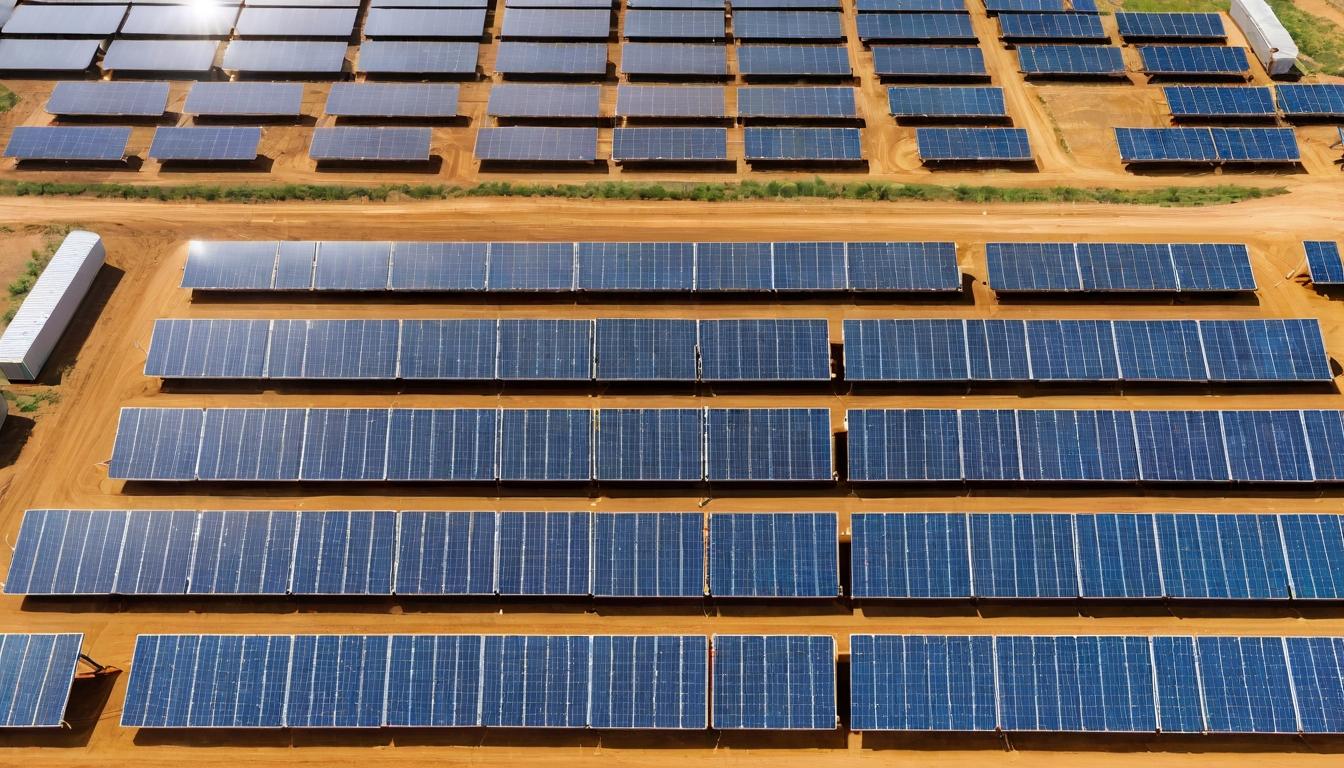
While politicians debate subsidies and homeowners compare wattage ratings, a quiet revolution is unfolding in the solar industry that most consumers never see. It's not about the panels themselves—those gleaming rectangles have become almost commoditized—but about everything that happens before they're mounted and after they start generating power. The real story isn't on rooftops; it's in the supply chains, software platforms, and community dynamics that determine whether solar actually delivers on its promise.
Walk through any solar trade show today, and you'll notice something peculiar: the biggest crowds aren't gathering around panel manufacturers. They're clustered at booths displaying monitoring software, battery integration systems, and what industry insiders call "balance of system" components. These unsexy brackets, connectors, and inverters represent where the real innovation—and profit—has migrated. A panel might last 30 years, but the technology managing it evolves every 18 months. This shift has created a parallel industry that's both more competitive and more vulnerable to disruption than the panel market itself.
Meanwhile, in neighborhoods from California to Connecticut, a different battle is playing out. Homeowners associations, once the bane of solar installers, have become unexpected laboratories for community solar projects. The old narrative of individual rooftops is giving way to shared solar gardens, virtual net metering agreements, and blockchain-enabled energy trading between neighbors. These models don't just increase access; they're rewriting the economics of solar deployment in ways that could make traditional installations look quaint within a decade.
Beneath these visible trends runs an undercurrent of material science breakthroughs that rarely make headlines. Perovskite solar cells, once confined to laboratory demonstrations, are now appearing in commercial prototypes with efficiencies that embarrass traditional silicon. What's more revolutionary than their performance is their potential application: imagine solar-active windows, vehicle coatings, and even clothing generating power. This isn't incremental improvement; it's a complete reimagining of what solar technology can be and where it can go.
Then there's the recycling problem nobody wants to talk about. The first generation of solar panels is now reaching end-of-life, and the industry is scrambling to develop circular economy solutions. Early attempts at panel recycling yielded disappointing recovery rates for valuable materials, but new mechanical and chemical processes are promising to recover over 95% of a panel's components. This isn't just an environmental imperative—it's becoming a competitive advantage as raw material prices fluctuate and supply chains remain fragile.
Perhaps most intriguing is the data war quietly raging between utilities, solar companies, and homeowners. Your solar system generates terabytes of data about energy production, consumption patterns, and grid stability. Who owns this data? Who gets to monetize it? And what happens when artificial intelligence begins optimizing not just individual systems but entire neighborhoods? The answers will determine whether solar remains a supplemental energy source or becomes the grid's nervous system.
These developments share a common thread: they're moving solar from a product industry to a service industry. The companies that thrive won't be those that sell the most panels, but those that provide the most value from the energy those panels produce. This transition explains why traditional energy giants are acquiring software startups rather than panel manufacturers, and why the most interesting solar companies today don't actually make hardware at all.
The implications extend beyond business models. As solar becomes more integrated, more intelligent, and more interconnected, it's also becoming more vulnerable. Cybersecurity threats that once targeted financial systems are now training their sights on energy infrastructure. A hacked solar farm or manipulated home energy management system could cause blackouts or market manipulation on a scale we haven't seen before. The industry's rapid innovation has outpaced its security protocols, creating risks that regulators are only beginning to understand.
What emerges from these intersecting trends is a picture of an industry at a crossroads. The simple narrative of "solar good, fossil fuels bad" has served its purpose, but it no longer captures the complexity of what's actually happening. The next phase of the solar revolution will be less about technology and more about integration, less about individual adoption and more about systemic transformation. The panels themselves are becoming the least interesting part of the story.
For consumers, this means looking beyond wattage and warranties when considering solar. The real questions are about data rights, system compatibility, and long-term service relationships. For policymakers, it means regulating not just panel production but data flows, recycling standards, and cybersecurity. And for the industry, it means recognizing that the easy growth of selling hardware is ending, replaced by the harder but more sustainable work of building energy ecosystems.
The solar panels on your roof are just the visible tip of an iceberg whose submerged bulk contains supply chain innovations, software platforms, regulatory battles, and economic models that will determine whether the renewable energy transition succeeds or stalls. Understanding that iceberg—not just admiring its tip—is where the real story begins.
The solar revolution's hidden battleground: Beyond panels and politics