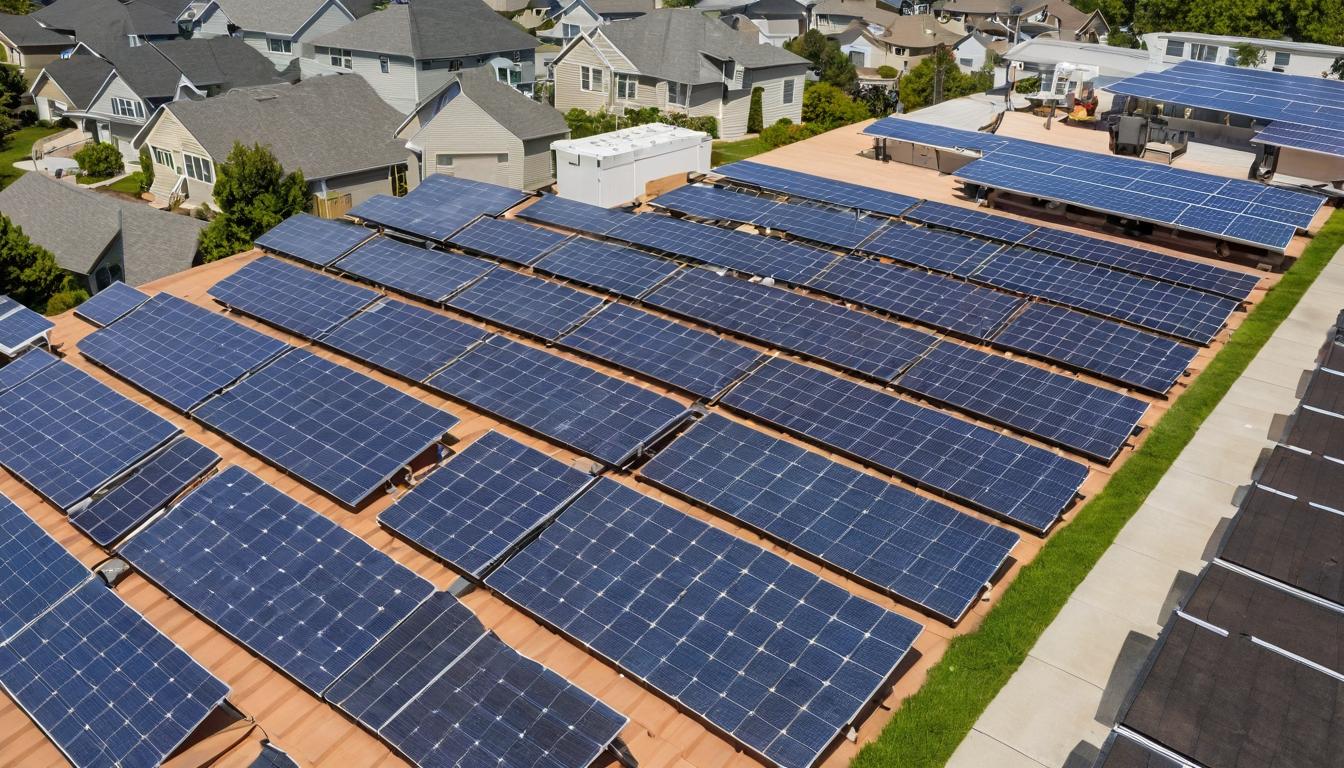
The quiet hum of solar panels on American rooftops masks a fierce technological and economic struggle unfolding across the nation. While homeowners celebrate their shrinking electricity bills, a complex ecosystem of manufacturers, installers, and utilities is grappling with the most profound energy transformation since the electrification of rural America.
In neighborhoods from suburban Arizona to rural Vermont, solar adoption is creating unexpected winners and losers. The traditional utility model, built around centralized power generation and predictable demand curves, is being upended by what industry insiders call the 'democratization of energy.' Homeowners are no longer just consumers—they've become producers, creating a two-way energy flow that challenges century-old infrastructure and business models.
Behind the glossy marketing of solar companies lies a brutal price war that's reshaping the industry. Panel costs have plummeted 90% over the past decade, but installation labor and 'soft costs'—permitting, customer acquisition, and financing—remain stubbornly high. This paradox means that while solar technology has never been cheaper, the total cost to consumers hasn't fallen as dramatically as manufacturers hoped.
The battery storage revolution is quietly changing the solar equation in ways most homeowners haven't yet realized. Tesla's Powerwall and competing systems from LG and Sonnen are transforming solar from a daytime-only solution to a 24-hour energy source. This shift is particularly crucial in states like California, where time-of-use rates make evening energy consumption punishingly expensive.
Utility companies are fighting back with sophisticated tactics that go beyond the much-publicized net metering battles. Some are creating their own solar programs, while others are implementing demand charges and grid access fees that specifically target solar homeowners. The result is a regulatory chess match playing out in public utility commissions across the country.
Manufacturing innovation continues at a breathtaking pace, with perovskite solar cells promising efficiencies that could make today's panels obsolete. Chinese manufacturers dominate global production, but American companies are betting on next-generation technologies to regain market share. The geopolitical implications are significant, as solar becomes another front in the U.S.-China technology competition.
Installation quality varies wildly across the industry, creating a hidden risk for homeowners. While reputable companies follow strict engineering standards, the gold rush atmosphere has attracted fly-by-night operators whose shoddy work could lead to roof damage, electrical fires, or system failures years down the line. Consumer protection remains patchy across state lines.
Financing innovation has made solar accessible to millions who couldn't afford the upfront costs, but it's also created a secondary market of solar asset-backed securities that Wall Street is watching closely. The performance of these financial instruments will determine whether institutional money continues flowing into residential solar or retreats to safer investments.
The environmental benefits of solar are clear, but the industry faces its own sustainability challenges. Panel recycling remains in its infancy, and the carbon footprint of manufacturing, while quickly shrinking, still represents a significant environmental cost. Companies are racing to develop closed-loop manufacturing processes that minimize waste and energy consumption.
Community solar projects are emerging as a solution for the 75% of Americans who can't install rooftop systems due to renting, shading, or structural issues. These shared arrays allow multiple households to benefit from solar without individual installations, creating new business models and regulatory frameworks.
As artificial intelligence enters the solar space, predictive analytics are helping homeowners maximize their energy production and savings. Smart inverters and monitoring systems can now detect subtle performance drops, alert homeowners to maintenance needs, and even automatically adjust system settings for optimal production.
The future of American solar may lie not in individual rooftops but in integrated energy ecosystems. Solar panels, batteries, electric vehicles, and smart home systems are beginning to work together seamlessly, creating homes that generate, store, and manage their own energy with minimal grid interaction.
What's clear is that the solar revolution is entering its most complex phase. The initial excitement about clean energy has given way to the hard work of integration, regulation, and optimization. How these challenges are resolved will determine whether solar becomes a niche solution or transforms America's energy landscape completely.
The solar revolution's hidden battle: How America's rooftops became the new energy frontier