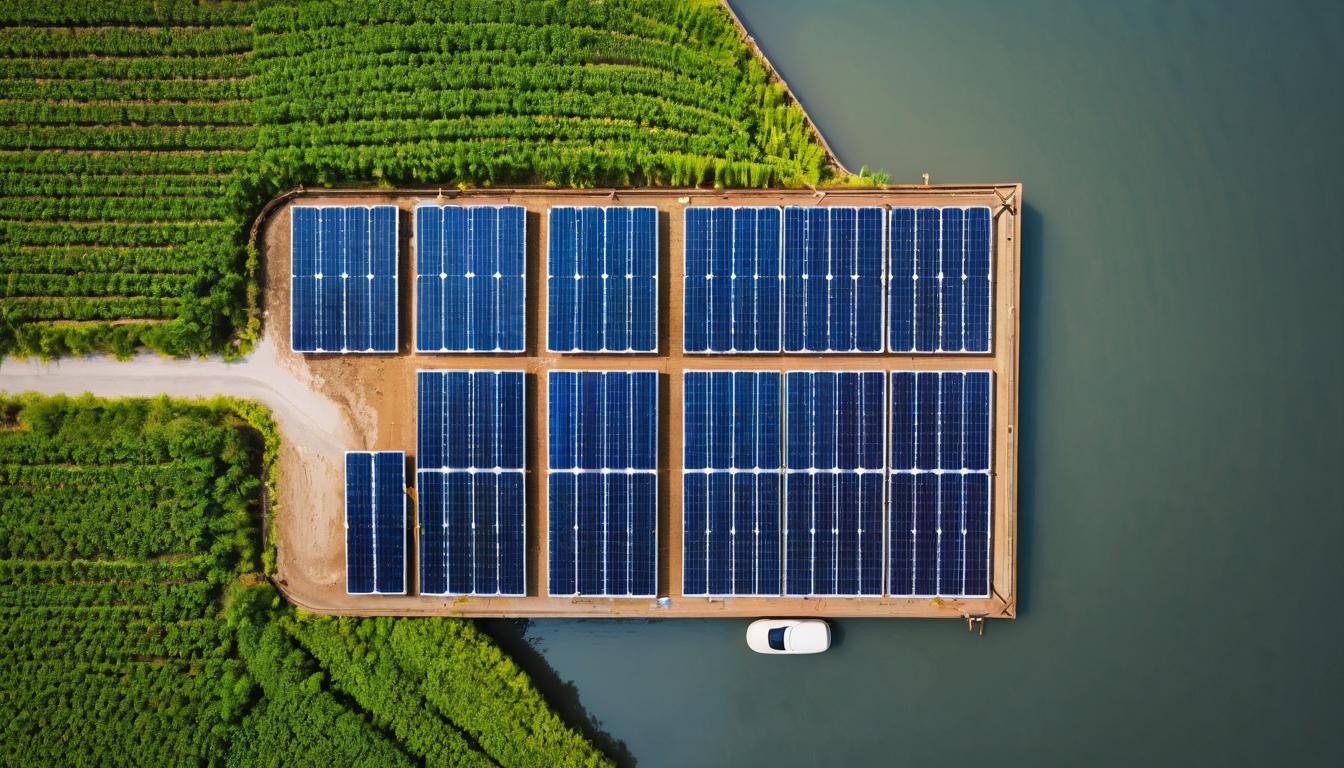
If you think solar panels are just for rooftops, you're missing the real story unfolding in fields, parking lots, and even on water. While residential installations grab headlines, a quieter revolution is happening where you least expect it—and it's changing everything about how we produce and consume energy.
Walk through any major city's industrial district, and you'll see them: vast parking lots transformed into power generators with solar canopies. These structures do double duty—shading cars while feeding clean electricity directly into local grids. Companies like Amazon and Walmart have turned their massive parking lots into mini power plants, but the real innovation isn't just in the scale; it's in how these systems integrate with electric vehicle charging, creating self-sustaining energy ecosystems where cars literally park under their power source.
Meanwhile, out in rural America, farmers are discovering that the same sun that grows their crops can also grow their income. Agrivoltaics—the practice of combining agriculture with solar panels—isn't just about putting panels in fields. It's about redesigning how we use land. Researchers have found that certain crops actually thrive under partial shade from elevated solar arrays, requiring less water while the panels produce electricity. Sheep graze happily underneath, keeping vegetation managed without fossil-fuel-powered mowers. This isn't solar versus agriculture; it's solar and agriculture working in unexpected harmony.
Then there's the water. Floating solar farms—panels mounted on pontoons in reservoirs, lakes, and even the ocean—are solving two problems at once. The water cools the panels, making them more efficient, while the panels reduce evaporation from reservoirs, conserving precious water supplies. In drought-prone regions, this dual benefit is more than clever engineering; it's a survival strategy. The largest floating solar farm in the United States now covers 17 acres of a New Jersey water treatment facility, powering the treatment process while protecting the water beneath from algae blooms caused by too much sunlight.
But perhaps the most transformative development isn't visible at all. Virtual power plants—networks of distributed solar systems controlled as a single entity—are turning thousands of individual installations into a collective force that can stabilize grids and prevent blackouts. When demand spikes, these networks can draw on stored solar energy from homes and businesses across a region, reducing the need for polluting 'peaker' plants that typically fire up during high-demand periods. Homeowners participate voluntarily, earning credits while contributing to grid stability—a democratization of energy that was unimaginable a decade ago.
Behind all these innovations lies a manufacturing revolution that rarely makes headlines. New solar panel designs are pushing efficiency boundaries while using less silicon, reducing costs and environmental impact simultaneously. Bifacial panels that capture light from both sides, perovskite cells that can be printed like newspaper, and building-integrated photovoltaics that turn entire facades into power generators—these aren't laboratory curiosities anymore. They're entering the market, driven by manufacturing breakthroughs that make solar not just cleaner, but smarter and more adaptable to diverse environments.
What ties these developments together is a fundamental shift in thinking. Solar is no longer just an alternative energy source; it's becoming an integrated component of our built environment, our agricultural systems, and our water management. The panels themselves are getting more sophisticated, but the real innovation is in how they're being deployed—in combinations and contexts that multiply their benefits beyond simple electricity generation.
This quiet revolution has implications that reach far beyond energy bills. It's changing land use patterns, creating new revenue streams for farmers and businesses, conserving water in drought regions, and making our electrical grid more resilient. The story isn't about solar replacing other energy sources; it's about solar becoming woven into the fabric of how we live and work, often in ways that aren't immediately visible but are profoundly transformative.
As these innovations spread, they're creating unexpected alliances—between farmers and energy companies, between water managers and utilities, between homeowners and grid operators. The solar revolution was never just about technology; it's about reimagining relationships between energy, land, water, and community. And that story, unfolding quietly in fields and parking lots and reservoirs across the country, might just be the most important one we're not paying enough attention to.
The hidden revolution: How solar power is quietly transforming energy beyond rooftops