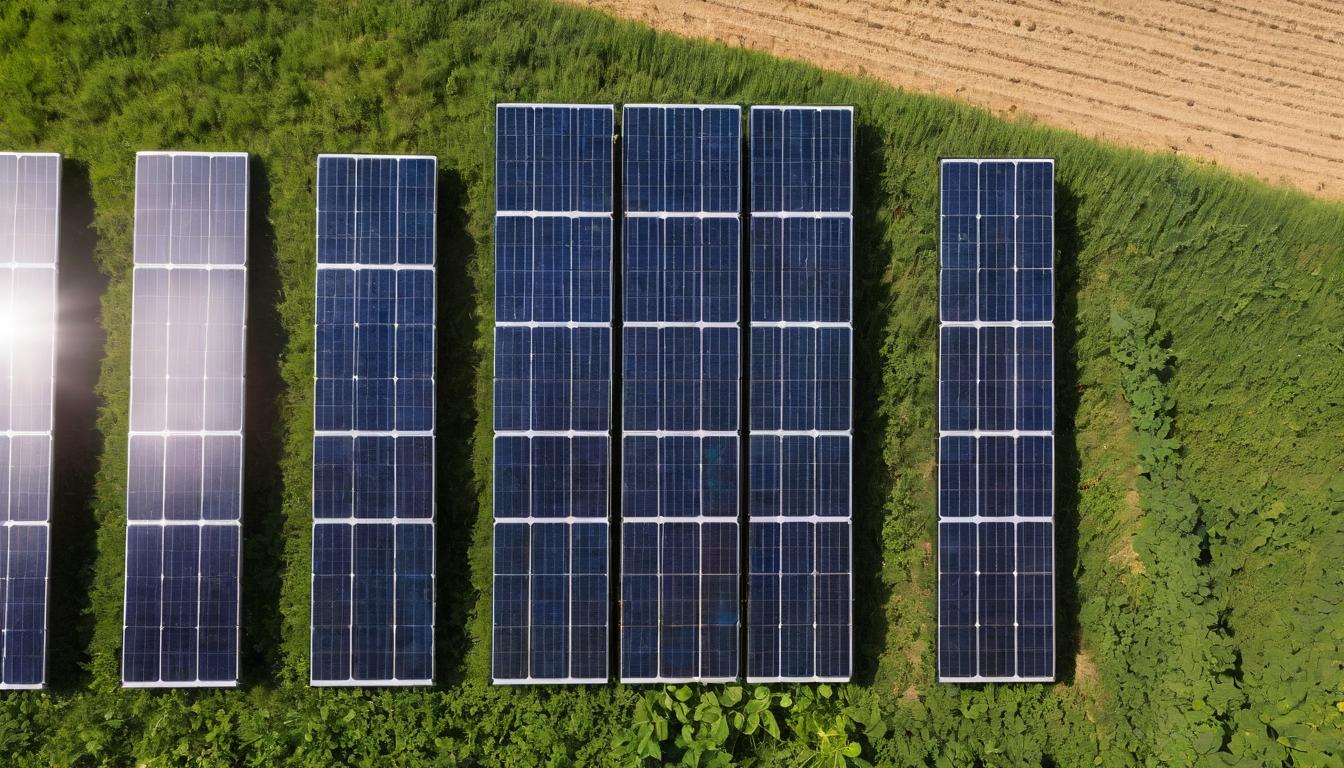
While most homeowners see solar panels as a way to slash electricity bills—and they absolutely do—the real story unfolding across rooftops and fields is far more profound. This isn't just about kilowatt-hours; it's about a quiet technological and social revolution that's reshaping everything from urban design to rural economies, often without making headlines. The panels themselves have become almost mundane, but what they enable is anything but.
Look beyond the silicon and glass, and you'll find solar integration reaching unexpected places. Agricultural operations are now pairing photovoltaic arrays with crop cultivation in what's called 'agrivoltaics'—where panels provide shade for delicate plants while generating clean energy. In water-scarce regions, solar-powered desalination units are turning seawater into drinking water. Even electric vehicle charging stations are becoming mini-power plants, with canopies of panels that not only fuel cars but sometimes feed excess electricity back to the grid during peak hours.
Then there's the materials science arms race happening behind the scenes. While traditional silicon panels still dominate, researchers are making startling advances with perovskites—crystalline structures that can be printed like ink onto flexible surfaces. These next-generation cells promise dramatically lower production costs and the ability to integrate solar collection into building facades, windows, and even clothing. The implications for urban architecture alone are staggering: soon, entire skyscrapers might generate their own power without a single visible panel.
Financial innovation has kept pace with technological breakthroughs. The old model of outright purchase or cumbersome leases has given way to sophisticated power purchase agreements (PPAs) and community solar programs that allow renters and low-income households to participate. In some states, virtual net metering lets multiple parties share benefits from a single installation. Meanwhile, blockchain-enabled peer-to-peer energy trading platforms are emerging, allowing neighbors to buy and sell excess solar power directly—creating hyperlocal energy markets that bypass traditional utilities entirely.
Perhaps most surprisingly, solar is becoming a tool for ecological restoration. In contaminated 'brownfield' sites and depleted mining lands where little else will grow, solar farms are providing both clean energy and a path to rehabilitation. The installations prevent erosion, create habitats for pollinators when planted with native vegetation, and generate revenue that can fund further cleanup efforts. It's a virtuous cycle that turns environmental liabilities into assets.
The human dimension of this transformation often gets overlooked. In rust-belt cities, solar installation has become one of the fastest-growing blue-collar job categories, offering living wages without requiring a four-year degree. Training programs are popping up at community colleges across the country, creating pathways to middle-class careers in communities that lost manufacturing jobs decades ago. These aren't just installers—they're system designers, maintenance technicians, and sales professionals building entire careers around the energy transition.
Storage, once solar's Achilles heel, is rapidly becoming its superpower. The combination of plummeting battery costs and smart energy management systems means households can now achieve near-total energy independence. During grid outages caused by extreme weather—increasingly common due to climate change—these solar-plus-storage systems keep lights on and medical devices running. In effect, they're creating decentralized resilience networks that make communities less vulnerable to infrastructure failures.
What's emerging is a new energy paradigm that's democratic, distributed, and remarkably adaptive. The solar panels on your neighbor's roof are no longer just generating electricity; they're part of a larger reimagining of how we produce, consume, and think about power—in every sense of the word. This transformation is happening not through grand policy declarations or corporate announcements, but through millions of individual decisions that collectively add up to something revolutionary.
The most exciting developments are still on the horizon. Imagine solar paint that turns any surface into a power generator, or floating photovoltaic arrays that reduce evaporation from reservoirs while generating electricity. Consider the potential of integrating solar with green hydrogen production, creating storable fuel for industries that can't easily electrify. We're just beginning to scratch the surface of what's possible when we harness sunlight not as a novelty, but as a fundamental building block of modern civilization.
What began as a niche technology for environmentalists has become something much more significant: a toolkit for addressing multiple challenges simultaneously—economic, environmental, and social. The panels themselves are becoming almost invisible, fading into the background of our built environment. But their effects are becoming increasingly impossible to ignore, quietly transforming everything they touch.
The hidden revolution: how solar panels are quietly transforming more than just your roof