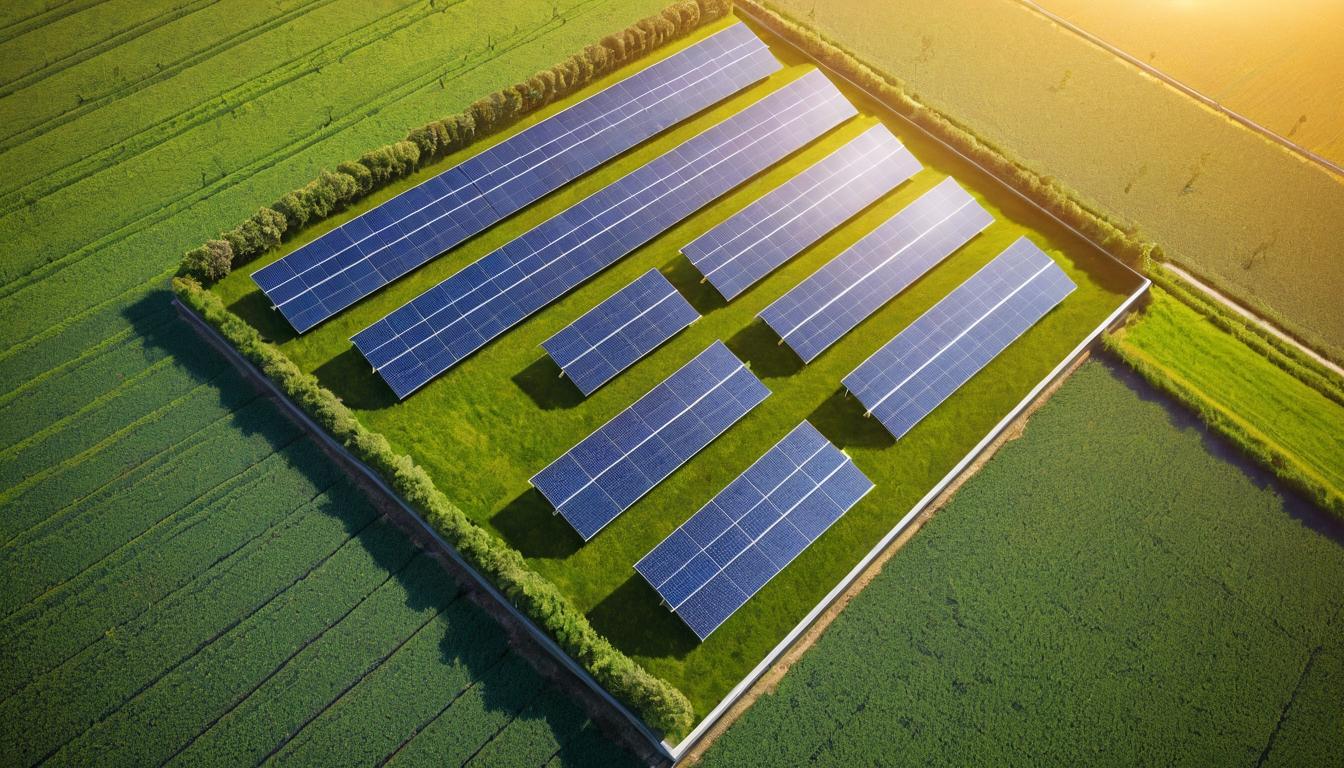
While most people picture solar panels as rigid blue rectangles on suburban roofs, a quiet revolution is happening far beyond residential installations. The technology that once seemed destined only for sun-drenched deserts and eco-conscious homeowners is now appearing in places that would have seemed absurd just five years ago. From highway noise barriers generating power for nearby communities to floating solar farms cooling reservoirs while producing electricity, solar integration has become an exercise in creative problem-solving.
Walk through any major city today and you might miss the most significant change—solar isn't just something we install anymore; it's something we build with. Building-integrated photovoltaics (BIPV) have turned entire facades into power generators, with solar windows that maintain transparency while harvesting energy and solar roof tiles indistinguishable from traditional materials. Architects no longer ask 'where can we put the panels?' but rather 'how can every surface contribute?' This shift from addition to integration represents perhaps the most profound change in how we think about energy infrastructure since the electrical grid itself.
Meanwhile, the economics have flipped completely. Where solar once required substantial subsidies to compete, it now frequently represents the cheapest form of new electricity generation across much of the world. But the real story isn't in utility-scale installations—it's in the democratization of energy production. Community solar projects allow renters and those with shaded roofs to buy into shared arrays, while virtual power plants connect thousands of home batteries to support the grid during peak demand. The energy system is transforming from a one-way street into a dynamic network where nearly anyone can participate.
Perhaps most surprisingly, solar's expansion has created unexpected environmental benefits beyond carbon reduction. Floating solar panels on reservoirs reduce evaporation in drought-prone regions, while agrivoltaics—combining agriculture with solar generation—can increase crop yields in hot climates by providing partial shade. Even transportation is getting a solar makeover, with solar-covered parking lots powering electric vehicle charging stations and creating shaded parking in the process. Each application solves multiple problems simultaneously, turning solar from a single-purpose technology into a multi-benefit solution.
Yet challenges remain hidden beneath the optimistic headlines. The same rapid growth that has driven prices down has created supply chain vulnerabilities, with critical materials concentrated in geopolitically sensitive regions. Recycling infrastructure for end-of-life panels lags far behind installation rates, potentially creating future waste problems. And interconnection queues for new projects have grown so long in some areas that they threaten to stall the very transition they're meant to support. These aren't reasons to slow solar adoption, but they represent the complex realities of transforming an energy system that took a century to build.
The most exciting developments, however, might be the ones we can't yet see. Perovskite solar cells promise dramatically higher efficiencies at lower costs, while transparent solar technologies could turn every window into a power generator. Solar paint and textiles hint at a future where nearly any surface could harvest energy. What's clear is that we're only at the beginning of understanding how to harness sunlight—not as a replacement for other energy sources, but as a fundamental layer in how we power civilization. The panels on your neighbor's roof are just the most visible tip of a transformation that's reshaping everything from how we design buildings to how we manage ecosystems.
The hidden revolution: how solar panels are quietly transforming everything from rooftops to roadways