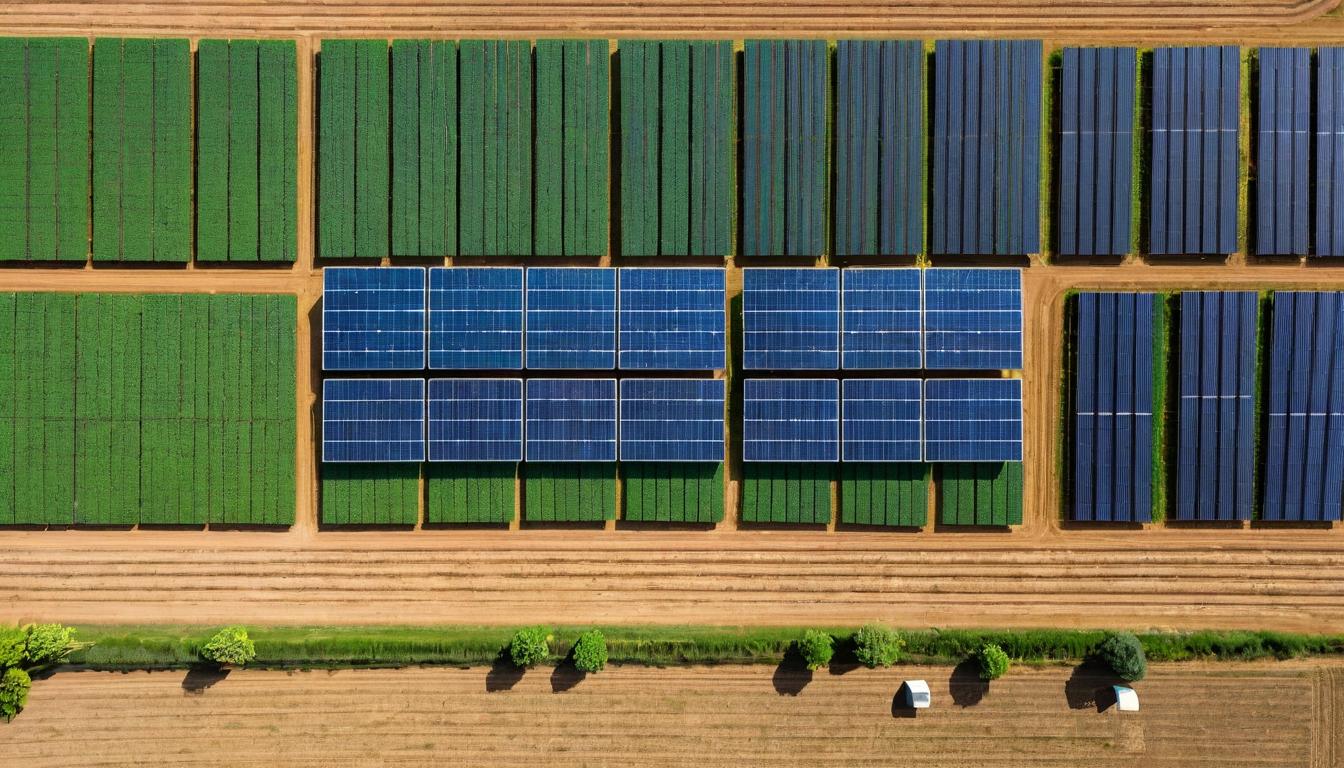
While most people picture solar panels on suburban rooftops, a quiet revolution is happening in places you'd never expect. Farmers are discovering that solar installations don't just generate power—they can create microclimates that boost crop yields. In California's Central Valley, almond growers are experimenting with elevated solar arrays that provide partial shade during scorching afternoons, reducing water evaporation while powering irrigation systems. It's not just agriculture either—warehouses with vast, unused roof space are becoming power plants in their own right, often generating more electricity than the buildings beneath them consume.
What's driving this expansion isn't just environmental concern, but cold, hard economics. The price of solar panels has dropped 90% over the last decade, making installations financially viable even for businesses that never considered themselves 'green.' Manufacturing facilities that run 24/7 are finding that solar plus battery storage can shave peak demand charges—those expensive hours when everyone's drawing power from the grid. One Ohio auto parts factory cut its energy bill by 40% not through conservation, but by becoming its own utility.
The technology behind this transformation keeps evolving in surprising ways. Bifacial panels—which capture light from both sides—are proving particularly effective in snowy regions where reflected sunlight boosts winter production. Meanwhile, perovskite solar cells, once confined to laboratory demonstrations, are finally entering commercial production with efficiency rates that challenge traditional silicon. These aren't incremental improvements; they're game-changers that make solar viable in places like Seattle and Glasgow where sunshine was once considered insufficient.
Community solar projects are democratizing access in ways that rooftop installations never could. In Massachusetts, apartment dwellers can subscribe to shares of a nearby solar farm, receiving credits on their utility bills without installing anything. These projects often prioritize low-income communities, addressing both energy poverty and climate goals simultaneously. The model has spread to 41 states, creating what advocates call 'energy justice'—the idea that clean power shouldn't be a luxury for homeowners with suitable roofs.
Perhaps the most overlooked story is how solar is reshaping the electric grid itself. Utilities that once fought rooftop solar are now embracing large-scale installations as the cheapest form of new power generation. In Texas—of all places—solar now provides more electricity during summer afternoons than the state's remaining coal plants. This isn't just replacing fossil fuels; it's changing when and how we use electricity, with solar production peaking right when air conditioners strain the grid most.
The recycling challenge looms as millions of early solar panels reach the end of their 25-30 year lifespans. European regulations already require manufacturers to take back old panels, but the U.S. is just beginning to address what could become a mountain of electronic waste. Innovative companies are developing processes to recover not just aluminum and glass, but the valuable silver and silicon that make recycling economically attractive. This circular economy approach could solve what critics call solar's 'dirty secret.'
Looking ahead, the integration of solar with other technologies promises even greater transformation. Electric vehicle charging stations powered by onsite solar are appearing at shopping centers and workplaces, creating what energy experts call 'distributed generation networks.' Smart inverters allow solar systems to provide grid stability services traditionally handled by natural gas plants. We're not just adding solar to our energy mix—we're redesigning the entire system around it.
The human stories behind these technical developments are equally compelling. Former coal miners in Appalachia are training to install solar panels, bringing their mechanical skills to a growing industry. Native American tribes are building solar farms on reservation lands, gaining energy independence while creating revenue streams. These aren't abstract climate solutions—they're livelihood transformations happening community by community.
What emerges from looking beyond the obvious solar applications is a picture of profound, systemic change. Solar technology isn't just getting cheaper and more efficient—it's adapting to diverse environments, integrating with other systems, and creating new economic opportunities. The solar panels themselves are becoming almost incidental to the larger story of how we generate, distribute, and think about energy. This revolution isn't happening on rooftops alone—it's unfolding in fields, factories, and communities across the country, quietly reshaping our relationship with power in ways we're only beginning to understand.
The hidden revolution: how solar panels are quietly transforming everything from farms to factories