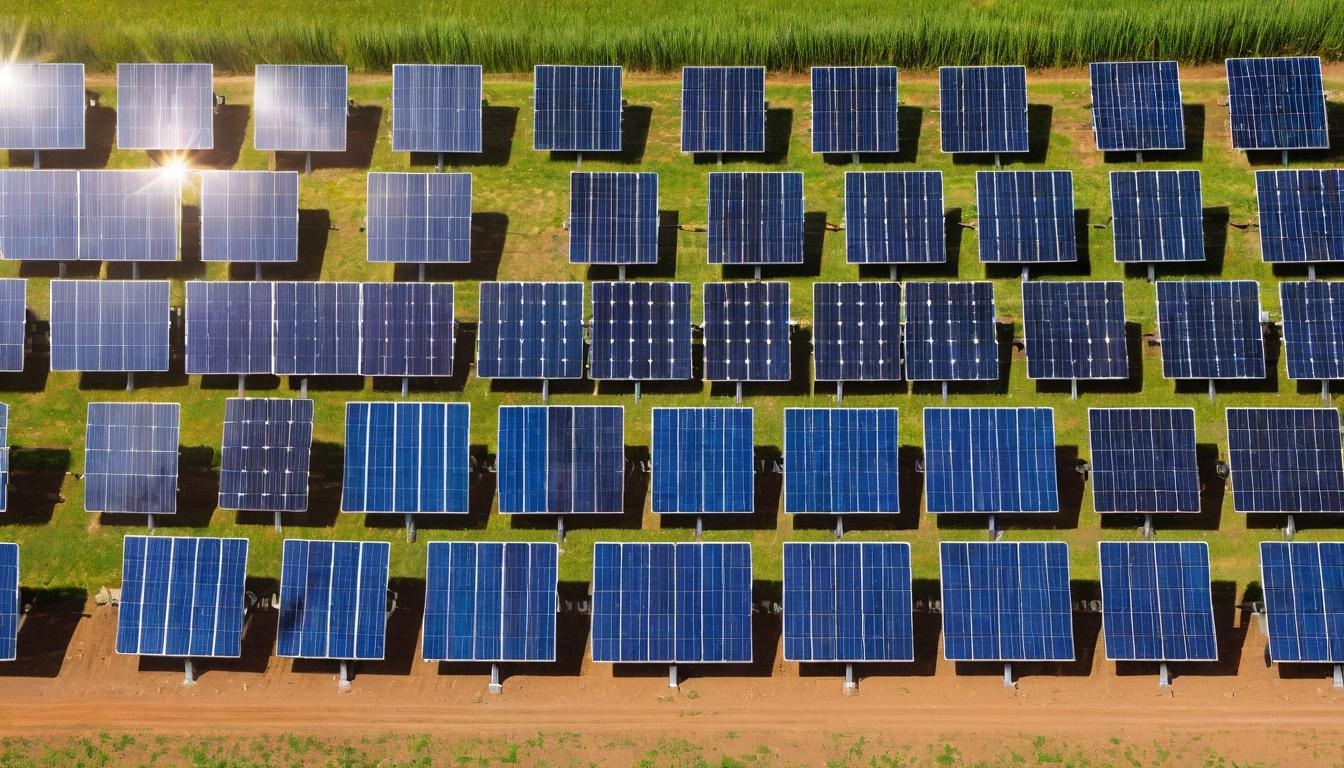
If you drive through America's suburbs today, you'll notice something that wasn't there a decade ago—a subtle shimmer on rooftops that speaks volumes about a quiet revolution. Solar panels, once the domain of eco-conscious pioneers and tech enthusiasts, have slipped into the mainstream with the stealth of a cat burglar. But this isn't just about shiny rectangles on roofs; it's about a fundamental shift in how we produce, consume, and think about energy.
What's driving this transformation isn't just environmental idealism—though that plays a role—but cold, hard economics. The cost of solar has plummeted by over 80% in the last decade, making it competitive with traditional energy sources in most markets. Homeowners aren't just saving the planet; they're saving hundreds, sometimes thousands, of dollars annually on their electricity bills. The math has become so compelling that even traditionally conservative regions are embracing solar at surprising rates.
Behind the scenes, technology is advancing at a pace that would make Moore's Law blush. Bifacial panels that capture sunlight from both sides, perovskite cells that promise higher efficiency at lower costs, and building-integrated photovoltaics that turn entire facades into power generators—these aren't science fiction. They're rolling off production lines right now. The solar panel on your neighbor's roof today is fundamentally different from what was available just five years ago, and what's coming tomorrow will make today's technology look quaint.
Storage is the missing piece that's finally falling into place. For years, solar's Achilles' heel was its intermittency—the sun doesn't shine at night, after all. But battery technology, led by innovations from companies like Tesla and LG, has improved dramatically while costs have followed solar's downward trajectory. Homeowners can now store excess daytime energy for use at night, creating self-sufficient energy systems that reduce grid dependence and provide backup during outages.
Financing innovations have removed the last barrier to entry. Power purchase agreements, solar leases, and various loan products mean homeowners can go solar with little to no money down. The industry has moved from selling hardware to selling energy solutions—a subtle but profound shift that has opened the market to millions who previously couldn't afford the upfront investment.
The regulatory landscape is evolving, though not always smoothly. Net metering policies, which allow solar owners to sell excess power back to the grid, have become political battlegrounds in some states. Utilities, seeing their traditional business models threatened, have fought back with everything from lobbying for less favorable rates to imposing special fees on solar customers. Yet despite these challenges, solar continues to grow, suggesting the economic fundamentals are simply too strong to stop.
Community solar projects are bringing the benefits to those who can't install panels on their own roofs—renters, apartment dwellers, and homeowners with shaded or unsuitable roofs. These shared solar farms allow participants to subscribe to a portion of the output, receiving credits on their electricity bills. It's democratizing solar access in a way that individual rooftop installations never could.
The environmental impact extends far beyond reduced carbon emissions. Solar installations create local jobs—from manufacturing to installation to maintenance—that can't be outsourced. They reduce strain on aging grid infrastructure during peak demand periods. And they're helping communities become more resilient in the face of extreme weather events that are becoming increasingly common.
Looking forward, the integration of solar with other technologies promises even greater transformation. Smart home systems that optimize energy use based on solar production, electric vehicles that double as mobile storage units, and microgrids that can operate independently from the main grid—these converging technologies are creating energy ecosystems that are more efficient, reliable, and sustainable.
The solar revolution isn't happening with fanfare or dramatic announcements. It's happening one rooftop at a time, one community solar subscription at a time, one battery installation at a time. It's a grassroots movement powered by economics as much as environmentalism, by pragmatism as much as principle. And it's changing America's energy landscape in ways that will be felt for generations to come.
The hidden revolution: how solar panels are quietly transforming America's energy landscape