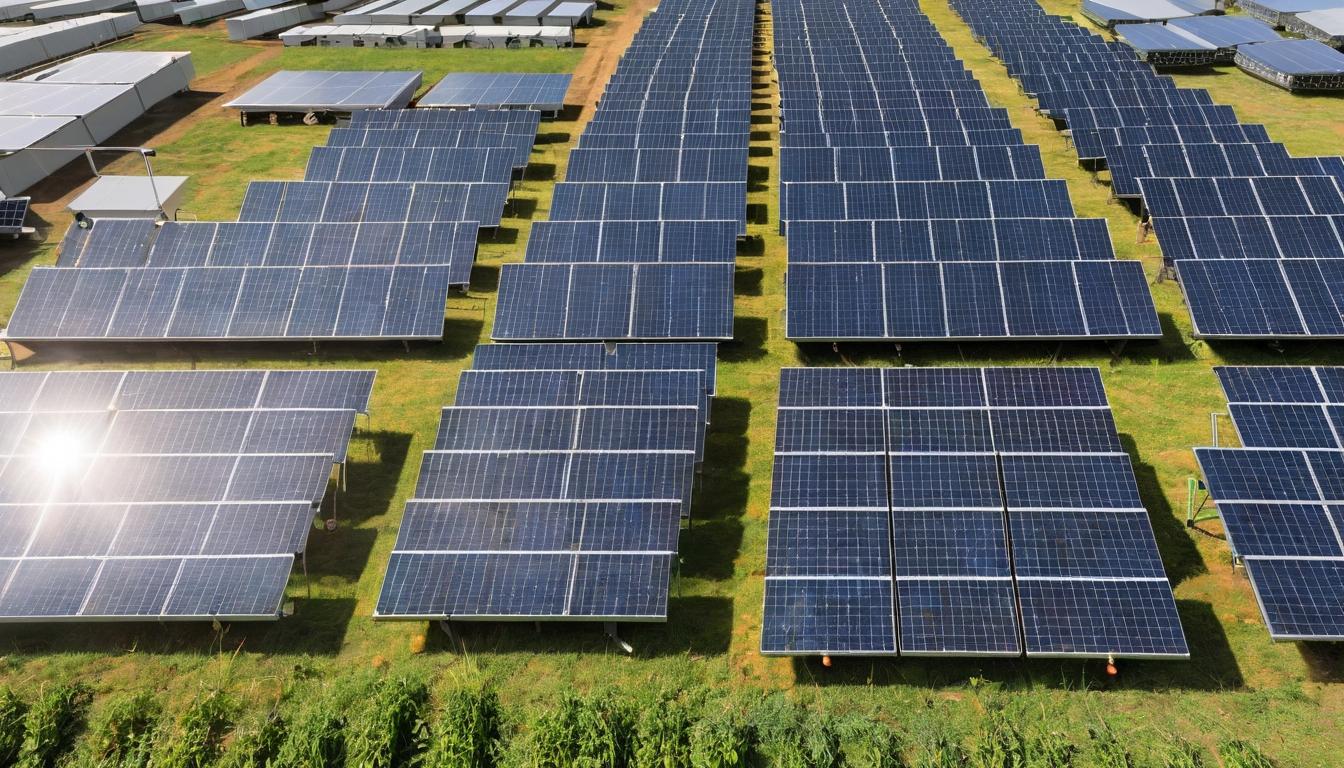
Walk through any suburban neighborhood today and you'll see them—gleaming solar panels perched on rooftops like technological sentinels. But what happens when these sentinels retire? The solar industry has quietly created a ticking time bomb of waste that could undermine its green credentials. While manufacturers tout 25-year warranties, few homeowners realize those panels will eventually need replacement, creating a wave of electronic waste that could reach 78 million metric tons by 2050.
Enterprising companies are now developing recycling methods that recover up to 95% of panel materials, but the economics remain challenging. Unlike aluminum cans or glass bottles, solar panels contain complex layers of silicon, silver, copper, and plastic that resist easy separation. The race is on to create cost-effective recycling before the first major wave of retired panels hits landfills.
Meanwhile, in communities from Brooklyn to Boulder, a different solar revolution is brewing—one that doesn't require owning a roof. Community solar gardens are sprouting up, allowing apartment dwellers and renters to buy shares in larger installations. These projects function like energy cooperatives, with participants receiving credits on their utility bills proportional to their investment. The model has proven particularly powerful in low-income neighborhoods where traditional solar adoption has lagged.
California's new mandate requiring solar panels on all new homes sounds like a victory for clean energy—until you consider the installation bottlenecks. Qualified solar installers are in such short supply that some projects face six-month delays. The industry's rapid growth has outpaced its workforce development, creating opportunities for vocational schools and apprenticeship programs that could transform the job market.
On the technological frontier, floating solar farms are turning reservoirs and lakes into power generators. These 'floatovoltaics' offer surprising advantages beyond saving land—the cooling effect of water boosts panel efficiency by up to 10%, while reducing evaporation from the reservoirs beneath them. From a winery in California using floating panels to power irrigation to a Singaporean reservoir hosting one of the world's largest floating arrays, this innovation demonstrates how creative siting can overcome land constraints.
The solar industry's supply chain reveals another layer of complexity. While China dominates panel manufacturing, new tariffs and trade policies are forcing companies to diversify. Vietnam, Malaysia, and even the United States are seeing increased investment in manufacturing facilities. This geographical shift isn't just about politics—it's about resilience. Companies that once relied on single sources are building redundant supply chains to weather trade storms.
Perhaps most intriguing is the convergence of solar with other technologies. Agri-voltaics—the practice of growing crops beneath raised solar panels—is yielding surprising results. Certain shade-tolerant plants actually thrive in the partial sunlight, while the panels benefit from the cooling effect of transpiration. In arid regions, this combination can reduce water evaporation by 30% while generating clean energy.
Storage remains the holy grail, and here too, innovation is accelerating. While lithium-ion batteries dominate headlines, flow batteries using iron or zinc are emerging as alternatives for large-scale storage. These systems can discharge power for longer periods at lower cost, making them ideal for smoothing out solar generation across multiple days of cloudy weather.
The financial landscape is shifting beneath all these technologies. Solar power purchase agreements (PPAs) are becoming more sophisticated, with some now including performance guarantees and maintenance provisions that transfer risk from homeowners to providers. This evolution in financing is making solar accessible to households that previously found the upfront costs prohibitive.
What emerges from these interconnected developments is a picture of an industry maturing beyond simple panel installations. The solar revolution is no longer just about putting rectangles on roofs—it's about integrating energy generation with waste management, community development, agricultural innovation, and financial creativity. The panels themselves are becoming just one component in a complex ecosystem of sustainability.
As this ecosystem evolves, regulatory frameworks struggle to keep pace. Zoning laws written before floating solar existed, building codes that don't account for panel recycling, and utility regulations designed for centralized power generation all create friction points. The most successful solar markets will be those where policymakers work collaboratively with innovators to remove these barriers.
Looking forward, the most significant breakthroughs may come from unexpected intersections. Imagine solar panels that double as rainwater collectors, or community solar projects that fund local microgrids for resilience during outages. The technology has moved beyond its niche to become a platform for broader social and environmental innovation—if we're clever enough to connect the dots.
The solar revolution's hidden battleground: How recycling, community power, and floating panels are reshaping our energy future