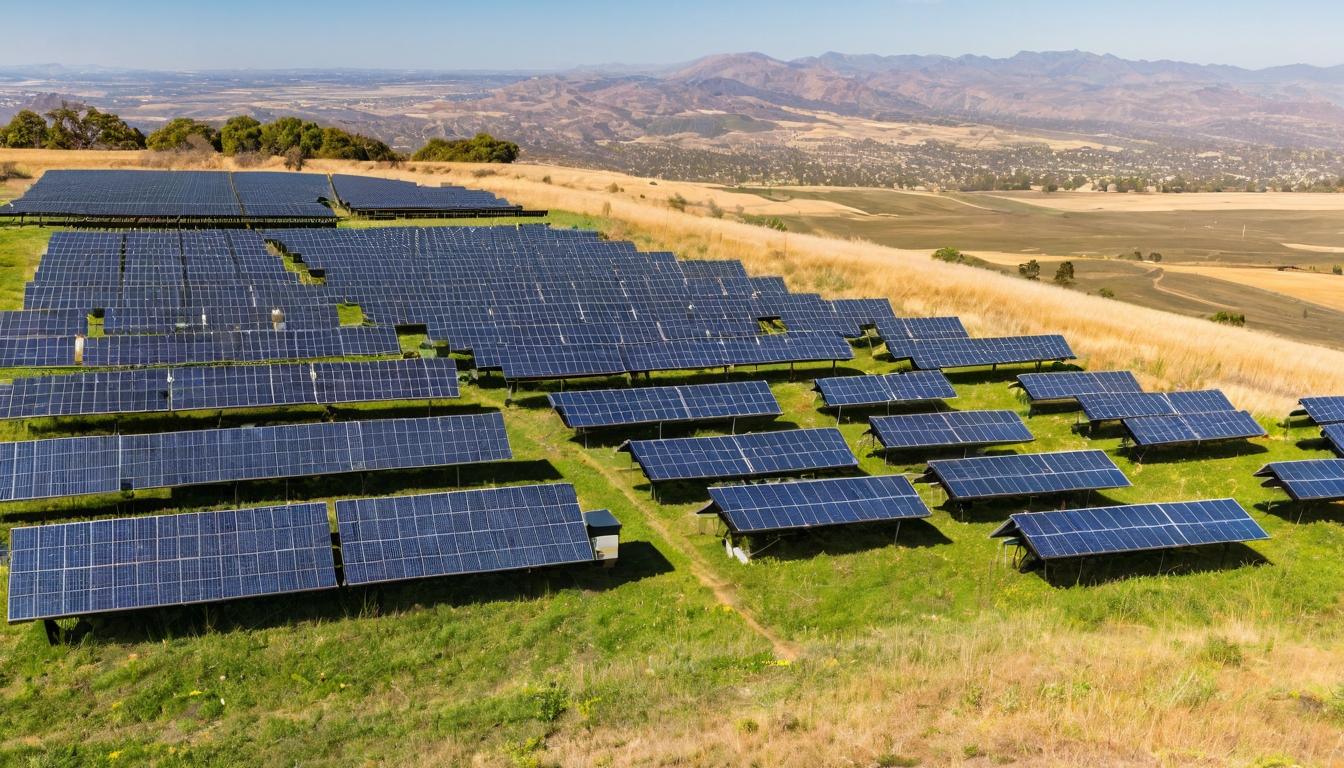
Walk through any solar farm today, and you'll see rows of gleaming panels harvesting sunlight. What you won't see are the complex battles being fought behind the scenes—battles that will determine whether solar energy becomes truly sustainable or creates new environmental headaches. While most coverage focuses on falling prices and rising installations, three underreported stories are quietly reshaping the industry: the looming waste crisis, the rise of community solar, and artificial intelligence's infiltration of every panel.
Let's start with the dirty secret no one wants to discuss. By 2050, the world will face 78 million metric tons of solar panel waste according to recent studies. That's enough to fill over 3,000 Olympic-sized swimming pools with discarded silicon and glass. The industry's rapid growth—global installations increased 22% last year alone—has created a ticking time bomb. Most panels have a 25-30 year lifespan, meaning the first massive wave of decommissioned units is just beginning to hit recycling facilities that don't yet exist at scale.
Innovators are racing against this clock. Companies like SolarCycle and First Solar are developing proprietary recycling methods that recover up to 95% of materials, including silver, silicon, and aluminum. But here's the catch: current recycling costs often exceed the value of recovered materials. Without regulatory pressure or economic incentives, the business case remains shaky. Europe's extended producer responsibility laws, which make manufacturers responsible for end-of-life panels, haven't gained traction in the U.S. Meanwhile, thousands of aging panels risk ending up in landfills where toxic elements like lead and cadmium could leach into groundwater.
While recycling struggles to scale, another revolution is happening at the community level. Community solar—projects where multiple subscribers share the benefits of a single solar array—grew 121% in 2023. This isn't just another green trend; it's solving solar's fundamental accessibility problem. Nearly half of American households can't install rooftop panels because they rent, live in multi-unit buildings, or have shaded roofs. Community solar changes that math completely.
Take the story of Minneapolis, where a 1.1-megawatt community solar garden powers 200 low-income households at 20% below utility rates. Or Maryland's program that reserves 30% of community solar capacity for low-to-moderate income subscribers. These projects aren't just about clean electrons—they're about energy justice. Subscribers typically save 10-15% on electricity bills without any upfront costs, creating what analysts call the 'democratization of solar.' The model has become so successful that 22 states now have enabling legislation, with another 12 considering bills this session.
Beneath both these stories runs a third, more subtle transformation: artificial intelligence is becoming solar's invisible nervous system. Forget clunky monitoring systems that simply tell you when a panel fails. Today's AI platforms predict failures weeks in advance, optimize cleaning schedules based on weather patterns, and even adjust panel angles in real-time to capture scattered light during cloudy days. One California farm using AI-driven tracking increased output by 8%—enough to power an additional 400 homes annually.
But the most fascinating application might be what's happening before panels even leave the factory. Machine learning algorithms now analyze production line data to identify microscopic defects in solar cells that human inspectors would miss. These same systems optimize supply chains, predicting material shortages months in advance. During last year's polysilicon crunch, AI-enabled manufacturers maintained production while competitors scrambled. The technology has become so integral that some analysts estimate AI will contribute to 15% of solar efficiency gains over the next decade.
What ties these three threads together? They represent solar's transition from a simple technology story to a complex ecosystem narrative. The industry can no longer just measure success in gigawatts installed; it must account for circular economies, social equity, and digital integration. As one veteran installer told me, 'We used to sell panels. Now we're selling resilience, community, and intelligence.'
The challenges are significant. Recycling infrastructure needs massive investment. Community solar requires navigating Byzantine utility regulations. AI systems demand robust cybersecurity as grids become more connected. But the solutions emerging—from robotic panel disassembly to blockchain-enabled energy sharing to predictive maintenance algorithms—suggest an industry maturing in unexpected ways.
Perhaps the most telling development is who's paying attention. Traditional energy giants, once dismissive of solar as a niche player, are now acquiring recycling startups and community solar developers. Private equity firms poured $3.2 billion into solar software companies last year alone. Even fossil fuel companies are repositioning themselves as 'energy transition' specialists, with several launching solar recycling divisions.
What does this mean for the average person considering solar? Look beyond the price-per-watt quotes. Ask installers about panel recyclability. Investigate community solar options if rooftop doesn't work. Inquire about monitoring systems—are they using basic reporting or predictive AI? The choices consumers make today will shape which of these behind-the-scenes battles are won or lost.
Solar energy's next chapter won't be written in boardrooms or laboratories alone. It will be written at recycling facilities struggling to scale, in community meetings debating energy equity, and in server farms processing petabytes of performance data. The panels themselves are becoming almost secondary to the systems that sustain, distribute, and optimize them. After decades of focusing on making solar cheaper, the industry is finally asking harder questions: What happens after the panels stop working? Who really benefits? And how do we make every photon count?
The solar revolution's hidden battleground: How recycling, community power, and AI are reshaping clean energy