While headlines obsess over solar panel tariffs and gigawatt installations, a quieter revolution is unfolding in the shadows of America's energy transition. It's not about how many panels we install, but how we integrate them into a grid that wasn't built for their intermittent nature. Across the country, utilities, startups, and homeowners are wrestling with a fundamental question: What happens when the sun doesn't shine on our solar dreams?
Walk through any new housing development in California or Texas, and you'll see the familiar shimmer of photovoltaic arrays. But look closer. Those panels are increasingly connected to batteries the size of small refrigerators—home energy storage systems that turn solar from a daytime supplement into a 24-hour power source. Companies like Tesla, Enphase, and LG are in a quiet arms race to make these systems affordable, while utilities watch nervously as customers become less dependent on the traditional grid.
This shift creates strange bedfellows. In Vermont, Green Mountain Power actually pays customers to install Tesla Powerwalls, creating a virtual power plant the utility can tap during peak demand. In Hawaii, where electricity costs are astronomical, solar-plus-storage has become the default for new homes. The economics are simple: Why pay 30 cents per kilowatt-hour when you can produce and store your own for half that?
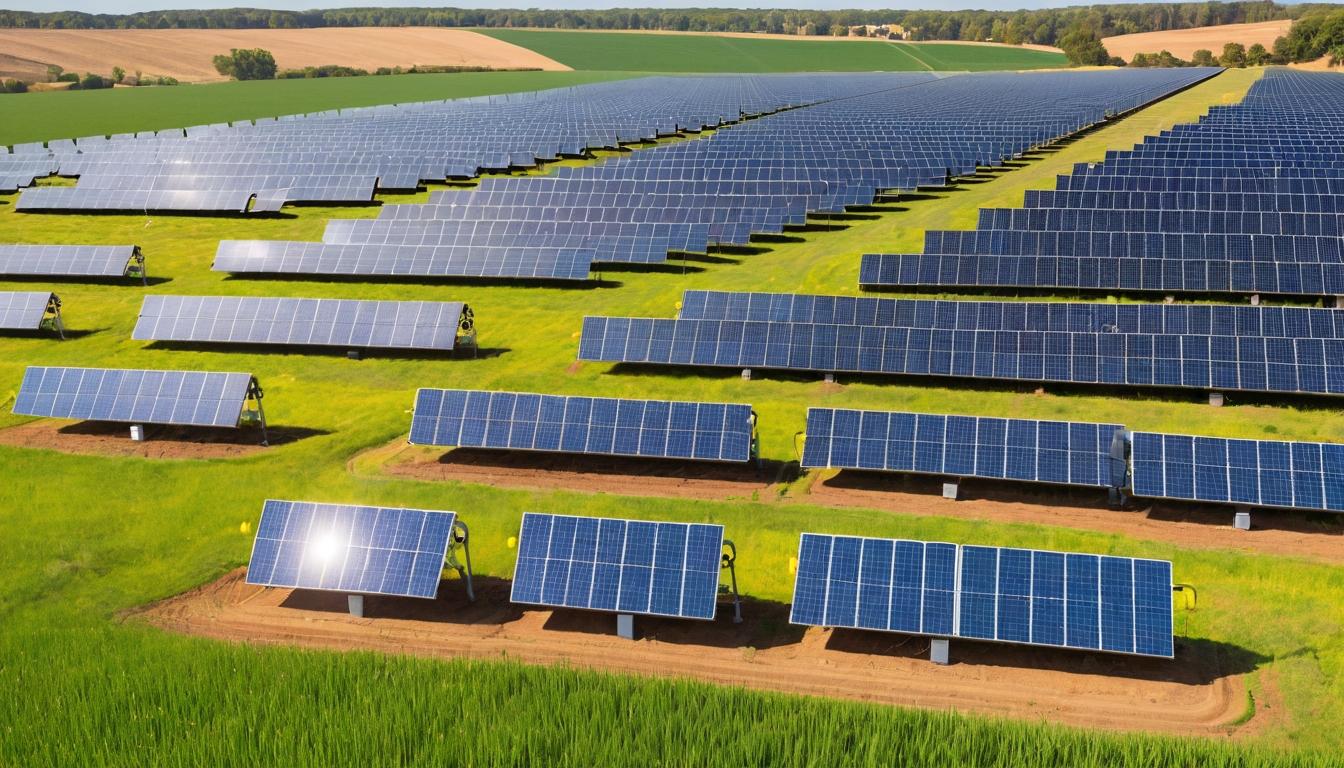
But the real action isn't in backyards—it's in boardrooms and research labs. Perovskite solar cells, once laboratory curiosities, are nearing commercial viability with efficiencies challenging traditional silicon. Meanwhile, 'agrivoltaics'—farming under raised solar panels—is turning Midwest fields into dual-purpose energy and food producers. In Massachusetts, cranberry bogs shaded by solar arrays yield better berries while generating power.
Financing this revolution has spawned its own ecosystem. Solar-as-a-service models mean homeowners can go solar with no upfront costs, while commercial 'power purchase agreements' let companies lock in energy prices for decades. The Inflation Reduction Act's tax credits have created a gold rush, but also confusion—installers report clients struggling to navigate the complex web of federal, state, and local incentives.
Perhaps most surprisingly, America's solar boom is reshaping global supply chains. While China dominates panel manufacturing, U.S. companies are finding niches in specialized components: microinverters that optimize each panel's output, racking systems that withstand hurricanes, and software that manages entire fleets of distributed energy resources. In Georgia, a South Korean company just opened the Western Hemisphere's largest solar manufacturing facility—not for panels, but for the polysilicon that goes into them.
Yet challenges loom like storm clouds. Interconnection queues—the process for connecting solar projects to the grid—stretch for years in some states. Arizona recently paused new connections in certain areas because the grid couldn't handle more solar. Meanwhile, debates rage over 'net metering' policies that determine how much utilities pay for excess solar power, with battles playing out in state capitals from California to Florida.
The human stories reveal the revolution's complexity. In Puerto Rico, solar microgrids built after Hurricane Maria are now community assets that keep lights on during regular outages. In Appalachian coal country, former miners are training to install solar panels on reclaimed strip mines. And in suburban neighborhoods, tensions simmer between solar adopters and neighbors who complain about 'visual pollution'—leading to surprisingly heated homeowners association meetings.
What emerges is a picture far more nuanced than simple 'solar good, fossil fuels bad.' It's about grid architecture, battery chemistry, utility business models, agricultural innovation, and financial engineering. The panels themselves are becoming commodities; the intelligence behind them—how they're integrated, managed, and financed—is where the real value and drama reside.
As sunset approaches on fossil fuel dominance, America's solar revolution isn't just changing where we get our electrons. It's redefining relationships between utilities and customers, creating new geopolitical dependencies, and forcing us to reimagine everything from farm fields to financial instruments. The panels are visible, but the truly transformative work happens where sunlight doesn't reach: in battery cells, software code, and the fine print of power contracts.
The solar revolution's hidden battleground: Beyond panels and politics