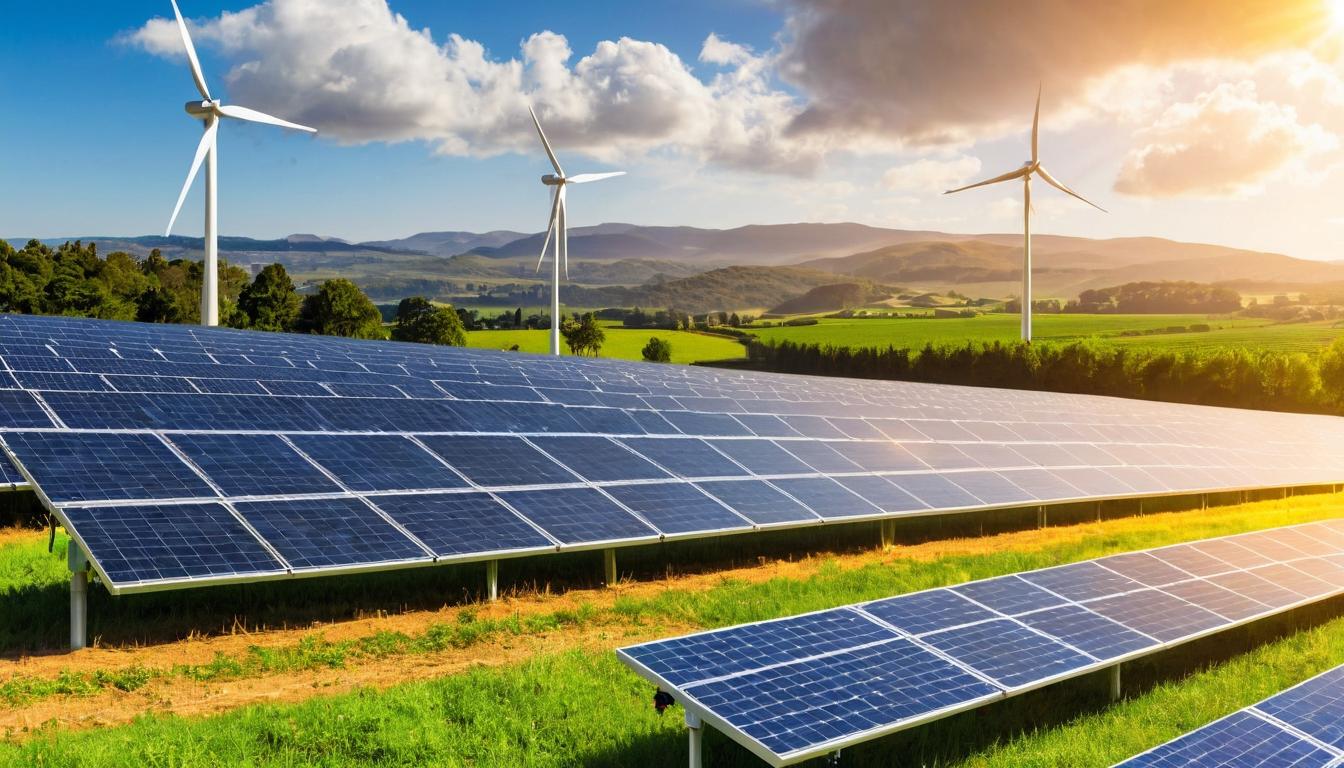
While most eyes remain fixed on rooftop installations and utility-scale solar farms, a quieter revolution is unfolding in laboratories, boardrooms, and even agricultural fields. This isn't just about generating electrons anymore—it's about reimagining how energy integrates with every aspect of our lives. The solar industry has matured beyond its adolescence, and the growing pains are giving way to sophisticated innovations that few saw coming just five years ago.
Walk through any modern research facility, and you'll find scientists experimenting with materials that would make traditional silicon panels blush. Perovskite solar cells, once fragile and short-lived, are now achieving commercial-scale durability while maintaining their astonishing efficiency gains. Meanwhile, tandem cells—stacking different materials to capture more of the solar spectrum—are breaking efficiency records monthly. What's remarkable isn't just the technology itself, but how quickly it's moving from lab benches to production lines. The solar panels of 2028 won't just be cheaper; they'll be fundamentally different organisms.
This technological leap coincides with a financial transformation that's equally profound. Solar-plus-storage projects are no longer exotic experiments but standard offerings in competitive markets. The economics have flipped so dramatically that in some regions, building new solar with batteries now beats operating existing fossil fuel plants. This isn't theoretical—it's happening in real-time procurement auctions where solar-storage hybrids consistently underbid natural gas peaker plants. The implications ripple through utility planning departments, where decades-old assumptions about grid stability are being rewritten overnight.
Perhaps the most unexpected development is solar's expanding role in agriculture. Agrivoltaics—the marriage of solar panels and crop production—is moving beyond niche demonstrations to commercial-scale operations. Researchers have discovered that certain crops actually thrive under partial shade from elevated panels, requiring less water while maintaining yields. Farmers are discovering dual revenue streams: electricity sales alongside traditional harvests. In drought-prone regions, this water conservation benefit might ultimately prove more valuable than the electricity itself.
Meanwhile, the recycling challenge that once loomed as solar's environmental Achilles heel is transforming into an economic opportunity. Early-generation panels are now reaching end-of-life in meaningful numbers, and innovative companies are developing processes to recover not just glass and aluminum, but the valuable silicon, silver, and copper inside. What was once considered waste is becoming feedstock for new panels, creating circular economies that reduce mining demands and manufacturing costs simultaneously.
The workforce story contains similar surprises. While installation jobs continue growing, the real expansion is happening in less visible roles: cybersecurity specialists protecting smart inverters, data scientists optimizing fleet performance, and material scientists developing next-generation technologies. Solar is no longer just a construction trade—it's becoming a technology sector with diverse career paths that barely existed a decade ago.
International trade patterns tell another chapter of this evolving story. The supply chain diversification away from single-country dominance is creating resilient networks that can withstand geopolitical shocks. Manufacturing is spreading across continents, with each region developing specialties rather than trying to control entire production processes. This decentralization makes the global solar industry more robust even as it becomes more interconnected.
What emerges from these interconnected developments is a picture of an industry hitting its stride. The frantic growth of solar's teenage years has settled into confident maturity. Challenges remain—grid integration, permitting bottlenecks, and ensuring equitable access—but the fundamental trajectory is clear. Solar is no longer an alternative energy source; it's becoming the backbone of modern energy systems, quietly reshaping everything from how we farm to how we finance infrastructure.
The most exciting developments might be those we haven't anticipated yet. As solar continues its descent down the cost curve and ascent up the innovation curve, it will likely spawn applications we can't currently imagine. The panels on rooftops and in fields are just the most visible manifestation of a much deeper transformation—one that's rewiring our relationship with energy itself.
The quiet revolution: how solar energy is reshaping our world beyond panels