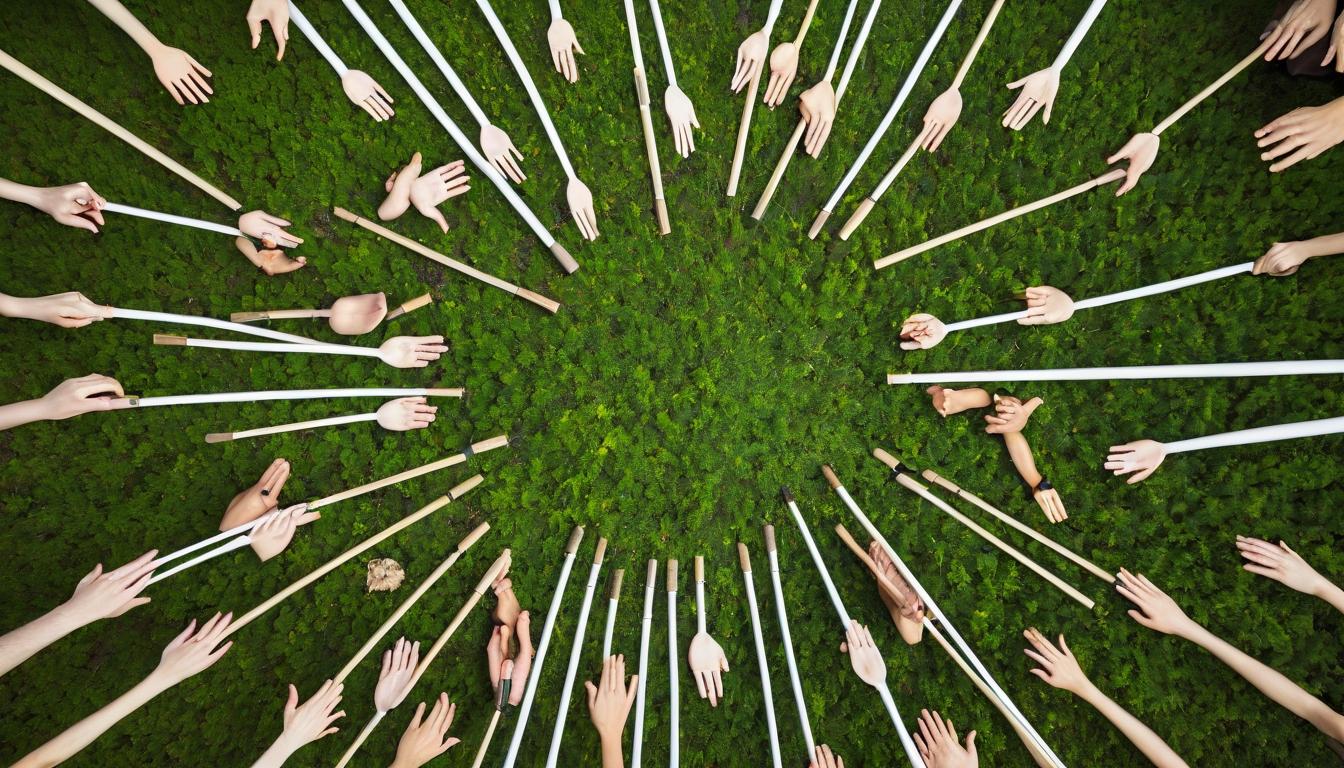
In the quiet corners of our hyper-connected world, a counter-movement is gaining momentum. While algorithms dictate our attention spans and notifications fracture our focus, millions are turning toward practices that predate electricity. This isn't about rejecting technology, but about reclaiming a fundamental human capacity that our digital environment systematically erodes: the ability to simply be present.
From corporate boardrooms to college dormitories, meditation has shed its esoteric image to become a mainstream tool for mental clarity. Neuroscience now confirms what mystics have professed for millennia—consistent mindfulness practice physically alters brain structure, thickening the prefrontal cortex associated with decision-making while calming the amygdala, our primal fear center. The implications extend beyond stress reduction into enhanced creativity and emotional resilience.
Parallel to this mental revolution runs a physical awakening. Yoga studios have proliferated, but the deeper story isn't about physical flexibility—it's about somatic intelligence. Practitioners report developing what some call 'body literacy,' an attunement to subtle sensations and energy flows that Western medicine has largely ignored. This embodied wisdom challenges the Cartesian mind-body dualism that has dominated Western thought for centuries.
Meanwhile, a quiet rebellion against synthetic living is unfolding in our relationship with nature. Forest bathing, derived from the Japanese practice of shinrin-yoku, has demonstrated measurable physiological benefits including reduced cortisol levels and boosted immune function. The science suggests what indigenous cultures always knew: we're not just in nature, we are nature, and separation from our ecological matrix creates a kind of existential malnutrition.
Perhaps most intriguing is the resurgence of dreamwork and lunar awareness. In an era obsessed with solar consciousness—productivity, achievement, outward expression—many are rediscovering the nocturnal wisdom of the subconscious. Dream journals are replacing productivity apps in some circles, while menstrual cycle awareness (applicable to all genders in tracking energy patterns) offers an alternative to the relentless linear timeline of industrial timekeeping.
This movement's most radical aspect might be its quiet democratization of spirituality. Gone are the days when mystical experiences required gurus or remote ashrams. Through apps, online communities, and accessible literature, people are constructing personalized spiritual frameworks that blend Buddhist mindfulness with quantum physics, Stoic philosophy with energy healing. It's a bricolage approach to transcendence that reflects our interconnected digital reality while seeking what lies beyond it.
The unifying thread isn't dogma but direct experience—what William James called the 'personal religion' of firsthand encounter rather than secondhand belief. In an age of information overload, the premium has shifted from knowing more to experiencing deeper. The silent revolution isn't spreading through manifestos or protests, but through individual moments of pause, breath, and reconnection that collectively form a cultural course correction toward what makes us fundamentally human.
The silent revolution: how ancient practices are rewiring modern minds