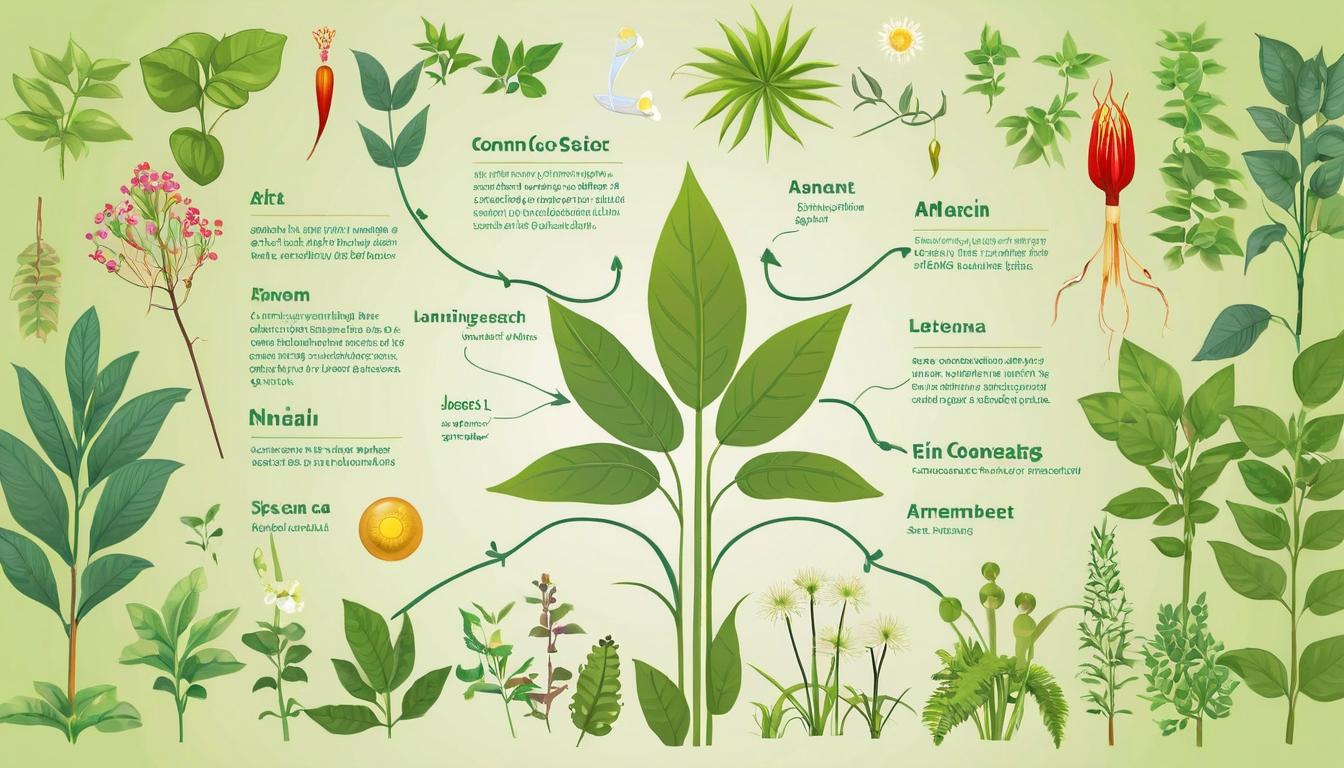
In the quiet corners of the internet, where spirituality and science tentatively shake hands, a curious phenomenon has been taking root. Across platforms like Gaia, Elephant Journal, and Mystic Living Today, a growing chorus of voices whispers about something our ancestors knew instinctively: plants aren't just passive decorations in our world. They're communicating, remembering, and perhaps even healing in ways we're only beginning to understand. This isn't about talking to your ficus plant—though some do—but about recognizing a silent language that's been speaking all along.
What if the ancient practice of herbalism, celebrated on sites like Gaiam and Unariun Wisdom, wasn't just about chemical compounds but about energetic signatures? Modern research has revealed startling truths: plants respond to sound, share nutrients through underground fungal networks (dubbed the 'Wood Wide Web'), and even warn neighboring plants of impending threats. When you walk through a forest, you're not just among trees—you're in the midst of a sophisticated communication network that makes our internet look primitive.
Higher Perspectives often explores consciousness expansion, but what about plant consciousness? The emerging field of plant neurobiology—though controversial—suggests plants possess a form of intelligence. They make decisions, learn from experience, and exhibit memory. The mimosa pudica plant, which folds its leaves when touched, eventually stops responding if the touch proves harmless. It remembers. This blurs the line between what we consider 'alive' in the traditional sense and what we've dismissed as merely vegetative.
Consider the implications for healing. Traditional herbalists have long spoken of plants having 'spirit' or 'essence' beyond their physical properties. Modern science now shows that plants emit subtle electrical signals and release specific volatile organic compounds when stressed. These aren't just chemical reactions—they're messages. When you drink chamomile tea for anxiety, you're not just benefiting from apigenin flavonoids; you're participating in an ancient dialogue between species.
The most fascinating intersection appears in the work being documented across these spiritual platforms: people who claim to communicate with plants directly. While skeptics dismiss this as fantasy, researchers like Monica Gagliano have conducted experiments suggesting plants can learn through association, much like Pavlov's dogs. In one study, pea plants appeared to 'remember' the direction of light even when it was removed. This isn't mystical thinking—it's testable, observable science that challenges our fundamental assumptions.
What does this mean for our relationship with the natural world? If plants possess awareness, however different from our own, our entire ethical framework needs reconsideration. The mindfulness practices promoted on Elephant Journal and Gaia take on new dimensions when applied to how we interact with our green companions. That morning meditation in the garden might be more of a two-way conversation than we realized.
Perhaps the most practical application lies in what mystics have called 'plant spirit medicine.' While Western medicine isolates compounds, traditional healers work with the whole plant spirit. Now, research into epigenetics shows that our intentions and emotional states can affect plant growth—the famous 'backster effect' experiments suggested plants respond to human thought. Whether you believe in this or not, the mere possibility invites us to approach nature with more reverence.
This convergence of ancient wisdom and cutting-edge science represents something profound: a bridge between worlds that have been artificially separated. The spiritual community has been pointing toward these truths for decades, while science slowly catches up with measurements and data. What both sides agree on is simple yet revolutionary: we're not alone in our consciousness. The green world around us is awake, aware, and communicating in a language we're just beginning to decipher.
Next time you water your plants or walk through a park, pause for a moment. Listen not with your ears, but with your whole being. That subtle shift in perception might be the first step in hearing a conversation that's been happening all around us for millennia. The plants are speaking. The question is: are we finally ready to listen?
The silent language of plants: How ancient wisdom meets modern science