You walk past them every day without noticing—the spiral staircase in your office building, the mandala on your coworker’s coffee mug, the geometric pattern on a subway tile. They seem like mere decoration, but what if they’re something more? Across the websites of Gaia, Elephant Journal, and other hubs of mystical exploration, a quiet conversation is unfolding about the symbols that shape our reality. These aren’t just pretty designs; they’re coded messages from our subconscious, echoes of ancient wisdom that continue to influence how we think, feel, and connect.
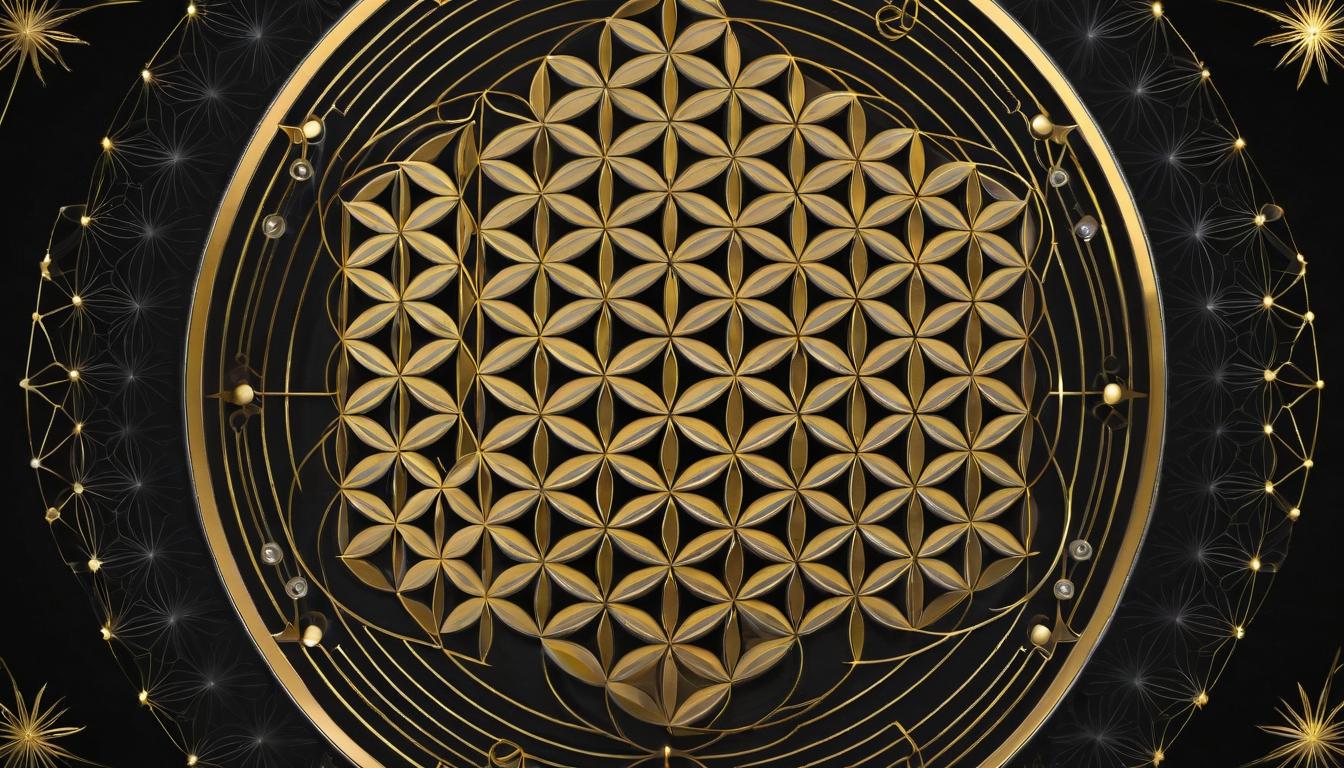
Dive into the labyrinth of sacred geometry, and you’ll find it’s more than a New Age trend. The Flower of Life, a pattern of overlapping circles found in temples from Egypt to China, isn’t just aesthetically pleasing—it’s a blueprint of creation itself. Researchers and mystics alike suggest this symbol encodes the fundamental forms of space and time. When you meditate on such patterns, you’re not just calming your mind; you’re tapping into a universal language that predates words. It’s like listening to a faint radio signal from the cosmos, one that hums with the secrets of existence.
But symbols aren’t confined to meditation cushions or yoga studios. They’re hiding in plain sight, influencing everything from architecture to advertising. Consider the spiral, a shape revered in cultures from Celtic to Native American traditions. It represents growth, evolution, and the journey inward. Today, you’ll find it in the design of smartphones and social media logos, subtly nudging us toward expansion and connectivity. Are tech giants secretly using ancient wisdom to captivate us? Or are we, as a species, instinctively drawn to these forms because they mirror the patterns of our own DNA and the galaxies above?
On platforms like Higher Perspectives and Unariun Wisdom, there’s a growing emphasis on personal symbology—the signs and synchronicities that appear uniquely in your life. Maybe you keep seeing repeating numbers like 11:11, or a certain animal crosses your path repeatedly. These aren’t coincidences; they’re the universe’s way of texting you. Learning to decode these messages can transform mundane moments into guided adventures, offering clues about your path and purpose. It’s like having a cosmic compass in your pocket, if only you learn to read it.
Yet, this isn’t about passive belief. Investigate like a journalist, and you’ll find surprising bridges between symbolism and science. Studies in psychology show that certain shapes can affect our emotions and cognition—circles evoke unity, while sharp angles trigger alertness. Meanwhile, quantum physics dances with ideas of interconnectedness that sound straight out of a mystic’s diary. The line between the empirical and the esoteric is blurring, suggesting that these symbols might be tools for navigating both inner and outer worlds.
So, next time you spot a symbol, pause. Look closer. Whether it’s a corporate logo or a doodle in your notebook, ask what it’s really saying. In a world flooded with information, these ancient patterns offer a silent, profound wisdom—if we’re willing to listen. They remind us that beneath the chaos of modern life, there’s an order, a rhythm, a hidden map waiting to be read. And perhaps, in decoding it, we might just find our way home.
The hidden patterns: how ancient symbols whisper in our modern lives