It begins with a crack in the sidewalk—a jagged line that, if you squint just right, resembles the branching veins of a leaf. Or the way morning frost crystallizes on your windowpane, forming geometric mandalas that vanish with the first rays of sun. These aren't mere accidents of physics; they're whispers from a world that speaks in symbols, patterns, and synchronicities. For centuries, mystics and sages have insisted that nature is the original sacred text, written not in words but in spirals, fractals, and recurring motifs. Today, a growing number of people are learning to read it.
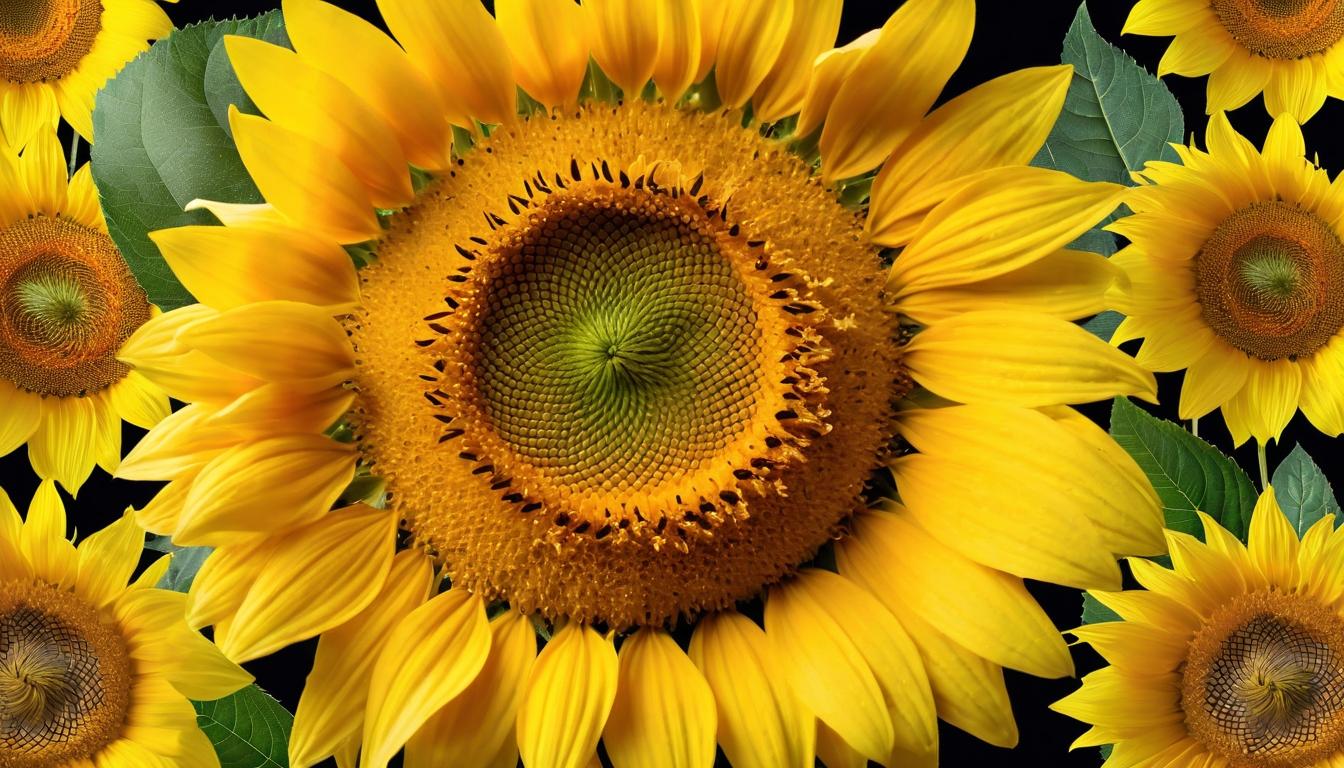
Consider the humble snail shell, its logarithmic spiral echoing the shape of distant galaxies. Or the Fibonacci sequence—a mathematical code found in sunflower seeds, pinecones, and hurricane formations. These patterns aren't just pretty coincidences; they're evidence of a fundamental order underpinning reality. Modern science calls it emergent phenomena or self-organization. Ancient traditions called it the fingerprint of the divine. Either way, the message is clear: the universe repeats itself, scaling its designs from the microscopic to the cosmic.
This language extends beyond the visual. Sound, too, carries hidden geometries. Cymatics—the study of visible sound vibrations—reveals that tones create intricate, symmetrical patterns in sand or water. Sacred chants, from Gregorian plainsong to Tibetan overtone singing, were designed not just for spiritual elevation but to literally reshape matter through resonance. When you hum or sing, you're not just producing noise; you're weaving invisible tapestries of vibration that interact with your environment in ways science is only beginning to understand.
Then there are the patterns of behavior—the migratory routes of birds aligned with magnetic fields, the collective intelligence of ant colonies, the uncanny timing of blooming flowers. These aren't robotic programs but expressions of a deep, intuitive wisdom embedded in living systems. Humans, too, possess this innate guidance. Ever had a gut feeling that proved eerily accurate? Or noticed repeating numbers—like 11:11 on clocks—during pivotal life moments? These synchronicities are nature's way of winking at you, offering signposts in a world that often feels chaotic.
Learning to decode this language requires a shift in perception. It means slowing down, observing without immediately labeling, and embracing ambiguity. Start by keeping a synchronicity journal. Note unusual patterns—a feather landing at your feet, a song lyric that answers a silent question, a dream image that manifests in waking life. Over time, you'll begin to see your personal symbology emerge, a unique dialect of the universal tongue.
Technology, ironically, can aid this ancient practice. Apps that track lunar phases, star alignments, or bird songs help bridge the gap between digital life and organic rhythms. Social media communities dedicated to pattern recognition—from cloud divination to ley line mapping—create spaces where intuitive insights can be shared and validated. The goal isn't to escape modernity but to weave its tools into a deeper engagement with the living world.
Ultimately, reading nature's hidden language isn't about acquiring secret knowledge. It's about remembering a skill we all possessed as children, when every dandelion was a wish and every shadow held a story. It's the practice of re-enchanting the ordinary, finding cosmos in the cracks. As you walk through your day, pause. Notice the way light filters through leaves, creating moving mosaics on the ground. Listen to the rhythm of rain. Feel the texture of tree bark. In these moments, you're not just observing—you're conversing. And the world has so much to say.
The hidden language of nature: decoding patterns in the mundane