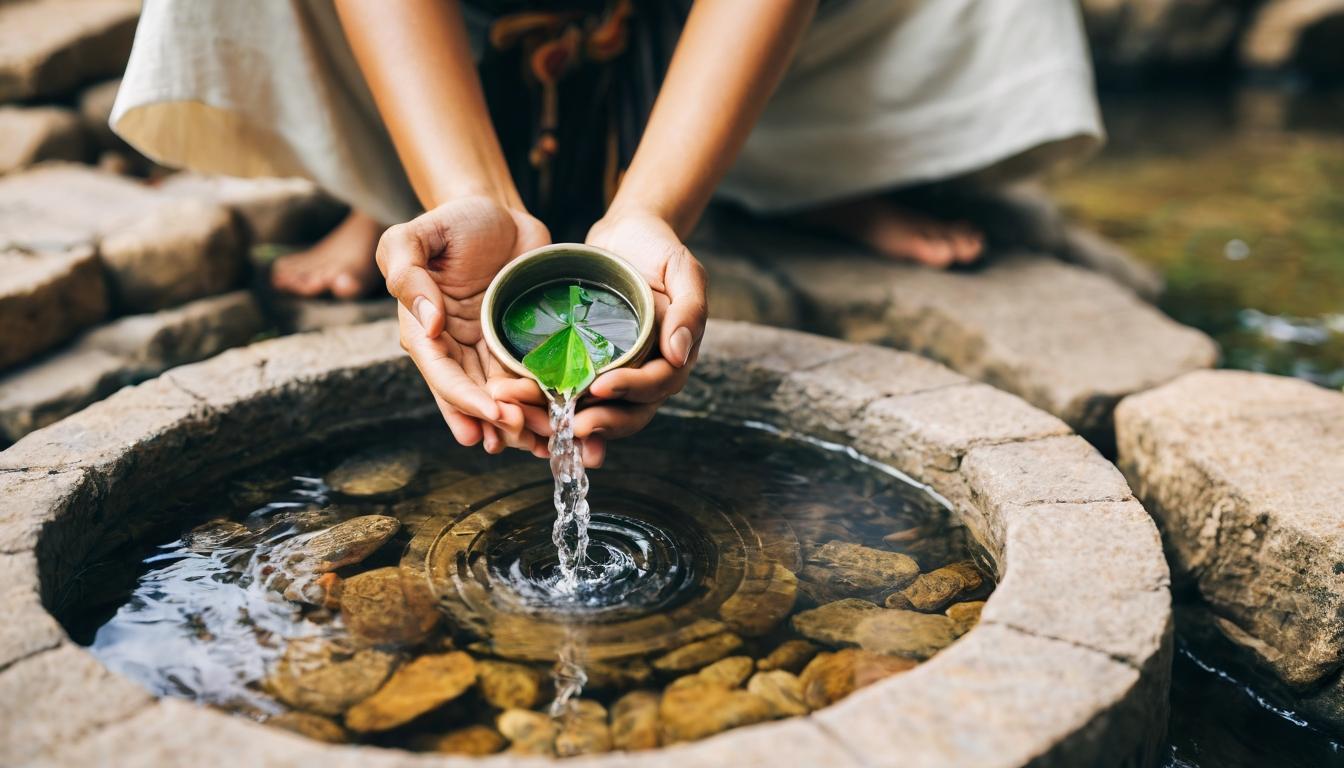
In the quiet corners of the internet where spirituality and science dance, a curious pattern emerges. Across platforms like Gaia, Elephant Journal, and Mystic Living Today, there's a growing whisper about something elemental yet overlooked: water's forgotten role in mystical traditions. This isn't about hydration tips or crystal-infused bottles—it's about how ancient cultures from the Druids to Taoist masters viewed water as a living library of consciousness, a concept that's resurfacing in surprising ways.
What makes this revival particularly fascinating is how it's bridging divides. On Higher Perspectives and Unariun Wisdom, you'll find discussions about Japanese researcher Masaru Emoto's controversial water crystal experiments alongside indigenous teachings about sacred springs. While mainstream science remains skeptical about water's 'memory,' practitioners are creating new rituals—from moon-charged water ceremonies to sound baths specifically designed to restructure water's molecular arrangement. The common thread? A belief that since our bodies are mostly water, aligning with its natural intelligence might hold keys to wellbeing we've neglected.
Meanwhile, at the intersection of ecology and spirituality, something practical is brewing. Gaiam and similar platforms showcase how communities are reviving water blessing traditions not as superstition, but as psychological tools for environmental activism. When people perform ceremonies for polluted rivers, they're not just praying—they're creating emotional connections that translate into conservation efforts. This psychological shift represents what some researchers call 'eco-spirituality,' where reverence becomes a catalyst for action rather than passive belief.
Perhaps most intriguing is water's emerging role in digital-age mysticism. As meditation apps proliferate, developers are incorporating water sounds not just for relaxation, but based on specific frequency research. Certain Tibetan bowl recordings, for instance, are engineered to mimic the resonant frequencies found in natural waterfalls—frequencies that preliminary studies suggest might affect brainwave patterns. It's a modern twist on ancient practices where technology becomes a conduit for elemental connection rather than a barrier to it.
What does this mean for everyday seekers? The water wisdom movement suggests small but profound shifts: drinking with intention rather than distraction, noticing how different water sources affect mood and energy, and reconsidering water as a partner in consciousness rather than just a resource. As climate change threatens water security globally, this spiritual perspective might offer more than personal insight—it could reshape how we value what flows through our bodies and our world.
The hidden currents: how ancient water wisdom is reshaping modern spirituality