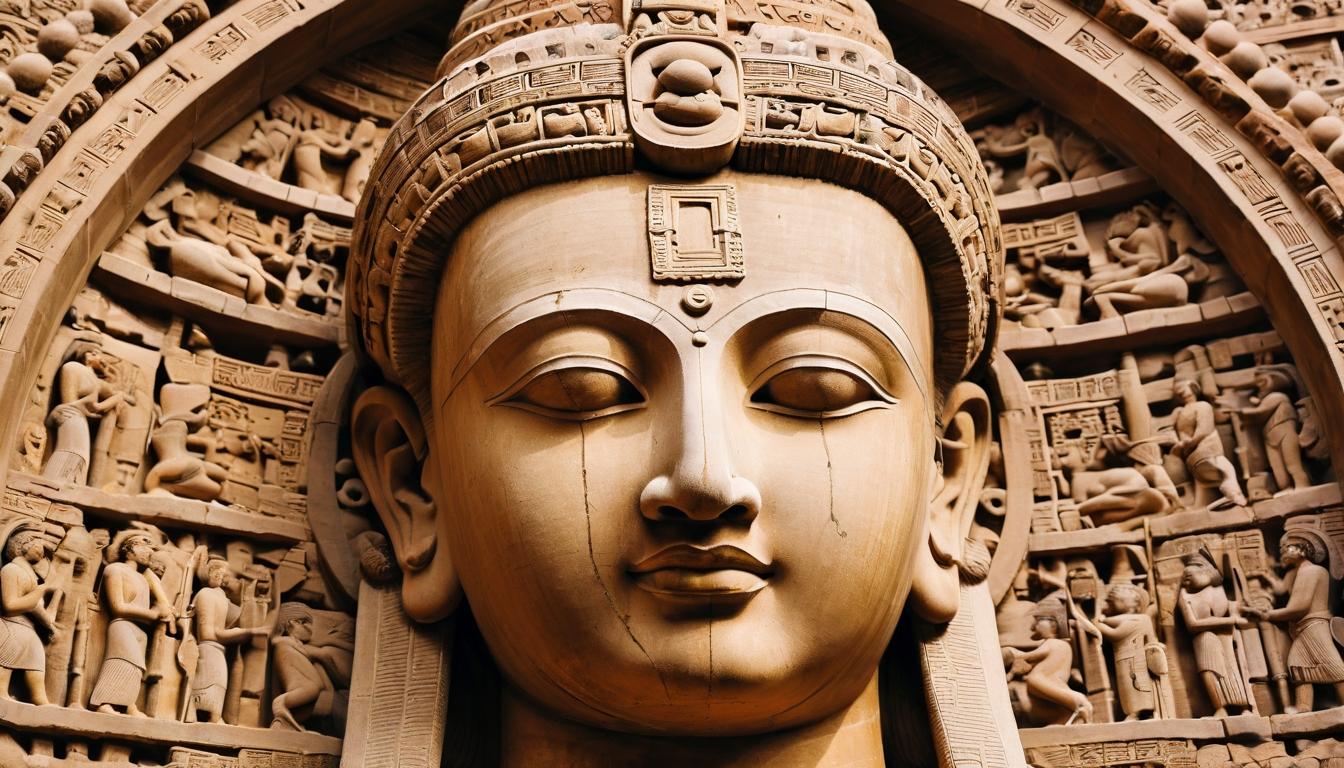
In the quiet corners of the internet, a subtle revolution is unfolding. While mainstream media focuses on political dramas and celebrity scandals, millions are quietly exploring something deeper—ancient wisdom repackaged for the digital age. What began as niche interests in yoga mats and meditation apps has evolved into a full-blown cultural shift, one that traditional institutions are only beginning to notice.
Walk into any bookstore today, and you'll find entire sections dedicated to topics that were once relegated to occult shops. Crystals sit beside best-selling memoirs, tarot decks share shelf space with business strategy guides. This isn't just merchandising—it's evidence of a profound hunger for meaning that conventional religion and science have failed to satisfy. People aren't abandoning rationality; they're expanding their definition of what's possible.
The most fascinating development isn't the popularity of these practices, but their democratization. Where once esoteric knowledge required initiation into secret societies or expensive retreats, now anyone with an internet connection can access teachings from Tibetan monks, Amazonian shamans, and quantum physicists. This accessibility has created a fascinating paradox: as spiritual practices become more mainstream, they're simultaneously becoming more personalized and eclectic.
Technology plays a curious dual role in this transformation. On one hand, our screens contribute to the distraction and disconnection that drive people toward spirituality. On the other, those same devices provide platforms for global communities of seekers. Meditation apps track biometric data while promising transcendence. Social media influencers share "energy-clearing" techniques between makeup tutorials. The boundary between the mystical and the mundane has never been blurrier.
What often gets missed in discussions about modern spirituality is its practical dimension. This isn't about escaping reality, but engaging with it more skillfully. The executive who uses breathwork before board meetings, the parent who employs mindfulness during toddler tantrums, the artist who consults astrology not to predict the future but to understand creative cycles—these are the real faces of today's spiritual exploration. They're not retreating from the world; they're seeking tools to navigate it with greater resilience and insight.
Critics dismiss this trend as superficial consumerism, and certainly, there's no shortage of expensive wellness products and questionable gurus. But beneath the commercial surface flows a genuine current of inquiry. People are asking ancient questions with modern urgency: How do I find purpose in a chaotic world? What does it mean to live well when traditional structures are crumbling? Can science and spirituality inform each other rather than conflict?
The answers emerging are as diverse as the seekers themselves. Some find solace in revived earth-based traditions, recognizing that ecological crisis requires not just political solutions but spiritual reconnection to the natural world. Others explore consciousness through the lens of neuroscience, seeking the biological underpinnings of mystical experience. Many simply piece together practices that work—a little yoga here, some dream journaling there, perhaps a community ritual borrowed from a culture not their own.
This eclectic approach troubles purists who worry about cultural appropriation or dilution of traditions. Their concerns are valid, yet there's something undeniably creative happening in this spiritual cross-pollination. Just as cuisine evolves through ingredient exchange, spiritual understanding grows when traditions converse. The challenge lies in honoring roots while allowing growth, respecting origins while acknowledging that wisdom belongs to humanity, not just to specific cultures.
Perhaps the most significant shift is the move from external authority to internal knowing. The modern seeker may consult teachers and texts, but the ultimate arbiter of truth is personal experience. Does this practice make me more compassionate? Does this perspective help me face suffering with courage? Does this understanding connect me to something larger than myself? These are the new criteria for spiritual validity.
As this movement grows, it's beginning to influence unexpected domains. Corporate wellness programs incorporate mindfulness, medical research explores prayer's healing potential, urban planners consider sacred geometry in public spaces. The mystical isn't staying in its designated corner; it's seeping into architecture, education, healthcare, and business.
What emerges from all this isn't a unified new religion, but something more fluid—a shared recognition that reality might be richer than our instruments can measure, that consciousness might be more fundamental than matter, that the ancient human quest for meaning remains urgent in our technological age. The tools and frameworks change, but the essential questions endure, asked now with the vocabulary of neuroscience alongside that of mysticism, with apps alongside altars, with both skepticism and wonder.
This isn't a retreat from modernity, but an attempt to humanize it. In a world of algorithms and automation, people are seeking what machines cannot provide—connection, meaning, transcendence. They're finding it not by rejecting science, but by asking it bigger questions. Not by abandoning tradition, but by engaging it more critically. Not through blind faith, but through curious exploration. The revolution is quiet, but its implications echo through every aspect of contemporary life.
The hidden currents: exploring the unseen forces shaping modern spirituality