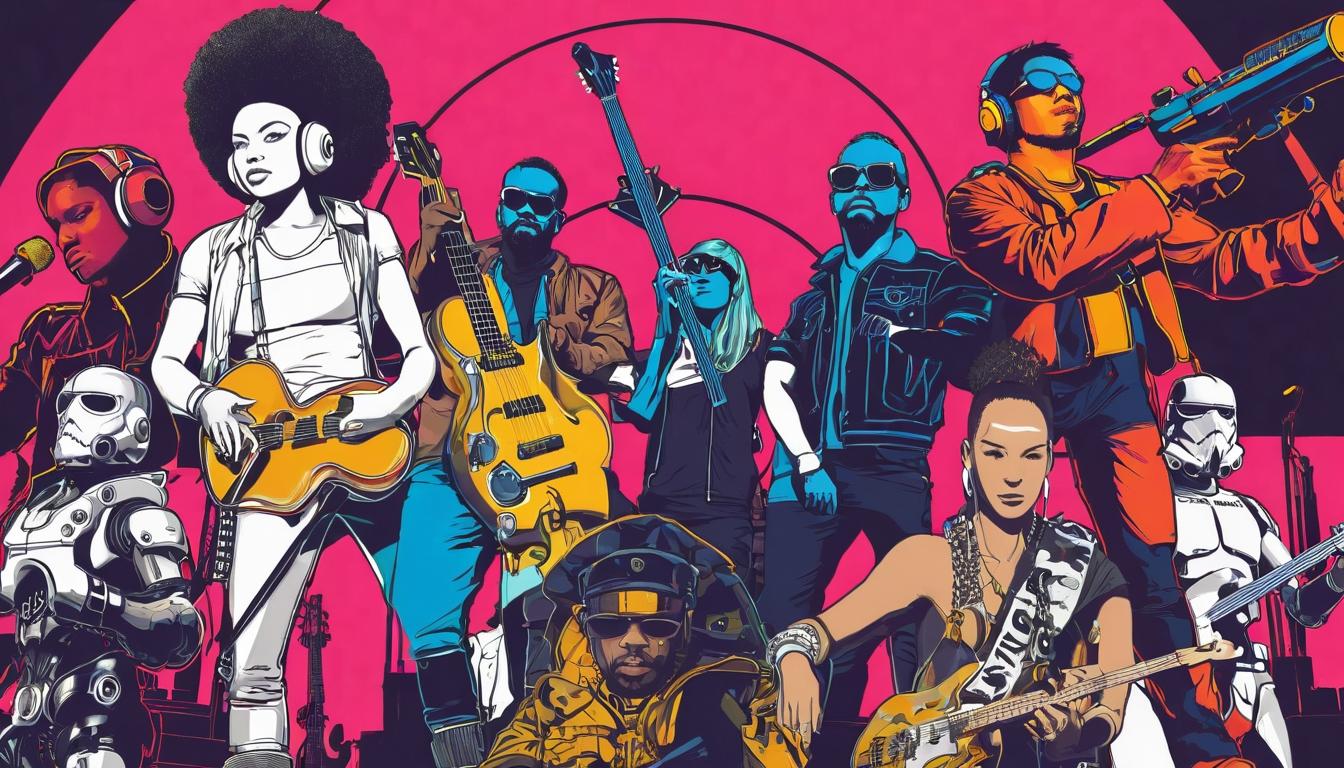
While mainstream charts recycle familiar formulas, a seismic shift is happening just beneath the surface. The music industry's traditional gatekeepers—major labels, radio programmers, even established music publications—are losing their grip on what defines the cutting edge. In basements, Discord servers, and DIY studios, artists are building audiences without asking permission, creating sounds that feel both futuristic and deeply human.
Hyperpop, once hailed as pop's disruptive future, has entered its baroque period. The genre that blended bubblegum melodies with industrial noise and video game soundtracks now feels strangely institutionalized. Major label signings have smoothed its edges, while the online communities that birthed it have fragmented. Yet from its ashes, something more interesting is emerging: artists like underscores and Jane Remover are creating what some call 'post-hyperpop'—music that retains digital experimentation while embracing organic instrumentation and emotional vulnerability that the genre's early iterations often lacked.
Meanwhile, in cities from Lagos to Seoul, artists are bypassing Western validation entirely. The 'global pop' narrative has shifted from seeking crossover success to creating self-sustaining ecosystems. Nigerian artists aren't just aiming for Afrobeats hits; they're blending Fuji music with drill, creating hybrid genres that speak directly to local audiences while attracting international curiosity. K-pop's fourth generation has moved beyond polished perfection, with groups like NewJeans incorporating UK garage and ambient sounds that feel surprisingly intimate.
Perhaps the most significant change is happening in plain sight: the quiet normalization of AI in the creative process. This isn't about viral deepfakes or algorithmically generated playlist fodder. Producers are using AI tools like Stable Audio and Google's MusicLM as collaborative partners—generating unusual chord progressions, creating textural palettes, or solving creative blocks. The ethical debates continue, but in studios worldwide, AI has become another instrument in the toolbox, used not to replace human creativity but to expand its possibilities.
The live experience is undergoing its own transformation. With touring costs skyrocketing, artists are reimagining what performance can be. Virtual concerts have evolved beyond pandemic stopgaps into carefully designed experiences. Artists like Porter Robinson create digital worlds that complement rather than replicate physical shows. Meanwhile, intimate 'living room tours' and unique venue partnerships offer alternatives to the exhausting arena circuit, prioritizing connection over spectacle.
Even music criticism is being reshaped. The traditional review has given way to cultural analysis, deep dives into niche scenes, and investigative pieces tracing sonic lineages. Publications now function as archival projects and community hubs as much as taste-makers. The most interesting writing isn't declaring what's good or bad, but explaining how sounds connect to broader cultural shifts—the anxiety embedded in glitchy production, the nostalgia in sample choices, the politics of who gets to experiment.
What ties these developments together is a rejection of binary thinking. The digital versus analog debate feels increasingly pointless when the most compelling music exists in the space between. Authenticity no longer means rejecting technology, but using it expressively. Success isn't measured solely by chart positions, but by cultural impact and community building. As the industry scrambles to monetize these shifts, the artists themselves are focused on something simpler: making sounds that feel true to this confusing, contradictory moment.
The future of music won't be announced with a press release or a viral TikTok moment. It's being built quietly in the spaces between genres, between technologies, between cultures. The most exciting developments are often the hardest to categorize—which is precisely what makes them worth paying attention to.
The underground sounds reshaping pop: from hyperpop's collapse to AI's quiet revolution