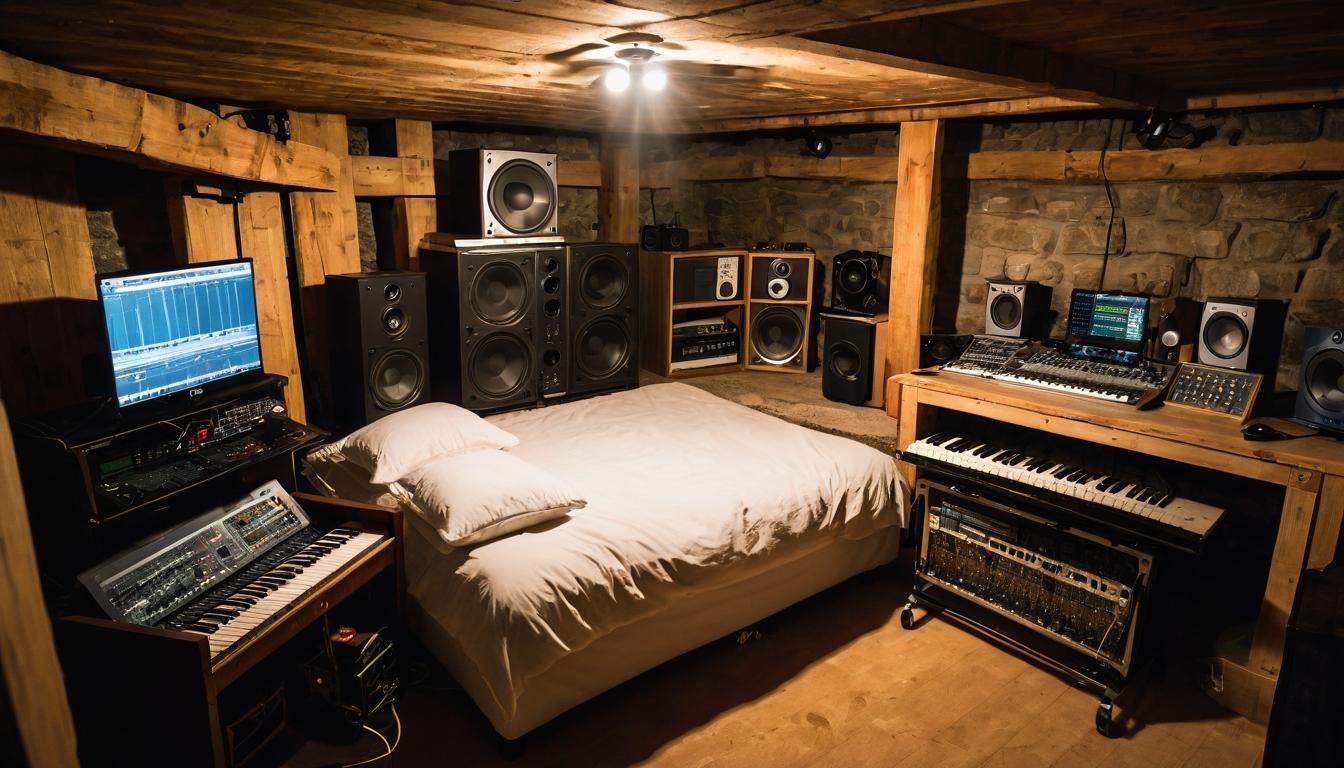
In the dim glow of laptop screens across Brooklyn basements, Los Angeles apartments, and London bedrooms, a quiet revolution is brewing. While mainstream charts cycle through familiar pop formulas and algorithm-friendly hits, a new generation of producers—armed with nothing but affordable software, internet connections, and defiant creativity—is building sonic worlds that defy genre, geography, and commercial expectations. This isn't just a niche movement; it's a fundamental shift in how music gets made, discovered, and consumed, challenging the very infrastructure of the industry.
Walk into any DIY venue from Mexico City to Seoul, and you'll hear it: textures that blur the line between digital and organic, rhythms that splice drill with traditional folk patterns, vocals processed into haunting new instruments. These artists aren't waiting for label approval or studio time. They're trading stems on Discord, dissecting each other's techniques on TikTok, and building audiences through cryptic Bandcamp pages and hyper-specific playlists. The tools have democratized, but more importantly, the mindset has shifted—perfection is out; raw, iterative experimentation is in.
This seismic change is forcing a reckoning for traditional music media. Pitchfork's reviews increasingly spotlight these bedroom-born projects, while Stereogum's news section tracks their viral breakthroughs. Consequence hosts deep-dive interviews with producers who explain their process in granular detail, and NME features them alongside established acts. The Fader documents the cultural aesthetics—the visual art, fashion, and online lore—that surround these sounds. Yet, for all this coverage, the narrative often focuses on individual 'success stories' rather than the interconnected ecosystem enabling them.
Hypebot, analyzing the business angle, notes that these artists are pioneering new revenue models. With streaming payouts notoriously meager, they're turning to direct sales of digital collectibles, exclusive sample packs, and tiered Patreon subscriptions offering access to works-in-progress. They're not just making music; they're building miniature, self-sustaining economies. This financial independence is as radical as the music itself, reducing reliance on the traditional label system and its gatekeepers.
The sound itself is a product of boundless access. A producer in Lisbon might weave samples of Angolan semba with hyperpop synths, while an artist in Nairobi layers Gqom rhythms with ambient jazz chords. Genre is less a box and more a palette to be remixed. This global cross-pollination, accelerated by platforms like Splice and YouTube tutorials, creates a shared sonic language that feels both personal and universally connected. The result is music that often feels unplaceable—a beautiful, confusing, and exhilarating sign of the times.
However, this utopian vision has its shadows. The sheer volume of output is overwhelming, making discovery a challenge even for dedicated fans. Algorithms favor consistency over innovation, potentially burying the most experimental work. There's also a risk of homogenization, as popular production tricks become ubiquitous. Furthermore, without traditional support structures, the mental health toll of constant self-promotion and financial precarity can be high, a topic still underexplored in the glossy features.
What emerges is a paradox: the most intimate, geographically untethered music is fostering intense local scenes. Online communities solidify into real-world meetups, warehouse parties, and collaborative projects. The music is digital by birth but increasingly physical in its community impact. This duality—global network, local heart—might be its greatest strength, resisting the flattening effect of pure internet culture.
Looking ahead, the influence of this bedroom renaissance is already seeping upward. Major-label A&R scouts haunt Discord servers, and chart-topping hits increasingly incorporate production techniques pioneered in these underground circles. The future they're scripting isn't merely a new set of sounds; it's a blueprint for a more agile, artist-centric, and creatively chaotic industry. The revolution won't be televised. It'll be streamed from a bedroom, shared via a cryptic tweet, and felt in the sub-bass of a packed, sweaty club that found its headliner through a viral loop on Instagram.
The underground sound renaissance: how bedroom producers are reshaping music's future