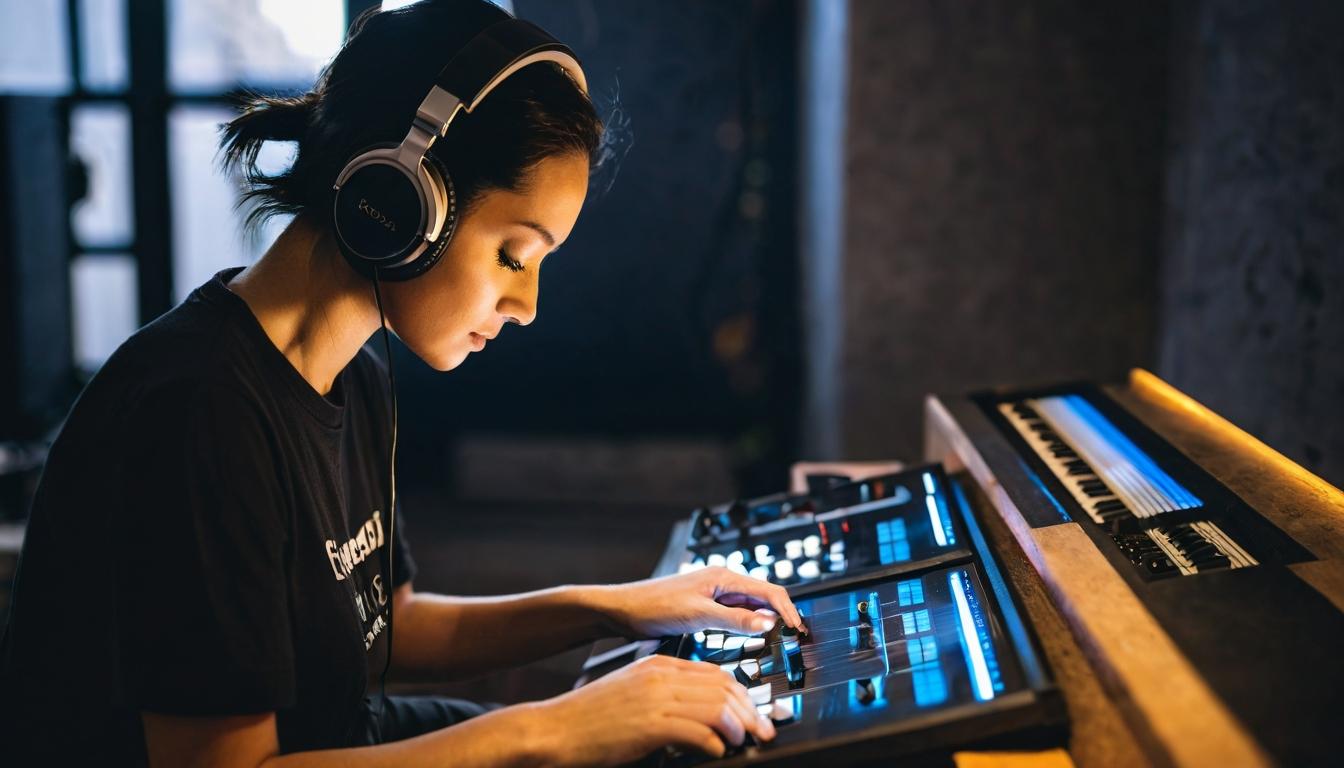
In the dimly lit corners of the internet, a sound is growing. It doesn't demand your attention with crashing drums or anthemic choruses. Instead, it whispers, hums, and breathes. Across platforms like Pitchfork and Stereogum, once dominated by guitar squalls and hip-hop beats, a new genre is claiming space: ambient music is no longer background noise—it's the main event for a generation drowning in stimulation.
This isn't your parent's Brian Eno records collecting dust. Today's ambient scene pulses with digital life. Artists like Kaitlyn Aurelia Smith weave synthetic textures with organic warmth, while labels like Leaving Records champion tapes that sound like forgotten transmissions from a calmer dimension. On Bandcamp Fridays, ambient albums consistently chart alongside punk and rap, proving there's an audience hungry for soundscapes over songs.
Why now? Look at the world. Notification pings, doomscrolling, the constant hum of global crisis. Our nervous systems are fried. Consequence and NME have tracked how post-pandemic, listeners aren't just seeking escape—they're seeking regulation. Ambient music, with its lack of aggressive rhythmic drive, acts as a balm. Neuroscience suggests slow, evolving sound can lower cortisol levels. This isn't just taste; it's public health.
The business is shifting, too. Hypebot reports on the 'functional music' boom—streaming playlists designed for sleep, focus, and anxiety relief amassing billions of listens. Startups are licensing ambient works for meditation apps and virtual offices. Artists once playing tiny galleries now score immersive installations and wellness retreats. The sound of silence, it turns out, is quite lucrative.
But is it still 'music'? Purists grumble. The Fader has profiled the debate: when does atmosphere become art? The new guard argues this is music stripped to its essence—pure emotion and texture. It's composition focused on the spaces between notes, the feeling of a room, the memory a drone evokes. In an age of content overload, ambient demands you feel, not just consume.
From niche forums to festival stages, this quiet revolution is rewriting rules. It's proof that in our loudest era, the most radical act might be to turn the volume down and truly listen. The future of music isn't always a scream; sometimes, it's a sigh.
The quiet revolution: how ambient music became the soundtrack of our anxious age