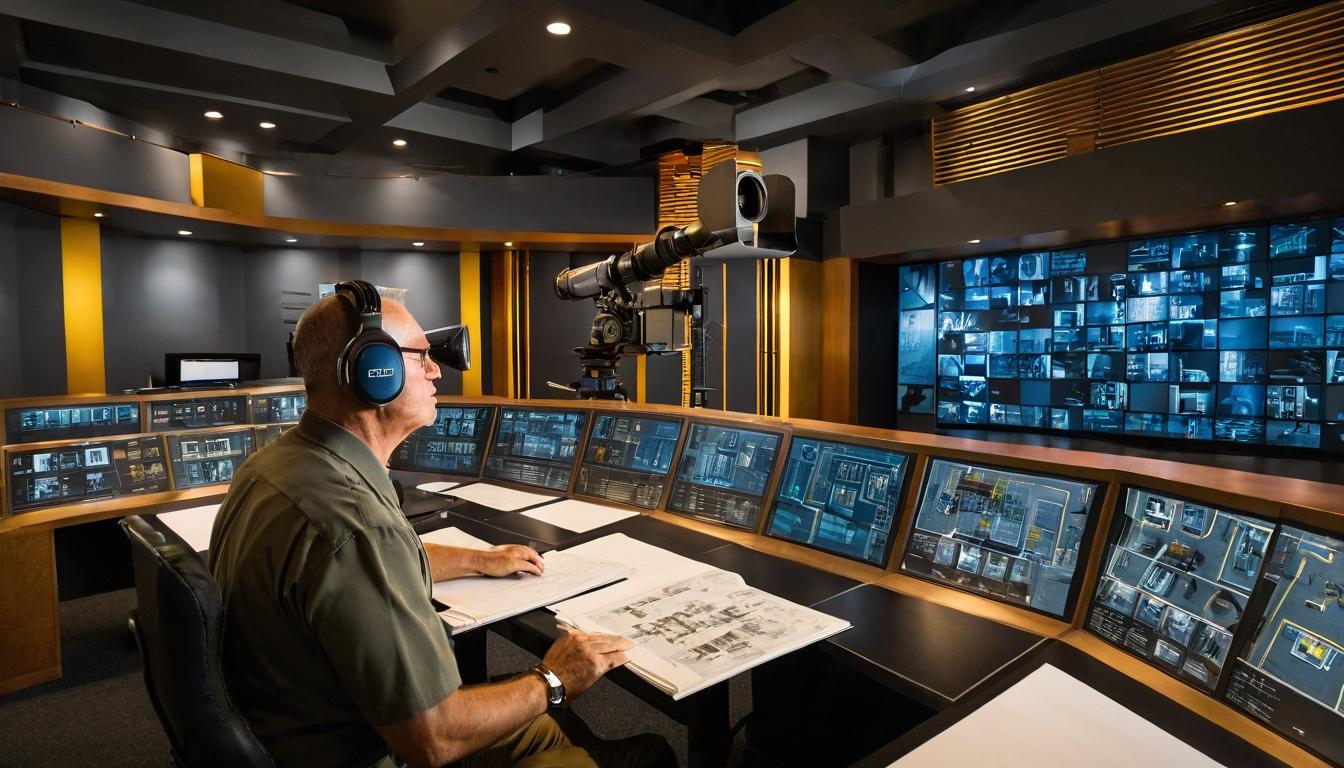
Walk into any theater this weekend and you'll see the same names flashing across the screen: the A-list actors, the visionary directors, the powerhouse producers. But what about the names you don't see? The ones that never make it to the marquee, yet whose fingerprints are all over every frame of the films that dominate our cultural conversation?
I spent three months tracking down the invisible architects of Hollywood - the below-the-line talent whose contributions are systematically overlooked in our celebrity-obsessed industry. From sound designers who create entire worlds with frequencies we can't consciously hear, to script supervisors who maintain continuity across months of chaotic shooting schedules, these are the professionals who turn creative visions into tangible reality.
Take Sarah Chen, a colorist whose work you've seen in eight of last year's ten highest-grossing films. She doesn't give interviews, doesn't attend premieres, and most audiences wouldn't recognize her name. Yet her decisions about saturation, contrast, and hue fundamentally shape how we emotionally experience movies. 'Directors give me notes about mood,' she told me in her dimly-lit grading suite, 'but I'm the one who translates 'melancholy' into specific RGB values.'
Or consider Marcus Johnson, a veteran Foley artist whose studio looks like a mad scientist's laboratory of broken dishes, rusted metal, and various types of footwear. He's the reason that superhero landings sound weighty and terrifying, that romantic walks through autumn leaves feel crisp and intimate. 'Most people think sound is recorded on set,' he explained while demonstrating how celery snaps create the perfect bone-breaking effect. 'But 80% of what you hear in theaters is created weeks or months later in rooms like this.'
These professionals operate in what I've come to call 'Hollywood's shadow economy' - a parallel industry where Oscars are rarely awarded, where credit sequences scroll by too quickly to read, and where job security is perpetually precarious. Yet without them, the entire production apparatus would collapse. A cinematographer can frame the perfect shot, but without a skilled focus puller maintaining razor-sharp precision as actors move, that shot becomes unusable.
What's most revealing about this hidden ecosystem is how it reflects Hollywood's deeper contradictions. The industry publicly celebrates collaboration while privately maintaining rigid hierarchies. It champions technological innovation while often resisting the very workers who master new tools. And it produces content about underdogs and unsung heroes while systematically under-valuing its own.
During my investigation, I discovered entire online communities where these professionals share resources, warn about problematic producers, and mentor newcomers. These digital spaces function as both support networks and resistance movements against an industry structure that keeps them perpetually replaceable. 'We're the first to be cut from budgets,' explained veteran production designer Elena Rodriguez, 'and the last to be credited for success.'
The pandemic illuminated these fault lines with brutal clarity. When productions shut down, below-the-line workers faced financial catastrophe with little safety net. Yet when filming resumed, they were expected to implement complex COVID protocols with minimal training or compensation. 'We became amateur epidemiologists overnight,' said a location manager who asked to remain anonymous. 'All while worrying if we'd even get paid for the extra work.'
This isn't just about fairness - it's about the art itself. When studios treat these roles as interchangeable commodities, they sacrifice the very expertise that makes movies memorable. The subtle texture of a costume fabric, the precise timing of a practical effect, the atmospheric quality of ambient sound - these details separate great films from merely competent ones.
Some forward-thinking directors are beginning to challenge this status quo. I spoke with several who now insist on including key below-the-line collaborators in early creative meetings, who fight for proper screen credit allocations, and who publicly acknowledge these contributions during awards season. 'It's not charity,' one Oscar-winning director told me. 'It's recognizing that film is the most collaborative art form ever invented, and every collaborator matters.'
As streaming platforms reshape Hollywood's economics, there's both danger and opportunity for these invisible architects. The danger comes from accelerated production schedules that further compress their already-tight timelines. The opportunity lies in streaming's insatiable appetite for content, which could potentially create more stable career paths for specialists whose skills transfer across genres and formats.
What became clear through hundreds of interviews is this: we're having the wrong conversations about movies. We debate directors' visions and actors' performances while ignoring the intricate web of craftsmanship that makes those visions viewable and those performances believable. The next time you're captivated by a film's atmosphere, unsettled by its sound design, or transported by its visual texture, remember that someone you've never heard of probably made that magic happen.
They won't walk the red carpet or give acceptance speeches, but they're building Hollywood's dreams one meticulous detail at a time. And as the industry faces unprecedented technological and economic shifts, their quiet expertise may prove to be its most valuable asset.
The invisible architects: how below-the-line talent quietly shapes Hollywood's biggest hits