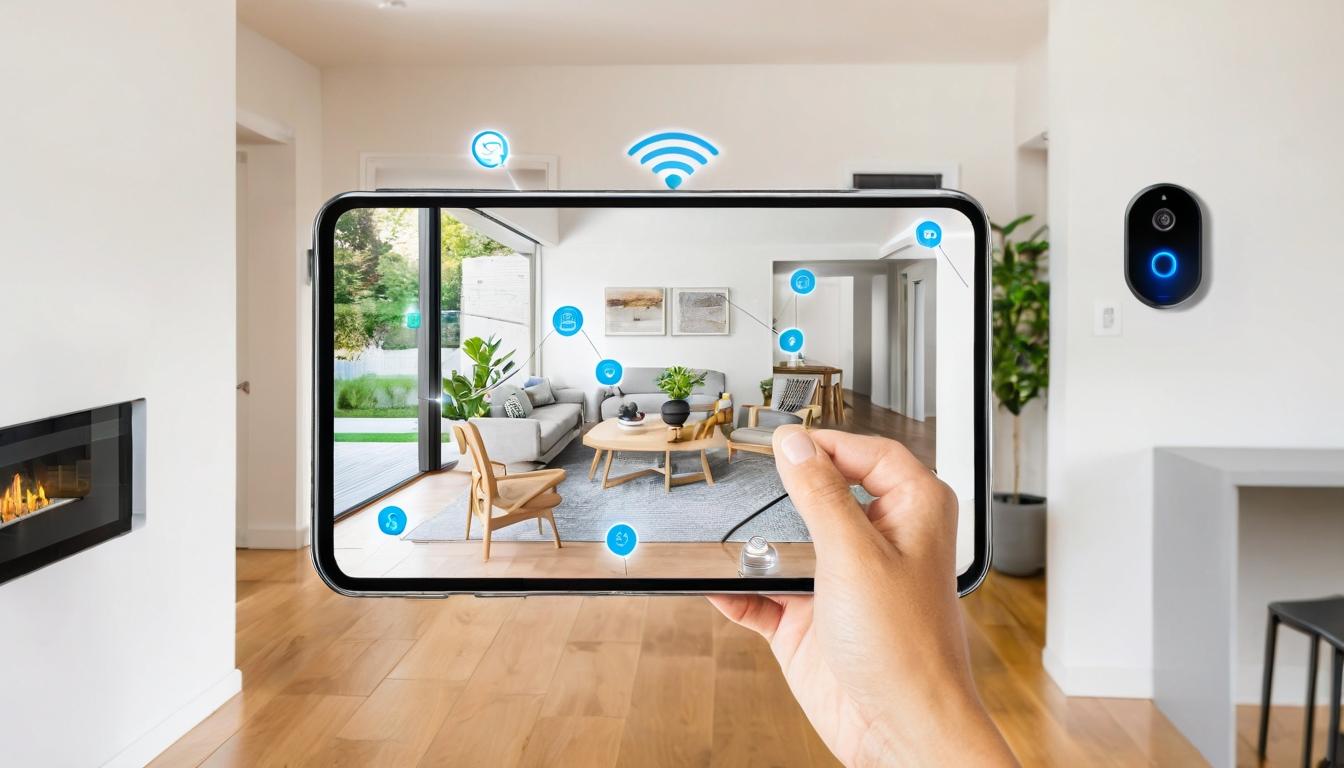
In the quiet hours between midnight and dawn, when most households surrender to sleep, a different kind of vigilance has taken root. It doesn't wear a uniform or carry a badge. Instead, it hums softly in corners, blinks with tiny LED lights, and sends silent alerts to smartphones. This is the new face of home security—not the clanging alarms and sticker-covered windows of yesterday, but an ecosystem of connected devices that watch, listen, and learn while families go about their lives.
What began as simple motion sensors and door alarms has evolved into something far more sophisticated. Today's smart security systems don't just detect intruders; they recognize patterns. They know when your teenager typically comes home from soccer practice, when the dog walker arrives each Tuesday, and when an unfamiliar car idles too long at the curb. This isn't surveillance—it's situational awareness, the digital equivalent of a neighborhood watch that never sleeps.
Consider the humble doorbell camera. Once a novelty, it's become the frontline reporter of suburban life, capturing everything from package thieves to wandering bears. But the real revolution isn't in what these devices see—it's in what they understand. Advanced systems now differentiate between a delivery driver placing a package and someone casing your home. They can tell if a person is approaching with purpose or merely passing by. This contextual intelligence transforms random footage into meaningful information.
Inside the home, the monitoring grows even more nuanced. Environmental sensors track air quality, detecting smoke long before flames appear or carbon monoxide before it reaches dangerous levels. Water sensors in basements send alerts at the first sign of leakage, potentially saving thousands in repair costs. Even refrigerators can now monitor their own performance, warning of impending failure before food spoils. The modern home has developed something akin to an immune system—constantly scanning for threats both obvious and invisible.
Privacy concerns naturally surface when discussing always-on monitoring, but the conversation has matured beyond simple trade-offs. Today's most thoughtful systems employ what security experts call 'privacy by design.' Cameras can be programmed to avoid certain areas entirely. Audio recording might activate only when glass breaks or alarms sound. Data is encrypted end-to-end, with homeowners controlling exactly what gets stored and for how long. The goal isn't to create a panopticon, but to provide what one engineer called 'selective transparency'—visibility where it matters, privacy where it's sacred.
Perhaps the most profound shift has been in how families interact with their security. Gone are the days of complicated keypads and monthly monitoring contracts. Modern systems speak the language of everyday life. They send notifications that read like text messages: 'The back door was unlocked at 10:23 PM' rather than 'ALERT ZONE 3 BREACH.' They integrate seamlessly with other smart home devices, turning on lights when motion is detected or adjusting thermostats when everyone leaves. Security has become less about fortification and more about fluid protection that adapts to your routine.
This democratization of safety technology has particularly empowered vulnerable populations. Elderly individuals can maintain independence with fall-detection systems that don't require wearing a device. Parents of children with special needs receive alerts if doors open unexpectedly. Domestic violence survivors can install temporary, renter-friendly systems that provide protection without permanent installation. The technology has developed a social conscience, recognizing that security means different things in different circumstances.
Yet for all its intelligence, the human element remains irreplaceable. The most advanced system still relies on homeowners to respond to alerts, to update settings as lives change, to recognize that technology supplements—rather than replaces—common sense. Neighborhood communities have adapted too, with digital watch groups sharing footage of suspicious activity and Nextdoor alerts complementing professional monitoring.
As we stand at this intersection of technology and tradition, it's clear that home security is no longer about keeping danger out. It's about creating environments where families can thrive with confidence. The silent guardians in our walls and on our shelves aren't just protecting property—they're preserving peace of mind, that most precious and fragile of commodities. They watch so we can rest, alert so we can act, and learn so they can better serve. In the quiet hours, they stand watch, rewriting what it means to feel safe at home.
The silent guardians: How smart home tech is rewriting family safety rules