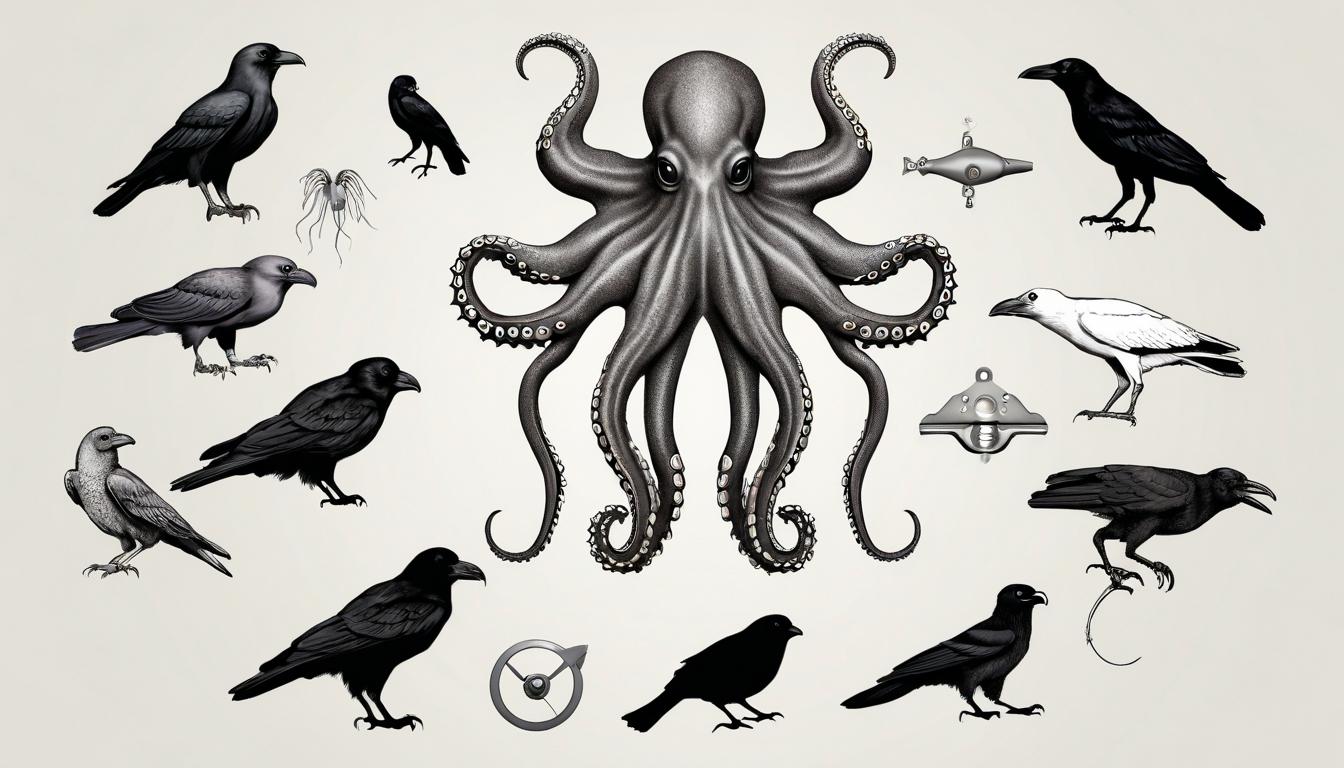
In the quiet corners of laboratories and the wild expanses of natural habitats, researchers are uncovering a startling truth: the animal kingdom is far smarter than we ever imagined. For decades, we've measured intelligence by human standards, but recent discoveries reveal cognitive abilities that challenge our very definitions of thought. From octopuses solving complex puzzles to crows crafting tools with precision, the evidence mounts that we share this planet with minds both alien and astonishingly familiar.
Consider the humble bumblebee. In a groundbreaking study at Queen Mary University of London, scientists taught these fuzzy insects to pull strings and move balls to receive sugar water rewards. What's remarkable isn't just that they learned the task, but that they taught other bees how to do it. This cultural transmission—once thought exclusive to humans and a few primates—now buzzes through hives worldwide. The implications ripple through our understanding of social learning, suggesting that even insects possess forms of knowledge sharing we're only beginning to comprehend.
Dive beneath the ocean's surface, and you'll find the octopus—a creature with distributed intelligence literally at its fingertips. Two-thirds of an octopus's neurons reside in its arms, allowing each limb to 'think' independently. Researchers at the University of Washington observed octopuses in captivity solving maze puzzles, opening childproof bottles, and even recognizing individual human caretakers. Their problem-solving doesn't follow linear logic but emerges from a network of semi-autonomous neural clusters, offering a completely different model of cognition that might inform everything from robotics to neuroscience.
High in the treetops of New Caledonia, New Caledonian crows demonstrate tool-making skills that rival early human ancestors. These birds don't just use sticks; they fashion hooks from twigs, create stepped tools from pandanus leaves, and even store their favorite implements for future use. At the University of Auckland, crows solved an eight-step puzzle requiring them to use multiple tools in sequence—a cognitive feat many primates struggle with. Their understanding of physical causality suggests abstract thinking previously reserved for great apes.
Perhaps most surprisingly, some animals display what appears to be self-awareness—the cornerstone of consciousness. When researchers placed mirrors in elephant enclosures at the Bronx Zoo, the pachyderms didn't react to their reflections as threats or companions. Instead, they used the mirrors to inspect parts of their bodies they couldn't normally see, even touching marked spots on their heads. This mirror test, passed by only a handful of species, hints at an internal world of self-reflection we're only beginning to map.
The implications extend beyond scientific curiosity. As we discover animals planning for the future (like squirrels who practice 'deceptive caching' by pretending to bury nuts when watched), displaying empathy (rats freeing trapped companions even when chocolate is available as an alternative reward), and communicating complex concepts (prairie dogs with different alarm calls for specific predators including 'tall human in blue shirt'), we're forced to reconsider our relationship with other species. These aren't just instinctual behaviors but evidence of rich inner lives.
What does this mean for how we treat animals? For conservation efforts? For our understanding of intelligence itself? The answers are still emerging from jungles, oceans, and laboratories worldwide. One thing is certain: the more we learn about animal minds, the less exceptional our own intelligence appears. We're not alone in our capacity for thought, planning, or even culture—we're simply one expression of nature's endless experimentation with consciousness.
Next time you watch a squirrel bury an acorn or a dog tilt its head in curiosity, remember: you might be witnessing not just instinct, but cognition in action. The boundary between human and animal intelligence grows blurrier with each discovery, revealing a world where minds of all kinds navigate the challenges of existence. The true wonder isn't that animals can think like us, but that they think in ways we're only beginning to understand.
The hidden world of animal intelligence: surprising facts about how creatures think