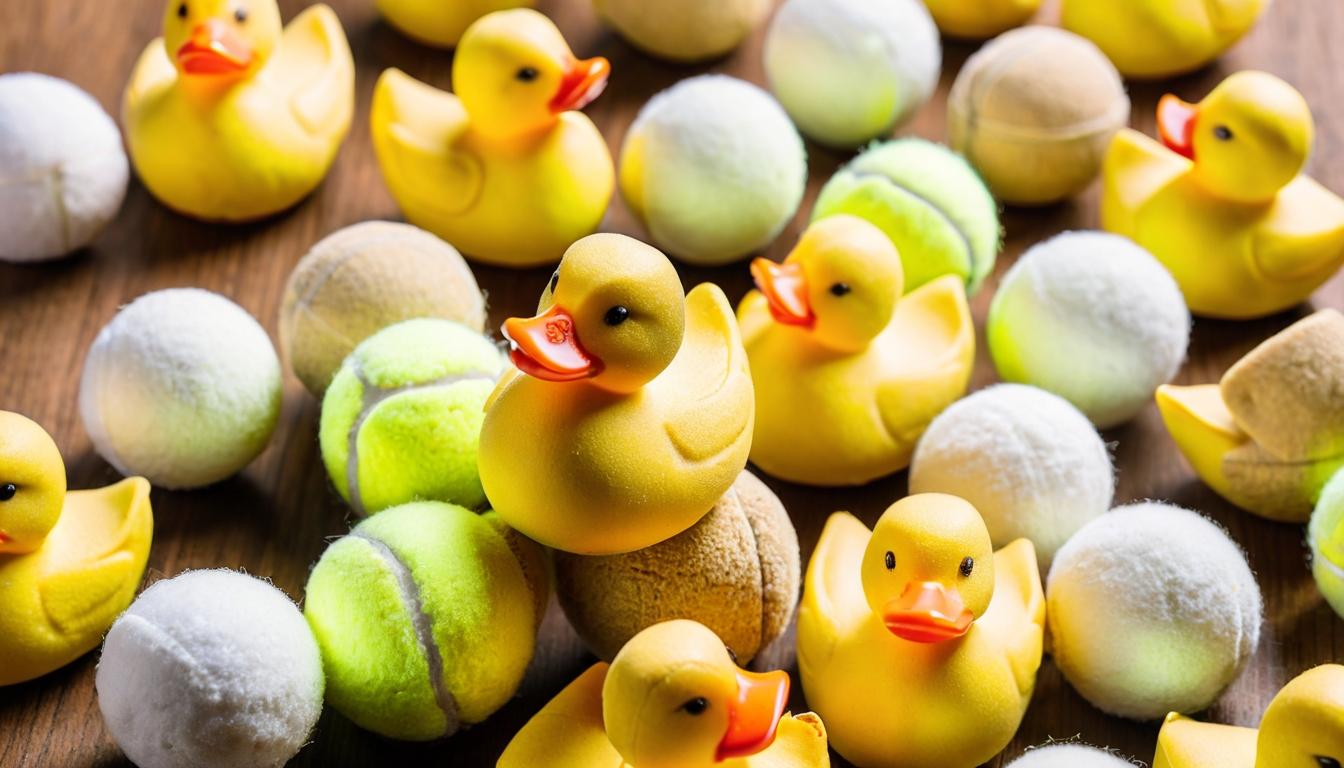
If you've ever taken a bath with a rubber duck, you've participated in a ritual with surprisingly dark origins. The cheerful yellow bath toy we know today descended from a much more practical—and less cheerful—ancestor. During World War II, military aircraft used rubber ducks for target practice over the Pacific Ocean. Their bright color made them easy to spot against the blue water, and their buoyancy meant they could be reused. After the war, surplus ducks found their way into toy stores, and an American sculptor named Peter Ganine patented the classic squeaker design in 1949. The rest is bath time history.
Speaking of things that aren't what they seem, consider the fortune cookie. That crisp, sweet treat with a prophetic slip of paper inside feels quintessentially Chinese. But its true origins are thoroughly American. While multiple California restaurants claim invention, most historians trace it to Japanese immigrants in early 1900s San Francisco. They served similar cookies called *tsujiura senbei* at tea houses. During World War II, when Japanese-Americans were interned, Chinese restaurants adopted and popularized the cookie, creating the version we know today. The messages inside evolved too—from vague Confucian sayings to the optimistic, actionable advice we get now.
Even something as simple as the color of your tennis ball has a story. Why are they almost universally neon yellow? For decades, tennis balls were white or black. Then, in 1972, the International Tennis Federation introduced yellow balls after research showed they were more visible to television audiences. Wimbledon, steeped in tradition, resisted until 1986. The change wasn't just about visibility; it was about the economics of broadcasting. The vibrant color made the fast-moving ball easier to track on screen, transforming how millions experienced the sport.
Then there's the humble pencil. Most have a small metal ferrule holding an eraser, but why? The modern pencil with an attached eraser is an American innovation. In 1858, Hyman Lipman of Philadelphia patented the idea of inserting a rubber eraser into a groove at the pencil's end. Before this, people used separate pieces of rubber or even bread crumbs to erase graphite marks. Lipman's patent was eventually invalidated because it was deemed simply combining two existing products, but his design became the standard. That little pink nub represents a triumph of convenience that we now take for granted.
Consider the microwave oven. Its invention wasn't the result of a quest for quick cooking but a happy accident involving a candy bar. In 1945, engineer Percy Spencer was testing a magnetron, a vacuum tube that generates microwaves, for radar systems. He noticed a chocolate bar in his pocket had melted. Intrigued, he tried popcorn kernels, which popped, and then an egg, which exploded. Spencer realized the microwaves were agitating water molecules in the food, generating heat. By 1947, the first commercial microwave oven stood nearly six feet tall and weighed over 750 pounds. It took decades to shrink to countertop size, revolutionizing kitchens worldwide.
Finally, look at the plastic tips on your shoelaces. They're called aglets, and their purpose goes beyond preventing fraying. Their history stretches back to ancient Rome, where wealthier citizens used brass or silver tips called *fibulae* on their lace-like cords. In the 18th century, aglets became more common as shoe wearing spread. Today, they're usually plastic, but their function remains crucial: they stiffen the lace ends, making threading through eyelets possible. Without this small innovation, putting on shoes would be a frustrating, finger-poking ordeal.
These everyday objects carry layers of history, accident, and adaptation. They remind us that innovation often comes from unexpected places—battlefields, internment camps, radar labs, and patent offices. The most ordinary items in our lives are frequently the products of extraordinary stories, hidden in plain sight.
The hidden stories behind everyday things: from rubber ducks to fortune cookies