We live surrounded by objects whose origins we never question, moving through routines shaped by forgotten accidents and brilliant mistakes. The most ordinary items in our homes hold extraordinary tales of innovation, desperation, and sheer luck that changed how we live. That zipper on your jacket? It spent twenty years as a novelty item called the 'automatic continuous clothing fastener' before anyone figured out what to do with it. The inventor, Whitcomb Judson, created it to help a friend with a bad back who struggled with buttons, but it took another engineer, Gideon Sundback, to perfect the design we recognize today. Even then, it took B.F. Goodrich putting them on rubber galoshes and giving them the catchy name 'zipper' to make them stick.
Consider the microwave oven, that humming box that reheats our coffee. It was discovered entirely by accident in 1945 when Percy Spencer, a Raytheon engineer, noticed a candy bar melting in his pocket while testing a magnetron. He experimented with popcorn kernels (which popped) and an egg (which exploded in a colleague's face), leading to the first commercial microwave in 1947—a six-foot-tall, 750-pound behemoth called the 'Radarange' that cost the equivalent of $50,000 today. For years, people were terrified of them, believing they caused cancer or sterility, until convenience won out over fear.
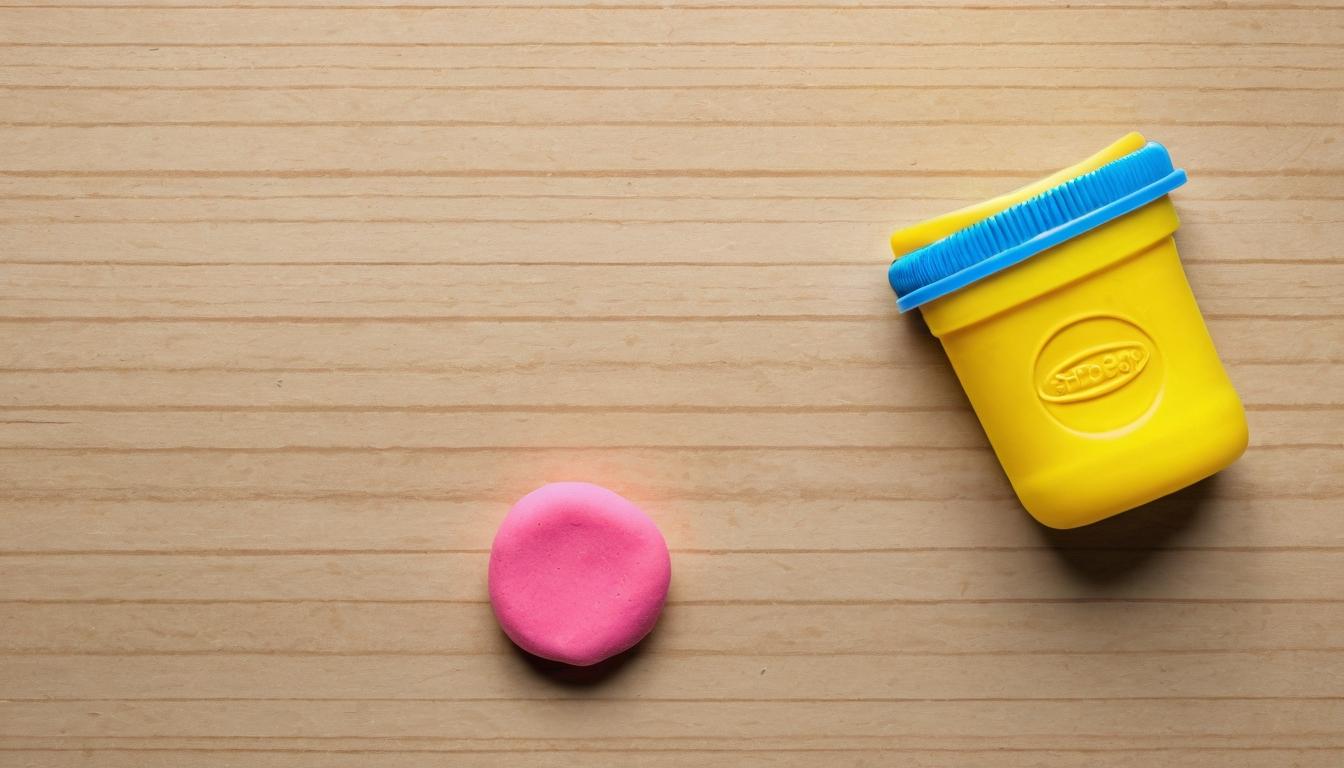
Some of our most enduring creations emerged from attempts to solve completely different problems. Play-Doh began as a wallpaper cleaner in the 1930s, a putty-like substance that could remove soot from coal-heated homes. When natural gas replaced coal and made the product obsolete, the company heard from nursery schools that children were using it for art projects. They removed the cleaner, added color and a sweet smell, and rebranded it in 1956—saving the company from bankruptcy. Similarly, the Slinky was born when naval engineer Richard James accidentally knocked a torsion spring off a shelf and watched it 'walk' down instead of falling. His wife Betty named it, and they sold 400 Slinkys in 90 minutes at their first demonstration, creating an icon from a happy accident.
Our language preserves these odd histories too. The term 'deadline' has a chilling origin from the Civil War's Andersonville prison, where a line was drawn 19 feet from the stockade wall; any prisoner crossing it would be shot. The 'blue moon' as the second full moon in a month originated from a misinterpretation in a 1946 Sky & Telescope article, not ancient folklore. Even 'OK' likely comes from a fad of intentional misspellings in 1830s Boston, where 'oll korrect' (all correct) was abbreviated as O.K. and popularized by a presidential campaign.
Food history reveals how scarcity and accident shaped our diets. The chocolate chip cookie was invented when Ruth Wakefield, owner of the Toll House Inn, ran out of baker's chocolate and chopped up a Nestlé semi-sweet bar instead, expecting it to melt. It didn't, and the chocolate chip was born. Potato chips emerged from a customer's complaint at a Saratoga Springs resort in 1853, when chef George Crum sliced potatoes paper-thin and fried them crisp out of spite—only to have them become a sensation. And the humble sandwich got its name from John Montagu, the 4th Earl of Sandwich, who reportedly ordered meat between bread so he could eat while gambling without greasing the cards.
Some innovations were born from tragedy or near-disaster. Safety glass, now standard in car windshields, was discovered when French chemist Édouard Bénédictus knocked over a glass flask coated with cellulose nitrate and noticed it cracked but didn't shatter. He patented it in 1909, but it wasn't used in cars until after World War I, when broken glass in accidents was causing horrific injuries. Even the smoke detector, now in 96% of American homes, traces back to a device invented in 1890 that used electricity to detect smoke but was too expensive for widespread use until the 1960s.
These stories remind us that progress isn't always a straight line from idea to product. It's messy, accidental, and often driven by people adapting to unexpected circumstances. The next time you zip your coat, microwave leftovers, or grab a chocolate chip cookie, remember that you're interacting with a hidden history of failure, adaptation, and occasional brilliance that made the ordinary possible. Our world is built on these forgotten moments, each object a fossil of human ingenuity waiting to tell its story.
The hidden stories behind everyday objects and forgotten histories