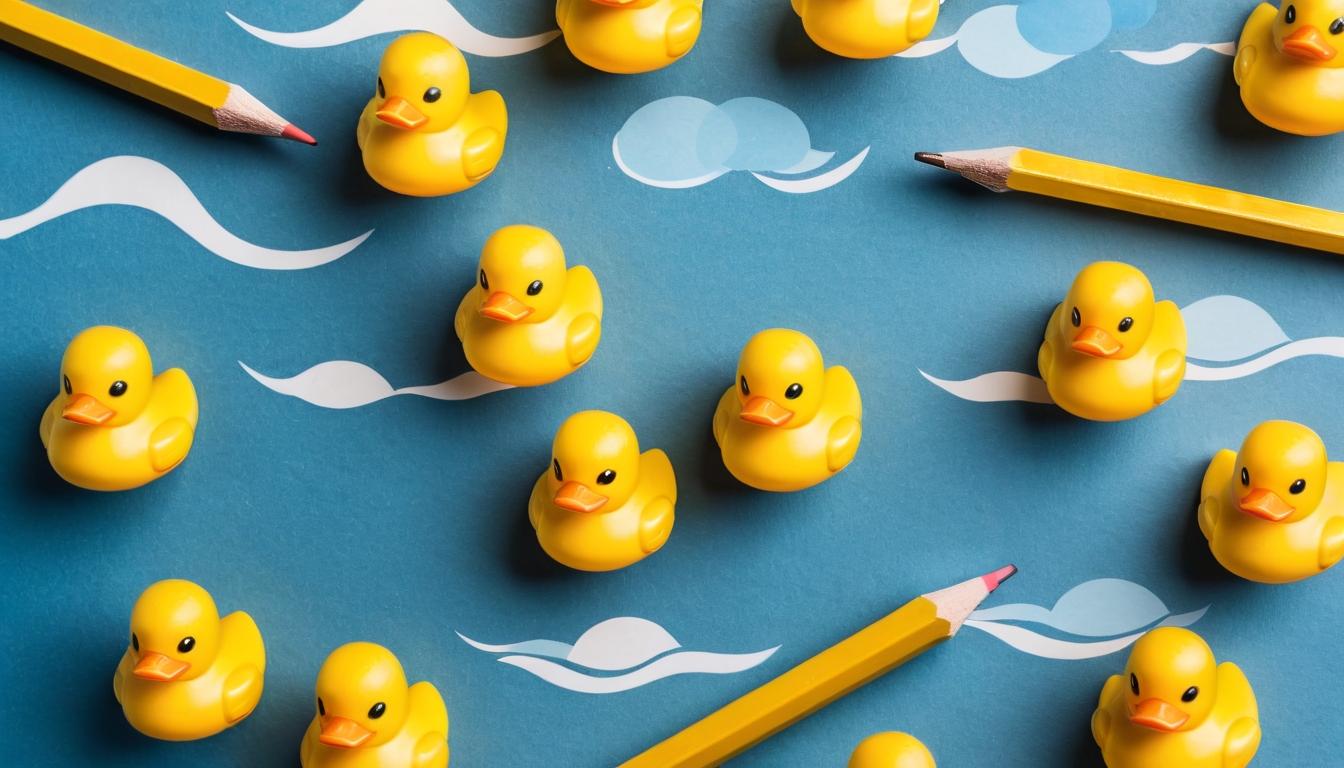
You've probably never given much thought to the humble pencil. It's just a tool for jotting down grocery lists or doodling during boring meetings. But that simple wooden stick with a graphite core has a secret life that would make even the most jaded detective raise an eyebrow. The average pencil can draw a line 35 miles long—enough to sketch a path from downtown Manhattan to the northern tip of Westchester County. More astonishingly, that same pencil could write approximately 45,000 words, nearly half the length of Hemingway's "The Old Man and the Sea." Yet here's the real kicker: despite being called "lead" pencils for centuries, they've never contained actual lead. The misnomer dates back to the 1500s when a massive deposit of pure graphite was discovered in England and mistakenly identified as a form of lead ore. This error persisted through generations, embedding itself so deeply in our language that we still reference it today, even as we know better.
Now consider something you interact with dozens of times daily: the QWERTY keyboard layout. Most of us learned it was designed to slow typists down to prevent mechanical typewriter jams. That's only half the story. The truth involves a much more fascinating cocktail of marketing, patent wars, and psychological manipulation. Christopher Sholes, the inventor of the first commercially successful typewriter, didn't just scatter letters randomly. He deliberately placed common letter pairs like "TH" and "ER" far apart to reduce jamming, yes, but he also positioned the letters of "TYPE WRITER" all on the top row. Why? So salesmen could quickly demonstrate the machine by typing those words without hunting for keys. The layout was never about efficiency for humans—it was a sales gimmick that accidentally became a global standard.
Let's shift from keyboards to something more whimsical: rubber ducks. That cheerful yellow bath toy floating in tubs worldwide has a surprisingly dark origin story. The first rubber ducks weren't toys at all—they were chew toys for dogs made from hard, durable rubber. Their transformation began in the 1940s when sculptor Peter Ganine created a floating duck toy and patented the design. But the real breakthrough came from an unexpected source: Sesame Street. When Ernie sang "Rubber Duckie" in 1970, sales skyrocketed, cementing the duck's place in pop culture. Today, they're not just bath companions; they've been used in oceanography studies to track ocean currents, with nearly 29,000 ducks lost at sea in 1992 providing valuable data about global water patterns.
Speaking of water, have you ever wondered why Olympic swimming pools are so consistently blue? It's not just for aesthetics or television appeal. The specific shade—known as "International Swimming Federation blue"—was scientifically chosen to enhance visibility for both swimmers and officials. The color provides maximum contrast against the white lane lines and the swimmers' bodies, reducing eye strain and improving accuracy during races. But there's another, more practical reason: blue tiles help mask minor imperfections and algae growth that would be glaringly obvious in a white pool. Even the water itself is meticulously monitored, maintained at precise temperatures between 77-82°F (25-28°C) to optimize performance while minimizing muscle cramps.
Finally, consider the lowly fortune cookie. That crisp dessert served at the end of Chinese meals isn't Chinese at all. Its origins trace back to early 20th century California, likely invented by Japanese immigrants or possibly inspired by Japanese tsujiura senbei (fortune crackers). During World War II, when Japanese Americans were interned, Chinese entrepreneurs adopted and popularized the treat. Today, approximately 3 billion fortune cookies are produced annually, mostly in the United States. The messages inside have evolved from philosophical proverbs to include lottery numbers, weather predictions, and even tech support advice. The largest fortune cookie ever made measured over 8 feet wide and required a forklift to transport—a far cry from the delicate treat that fits in the palm of your hand.
These everyday objects carry layers of history, accident, and innovation that most of us never pause to consider. They're silent witnesses to human ingenuity, cultural shifts, and sometimes pure coincidence. The next time you pick up a pencil, type an email, or crack open a fortune cookie, remember: there's probably a remarkable story hiding in plain sight, waiting to be discovered if you just know where to look.
The hidden lives of everyday objects: surprising stories behind things you thought you knew