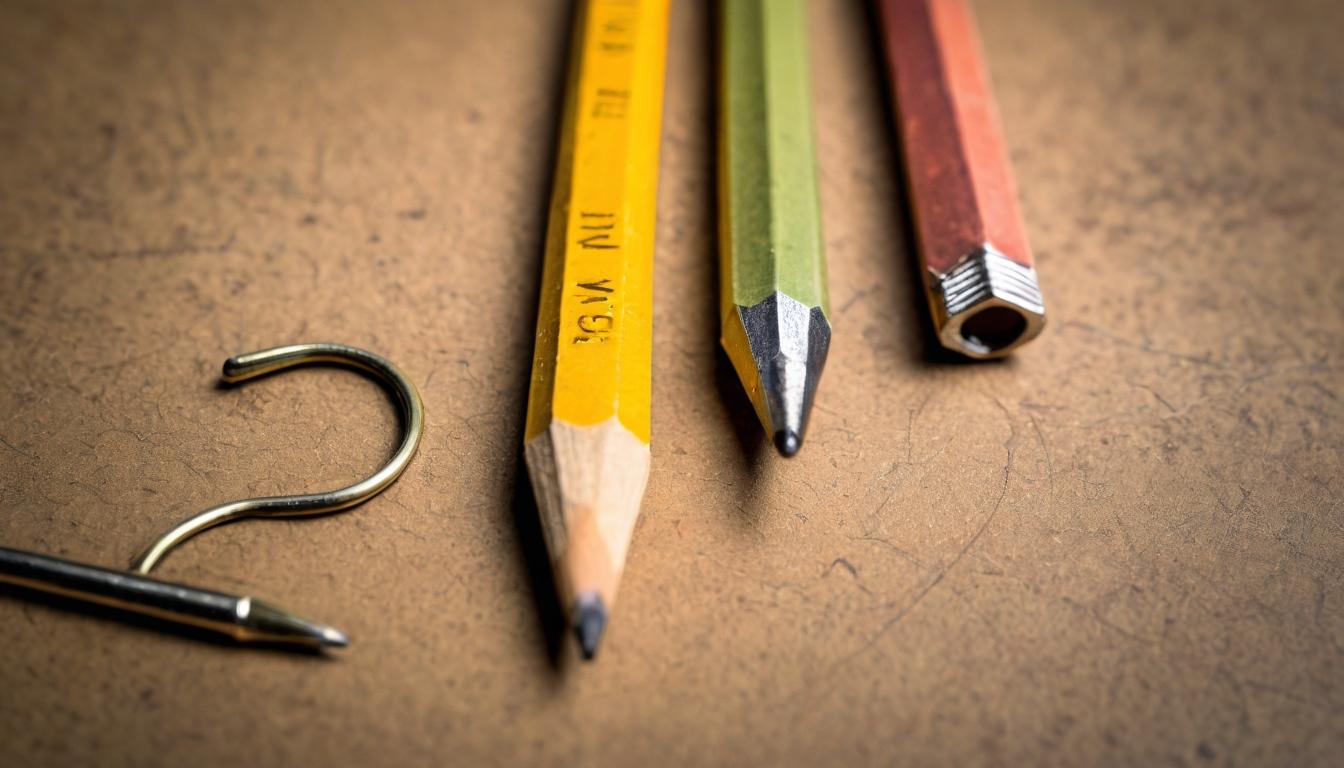
You've probably never given much thought to the humble pencil. It's just a tool for jotting down grocery lists or solving crossword puzzles. But dig a little deeper, and you'll find a story that spans continents and centuries. The modern pencil owes its existence to a massive graphite deposit discovered in England in the 1500s—so pure and solid that it could be sawn into sticks and wrapped in string. Napoleon Bonaparte was so impressed by this writing instrument that he commissioned Nicolas-Jacques Conté to create a version that didn't rely on English imports during wartime blockades. The result? The graphite-clay mixture still used in pencils today. Every time you make a mark with a pencil, you're participating in a legacy of innovation born from geopolitical tension.
Consider the paperclip. That simple loop of wire seems about as exciting as watching paint dry. Yet during World War II, Norwegians turned it into a powerful symbol of resistance. Wearing a paperclip on one's lapel became a silent protest against Nazi occupation—a subtle nod to binding together in unity. The German authorities eventually caught on and banned the practice, but not before the paperclip had cemented its place in history as more than just an office supply. Today, a giant paperclip sculpture stands in Oslo as a monument to peaceful resistance, reminding us that even the most ordinary objects can carry extraordinary meaning.
Let's talk about something you probably have in your pocket right now: the zipper. Before it became the fastener of choice for everything from jeans to luggage, it was known as the 'hookless fastener' and debuted at the 1893 Chicago World's Fair. People were baffled by this contraption with interlocking teeth. It took twenty years and a clever marketing campaign—'your fly is open' became 'your zipper is open'—to make it mainstream. B.F. Goodrich coined the term 'zipper' when using it on rubber boots, and fashion designers eventually realized its potential beyond footwear. The zipper's journey from novelty to necessity reveals how persistence and rebranding can transform public perception.
Now, look at the ceiling. Chances are you'll see a sprinkler head. These life-saving devices have a history that reads like a detective novel. In 1812, British inventor Sir William Congreve created a perforated pipe system for the Theatre Royal Drury Lane after a devastating fire. But the automatic sprinkler we know today was patented by Henry S. Parmalee in 1874 to protect his piano factory. The real breakthrough came when Frederick Grinnell improved the design with a glass bulb containing a heat-sensitive liquid that shatters at specific temperatures. Today's systems are so effective that statistics show no multiple deaths have ever occurred in a building with properly functioning sprinklers. That's a safety record worth remembering next time you glance upward.
Finally, consider the lowly potato chip. According to popular legend, this snack was born out of spite at a Saratoga Springs resort in 1853. When a fussy customer kept sending back his fried potatoes for being too thick, chef George Crum sliced them paper-thin, fried them to a crisp, and salted them heavily—expecting to provoke the patron. Instead, the man loved them, and 'Saratoga Chips' became a sensation. Whether this story is entirely accurate is debated, but what's undeniable is how a moment of kitchen frustration spawned a global industry worth billions. The potato chip teaches us that sometimes, the best innovations come from unexpected reactions to criticism.
These everyday objects surround us, blending into the background of our lives. But each carries layers of history, innovation, and cultural significance. The pencil connects us to Renaissance discoveries and wartime ingenuity. The paperclip symbolizes quiet defiance. The zipper demonstrates the power of marketing. The sprinkler represents centuries of fire safety evolution. The potato chip reminds us that accidents can become institutions. They're not just things—they're stories waiting to be told, evidence that even the most mundane items have extraordinary tales woven into their existence. Next time you pick up one of these objects, remember: you're holding a piece of history in your hand.
The hidden lives of everyday objects: surprising stories behind the mundane