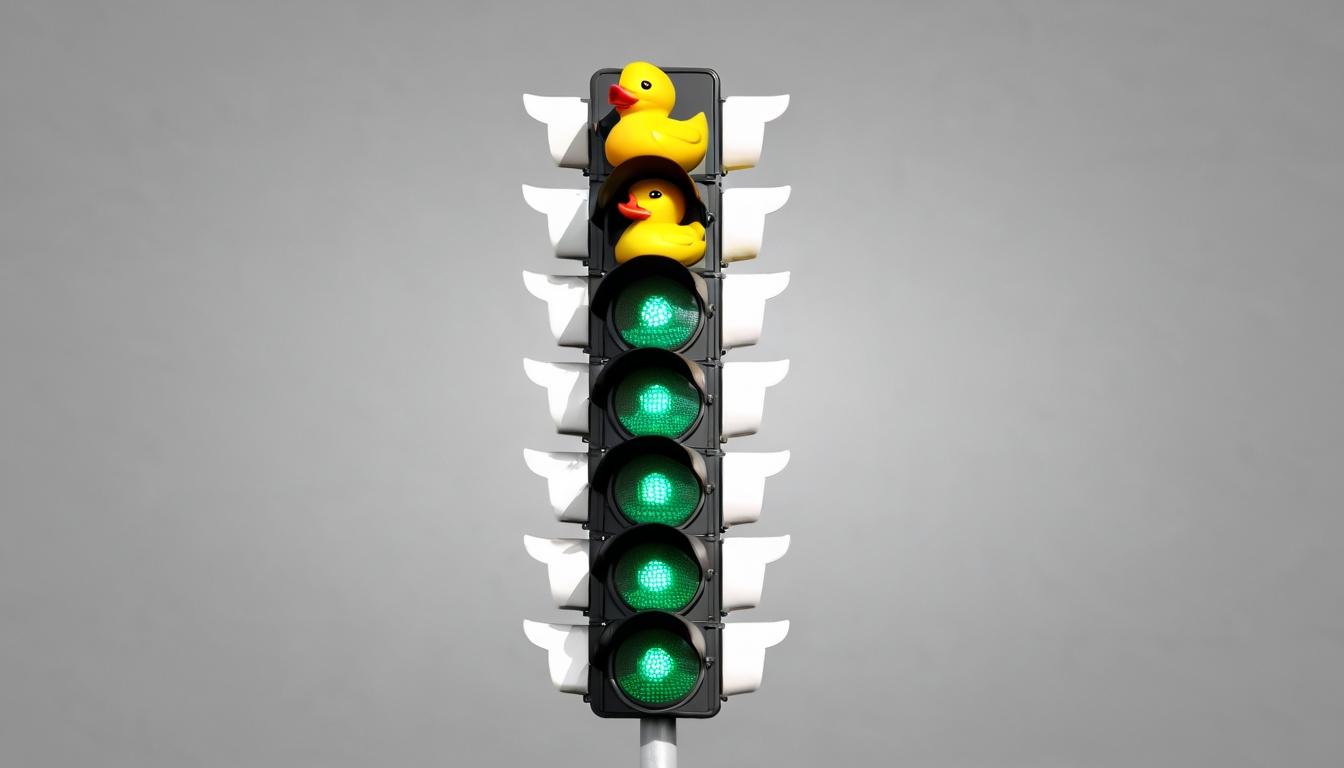
You've probably never given much thought to the rubber duck floating in your bathtub, but its journey to becoming a bathroom staple is anything but ordinary. The first rubber ducks weren't toys at all—they were chew toys for dogs made from hard, durable rubber in the late 1800s. It wasn't until the 1940s that sculptor Peter Ganine patented the floating version we know today, creating a mold that would eventually sell over 50 million units. What makes this particularly fascinating is that during World War II, rubber ducks were briefly considered for military use as decoys in naval operations, though the idea was ultimately scrapped when someone realized enemy ships might find floating yellow ducks more suspicious than convincing.
While we're on the subject of colorful objects with surprising histories, let's talk about traffic lights. The world's first traffic signal was installed outside the Houses of Parliament in London in 1868, and it was a disaster waiting to happen—literally. Engineer J.P. Knight designed it based on railway signals, using gas lamps with red and green filters operated by a police officer. The entire contraption exploded less than a month after installation, injuring the officer operating it. The modern electric traffic light wouldn't appear until 1914 in Cleveland, Ohio, but even that early version lacked the yellow light we now take for granted. That innovation came from police officer William Potts in Detroit, who added the amber caution signal in 1920 after noticing how many accidents occurred during the transition between green and red.
Speaking of transitions, have you ever wondered why we say 'hello' when answering the telephone? Thomas Edison gets credit for popularizing the greeting, but his rival Alexander Graham Bell preferred 'ahoy'—yes, like a sailor. Edison championed 'hello' because it carried well and was difficult to misunderstand over crackly early phone lines. What's even more surprising is that telephone operators, almost exclusively young women in the early days, were originally instructed to answer with 'What is wanted?' until someone realized how unfriendly that sounded. The standardization of 'hello' didn't just change telephone etiquette; it fundamentally altered how we begin conversations, making the word one of the most recognized on the planet.
Now let's shift from communication to confection with a story about fortune cookies. Despite being synonymous with Chinese restaurants in America, fortune cookies are actually Japanese in origin. Makoto Hagiwara, a Japanese immigrant and landscape designer in San Francisco, is credited with serving the first modern version at the Japanese Tea Garden in Golden Gate Park around 1914. The cookies contained thank-you notes rather than fortunes initially. Chinese restaurants adopted them during World War II when Japanese businesses faced boycotts, and the fortunes evolved to include predictions and wisdom. Today, about three billion fortune cookies are produced annually, mostly by two companies in Brooklyn and Los Angeles, with the messages carefully vetted to avoid controversial predictions.
Finally, consider the humble paperclip. Norwegian inventor Johan Vaaler patented a paperclip design in 1899, but his version lacked the double-loop we recognize today. The Gem paperclip—the classic oval-within-an-oval design—was actually developed by the Gem Manufacturing Company in Britain around the same time, though no single inventor is credited. During World War II, Norwegians wore paperclips on their lapels as a subtle symbol of resistance against Nazi occupation, since the Nazis had banned all badges showing loyalty to the Norwegian king. The paperclip became so associated with Norwegian patriotism that a giant one stands outside an Oslo business school today, though ironically it's based on Vaaler's inferior design rather than the more effective Gem version.
What ties these objects together isn't just their ubiquity in our daily lives, but the way their histories reveal unexpected connections between technology, culture, and human ingenuity. The rubber duck's transformation from dog toy to bath-time companion mirrors how everyday items often find their true purpose through accidental discovery. The traffic light's explosive beginnings remind us that even the most practical innovations often emerge from trial and error—sometimes literally explosive error. These stories aren't just trivial footnotes; they're windows into how our world was built, one seemingly ordinary object at a time.
From Edison's battle over telephone greetings to the paperclip's role in wartime resistance, these narratives demonstrate how material culture shapes and reflects social change. The next time you answer the phone with 'hello' or clip papers together, you're participating in a history far richer than the objects themselves suggest. That's the real magic of everyday things—they carry stories in their curves and contours, waiting for someone to ask the right questions.
The hidden history of everyday objects: from rubber ducks to traffic lights