We interact with dozens of mundane objects every day without giving them a second thought. But behind each lies a story of accidental discovery, fierce competition, or surprising origins that would make even the most jaded historian raise an eyebrow. Let's pull back the curtain on the ordinary.
Take the humble paperclip. Most of us assume it's always been there, quietly holding our documents together. But the wire-and-loop design we recognize today emerged from a patent war in the late 19th century. Norwegian inventor Johan Vaaler filed the first patent in 1899, but his design was flawed—it lacked the second loop that gives modern clips their spring. The Gem Manufacturing Company in Britain perfected it around 1900, though they never patented their version. During World War II, Norwegians wore paperclips on their lapels as silent protest against Nazi occupation, turning an office supply into a symbol of resistance.
Now consider something you encounter daily: traffic lights. The first electric traffic signal wasn't installed to manage cars—it appeared in Cleveland in 1914, when automobiles shared roads with horse-drawn carriages, streetcars, and pedestrians. Police officer Lester Wire invented it after witnessing one too many collisions at busy intersections. His design used red and green lights with a buzzer to warn of color changes. The yellow light came later, invented by Detroit police officer William Potts in 1920. Early traffic lights were manually operated by officers sitting in tiny booths above intersections, until automated systems took over in the 1920s.
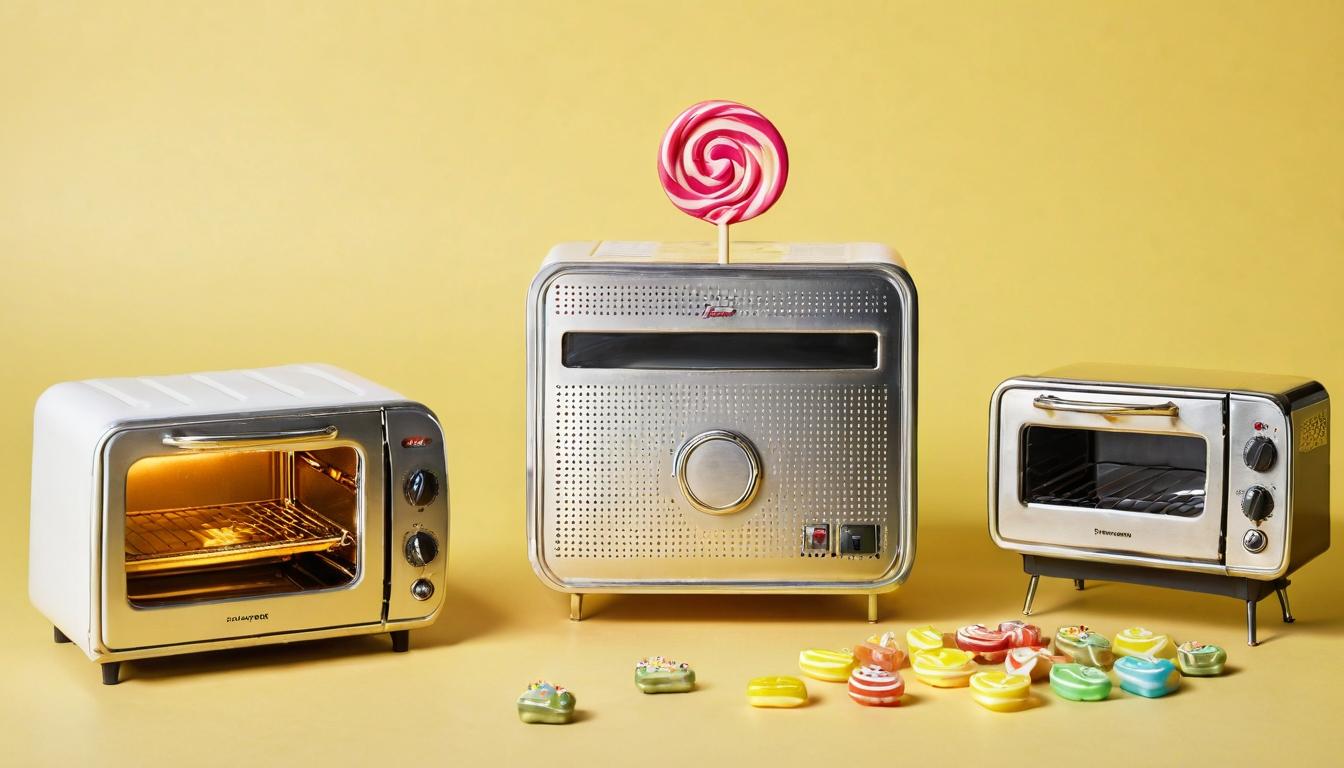
What about the microwave oven? It was discovered entirely by accident in 1945. Percy Spencer, a self-taught engineer working on radar technology for Raytheon, noticed a candy bar in his pocket had melted while he was testing a magnetron. Intrigued, he tried popcorn kernels next—they popped. Then an egg, which exploded in his colleague's face. The first commercial microwave oven weighed 750 pounds, stood nearly six feet tall, and cost about $5,000 (equivalent to over $60,000 today). It took two decades before countertop models became affordable for homes, revolutionizing how we prepare food.
Even something as simple as the potato chip has a disputed origin story. The most popular tale credits chef George Crum at Moon's Lake House in Saratoga Springs, New York, in 1853. When a fussy customer kept sending back fried potatoes for being too thick, Crum sliced them paper-thin, fried them to a crisp, and salted them heavily—expecting to annoy the patron. Instead, the customer loved them. However, some food historians point to similar recipes in earlier cookbooks. What's undeniable is that the potato chip didn't become a mass-market snack until the 1920s, when mechanical peelers and continuous fryers made large-scale production possible.
Then there's the surprising story of bubble wrap. Engineers Alfred Fielding and Marc Chavannes weren't trying to create packaging material in 1957—they were attempting to make textured wallpaper. Their sealed air bubbles trapped between two shower curtains failed as wallpaper but found niche use as greenhouse insulation. It wasn't until IBM shipped their new 1401 computer in 1960 that someone realized bubble wrap's protective potential. Today, over 240,000 miles of bubble wrap are produced annually—enough to circle the Earth nearly ten times. And yes, that satisfying pop sound? Each bubble bursts at nearly the speed of sound.
These objects teach us that innovation rarely follows a straight line. They emerge from wartime technology, kitchen accidents, failed experiments, and sometimes pure frustration. Next time you clip papers, wait at a red light, or pop bubble wrap, remember: you're interacting with a tiny piece of human ingenuity that refused to stay ordinary.
The hidden history behind everyday objects: from paperclips to traffic lights