If you've ever absentmindedly twisted a paperclip while on hold, you've handled a tool with a surprisingly dramatic backstory. The humble paperclip, that simple loop of wire we take for granted, was patented in 1899 by Norwegian inventor Johan Vaaler. But here's the twist: his design wasn't the one that conquered offices worldwide. The iconic Gem paperclip, with its double-oval shape, emerged separately in Britain. During World War II, this mundane object became a potent symbol of resistance in Norway. Citizens wore them on lapels to silently protest the Nazi occupation, a subtle act of defiance that turned stationery into a statement. The paperclip's journey from patent office to protest symbol reminds us that even the most ordinary items can carry extraordinary weight.
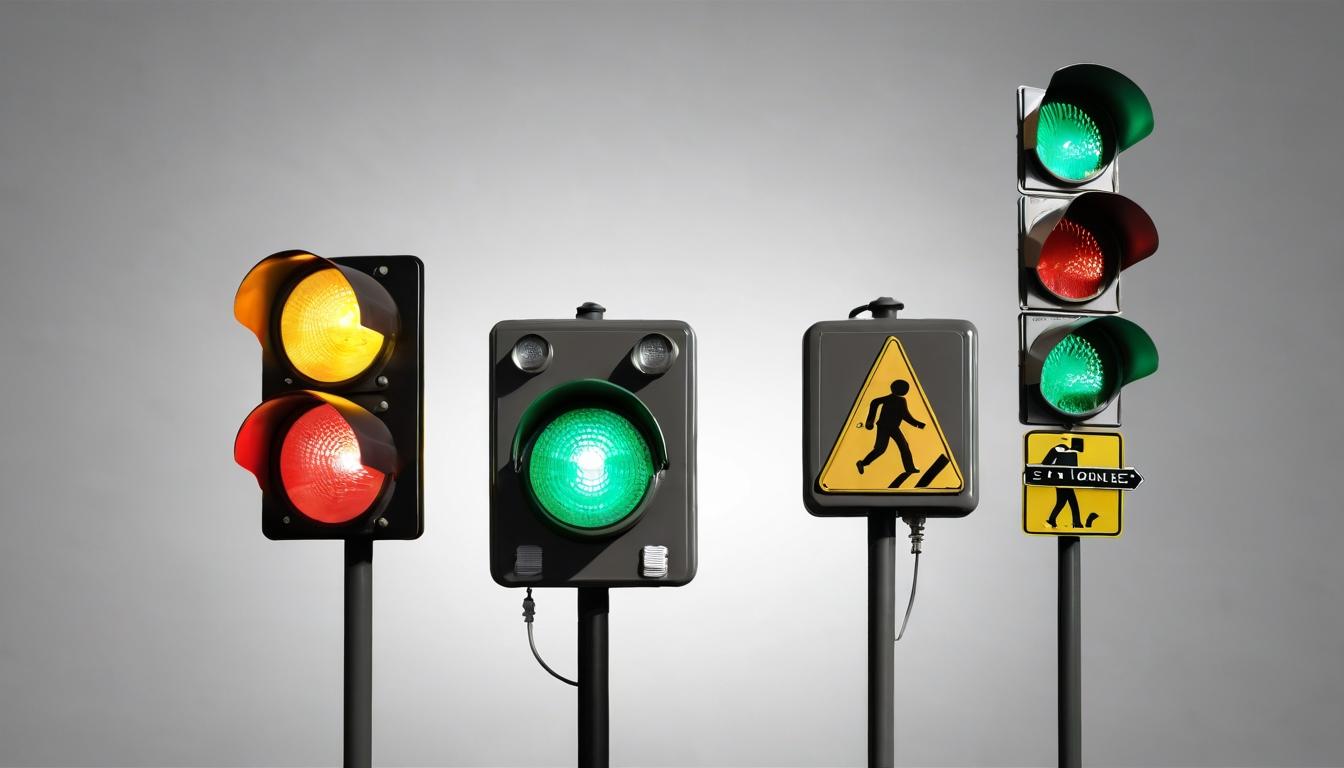
Consider the traffic light, that ubiquitous arbiter of urban flow. We obey its red, yellow, and green without a second thought, but its evolution is a tale of trial, error, and one tragic explosion. The first gas-lit traffic signal was installed outside London's Houses of Parliament in 1868. It lasted less than a month before it exploded, injuring the policeman operating it. The electric traffic light as we know it was patented in 1923 by Garrett Morgan, an African-American inventor from Cleveland. His original design was a T-shaped pole with three positions: Stop, Go, and an all-directional stop—the precursor to today's yellow caution light. Morgan, who also invented an early gas mask, sold the rights to General Electric for $40,000, a fortune at the time. His creation didn't just organize traffic; it wove a new rhythm into the fabric of modern cities.
Now, let's talk about something that truly shaped modern life: the microwave oven. Its discovery was a classic case of serendipity. In 1945, Percy Spencer, an engineer at Raytheon, was testing a magnetron, a vacuum tube that generates microwaves. He felt a strange sensation and discovered a melted candy bar in his pocket. Intrigued, he tried popcorn kernels, which promptly popped. Next, he aimed the device at an egg, which exploded in his colleague's face. Spencer had unlocked a revolutionary cooking method, but the first commercial microwave, the 'Radarange,' was a behemoth. It stood nearly six feet tall, weighed over 750 pounds, and cost the equivalent of $50,000 today. It took decades of miniaturization before microwaves became kitchen staples, transforming how we prepare food and reheat leftovers with a mere press of a button.
Shifting from the kitchen to the cosmos, the story of Velcro is one of biomimicry at its finest. In 1941, Swiss engineer George de Mestral returned from a walk with his dog, both covered in burrs from the burdock plant. Instead of simply brushing them off, he examined one under a microscope. He discovered the burrs were covered in tiny hooks that latched onto loops in fabric and fur. Inspired, he spent eight years perfecting a synthetic version, combining 'velvet' and 'crochet' to name his invention. Early critics dismissed 'hook and loop' fastener as a gimmick, but NASA adopted it in the 1960s to secure equipment in zero gravity. Astronauts used it to anchor food packets, tools, and even themselves. From space suits to sneakers, Velcro's grip on our world is a testament to learning from nature's clever designs.
Finally, ponder the Post-it Note, that brilliant blend of failure and ingenuity. In 1968, 3M scientist Dr. Spencer Silver was trying to develop a super-strong adhesive. Instead, he created a weak, reusable glue that stuck lightly but could be peeled off without leaving residue. For years, it was a solution without a problem—a 'failure' languishing in 3M's labs. The breakthrough came in 1974 when colleague Art Fry, frustrated by bookmarks falling out of his hymnal, remembered Silver's adhesive. He applied it to paper, creating the first repositionable notes. Initially marketed as 'Press 'n Peel,' they flopped. A year later, 3M launched a massive free sample campaign in Idaho, and demand exploded. Today, those little yellow squares are a global phenomenon, proving that sometimes the best innovations arise from happy accidents and persistent curiosity.
These objects—paperclip, traffic light, microwave, Velcro, Post-it—are so woven into daily life that we rarely question their origins. Yet each has a history marked by chance, perseverance, and occasional disaster. They remind us that innovation isn't always a straight path from idea to product; it's often a messy journey of explosions, melted candy, and burr-covered dogs. The next time you wait at a red light or jot a note on a yellow square, remember the hidden stories in your hands. They're not just tools; they're artifacts of human ingenuity, shaped by the unpredictable alchemy of necessity and accident.
The hidden histories behind everyday objects: from paperclips to traffic lights