Look at the zipper on your jacket or the Velcro on your shoes. These weren't just invented; they were stolen from nature. The zipper's interlocking teeth mimic the way feathers on a bird's wing overlap. Velcro? That came from burrs sticking to a dog's fur. The inventor, George de Mestral, examined those burrs under a microscope and saw hundreds of tiny hooks. He spent years trying to replicate that simple, elegant design. It's a reminder that the next world-changing idea might be clinging to your socks right now.
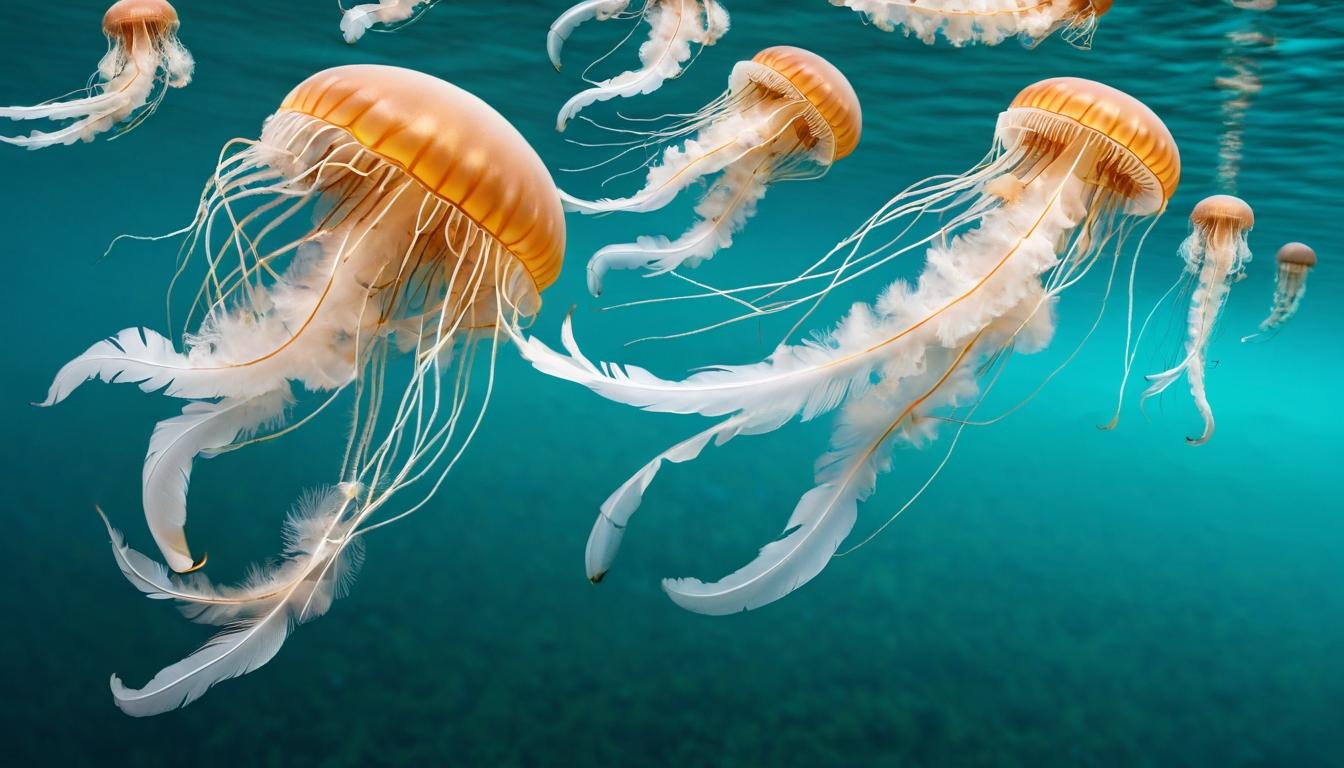
Speaking of things that cling, let's talk about the immortal jellyfish. *Turritopsis dohrnii* is a creature about the size of your pinky nail that can, under stress, reverse its aging process. It transforms its cells back into a younger state, essentially hitting the biological reset button. Scientists are studying it, hoping to unlock secrets about aging and regeneration. It's a tiny, translucent reminder that some of life's biggest mysteries are floating in the ocean, not in a lab.
History is full of these quiet revolutions. The humble potato chip was born from a customer's complaint. In 1853, a patron at a New York resort kept sending his fried potatoes back, calling them too thick and soggy. Chef George Crum, in a fit of pique, sliced them paper-thin, fried them to a crisp, and salted them heavily. To his surprise, the customer loved them. The 'Saratoga Chip' was born not from careful planning, but from kitchen frustration. It's a lesson in accidental genius.
Sometimes, the facts are weirder than fiction. Take the platypus. When British scientists first received a specimen in the late 1700s, they thought it was a hoax—a mammal with a duck's bill, a beaver's tail, and it laid eggs? It seemed like a taxidermist's prank. But it was real. Even stranger, the male platypus has venomous spurs on its hind legs. It's a living, breathing patchwork of evolutionary traits that defies easy categorization.
Our own planet holds secrets that sound like science fiction. There's a lake in Tanzania called Lake Natron that's so alkaline and salty it can calcify animals that fall into it, preserving them in a kind of stone. Photographer Nick Brandt captured haunting images of these 'stone' birds and bats, looking like statues. Meanwhile, in the Pacific Ocean, there's a 'white shark café'—a remote, nutrient-poor area where great white sharks from California and Mexico mysteriously congregate every year. Scientists still aren't entirely sure why.
Language itself is a treasure trove of oddities. The shortest complete sentence in English is 'Go.' The word 'set' has the most definitions in the Oxford English Dictionary—over 430. And 'almost' is the longest word in English with all its letters in alphabetical order. These aren't just trivia; they're glimpses into how our communication evolved in fits, starts, and delightful inconsistencies.
Even space has its quirks. A day on Venus is longer than a year on Venus. The planet takes 243 Earth days to rotate once on its axis, but only 225 Earth days to orbit the sun. If you could stand on its surface (which you can't, due to the crushing pressure and acid rain), you'd see the sun rise in the west and set in the east, and your birthday would come around twice in a single day-night cycle.
Back on Earth, consider the humble banana. The bananas we eat today, the Cavendish variety, are all genetic clones. This makes them vulnerable to disease, which is why the previous dominant variety, the Gros Michel, was nearly wiped out in the 1950s. We're essentially eating the same banana, over and over. It's a stark lesson in agricultural monoculture hiding in your fruit bowl.
Finally, there's the story written in light. When you look at the stars, you're looking into the past. The light from the nearest star, Proxima Centauri, takes over four years to reach us. The light from the Andromeda Galaxy? Two and a half million years. You're seeing it as it was when early humans were just beginning to walk the Earth. Every glance at the night sky is a form of time travel, a direct connection to histories written in photons long before our own story began.
The hidden histories behind everyday objects and curious creatures