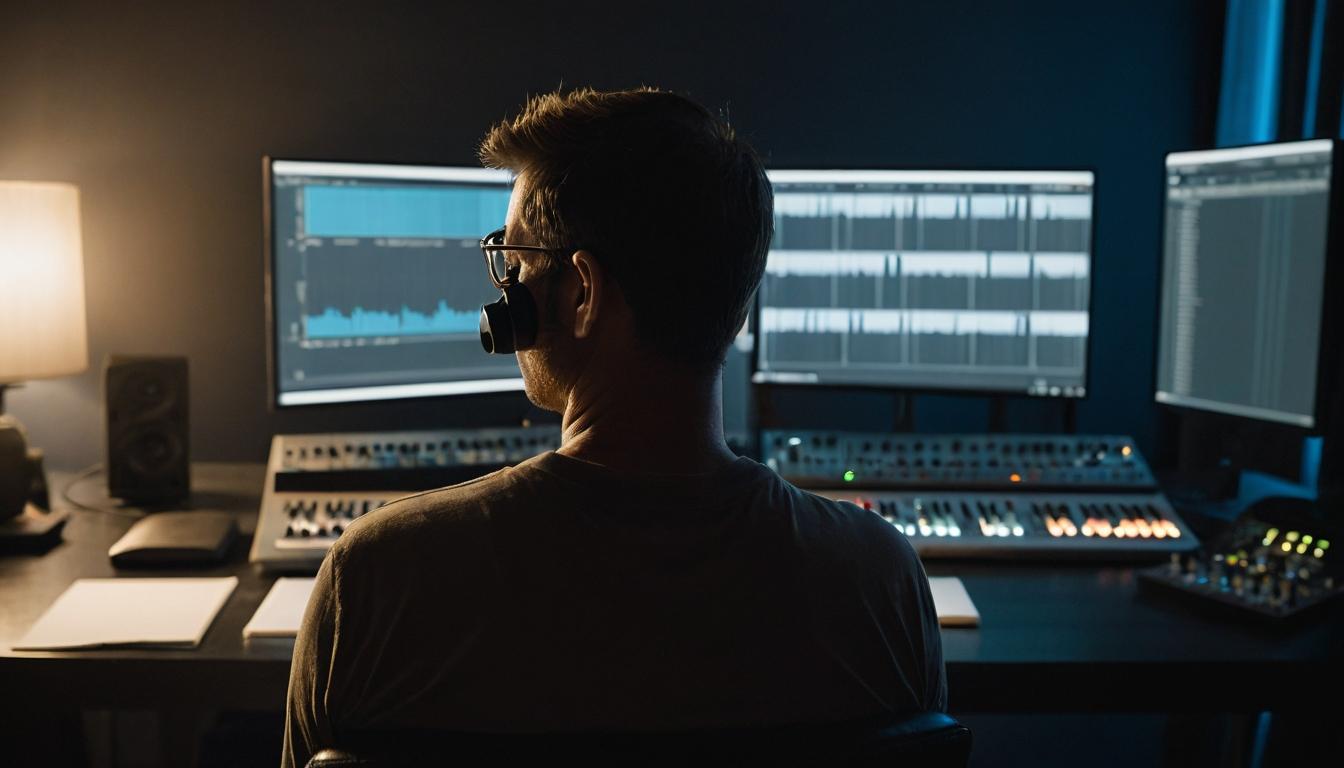
In the dimly lit corners of recording studios across Los Angeles, London, and Berlin, a quiet revolution is unfolding. While audiences flock to theaters for visual spectacles and A-list performances, a different kind of artist is reshaping the emotional landscape of modern cinema. Film composers, once relegated to background status, have emerged as narrative architects whose work determines whether a scene soars or stumbles. Their craft has evolved from simple accompaniment to complex psychological manipulation, creating sonic worlds that linger long after credits roll.
Recent interviews with industry insiders reveal that directors now approach composers during pre-production rather than post-production, treating music as a character rather than decoration. This shift represents a fundamental change in how studios conceptualize storytelling. The haunting minimalism of Mica Levi's score for 'Jackie' demonstrated how sparse instrumentation could convey profound grief, while Ludwig Göransson's fusion of traditional orchestra and synthesizers in 'Tenet' created temporal disorientation that mirrored the film's complex plot. These aren't mere background tracks—they're narrative devices operating at subconscious levels.
Technology has democratized film scoring in unexpected ways. Where once only major studios could afford full orchestras, now a composer with a laptop and MIDI controller can create convincing mock-ups that capture emotional essence. This accessibility has led to an explosion of diverse voices, from Hildur Guðnadóttir's cello-based score for 'Joker' to Nicholas Britell's hip-hop influenced work for 'Succession.' The tools have changed, but the goal remains unchanged: to bypass intellectual processing and speak directly to viewers' nervous systems.
Behind the scenes, a fascinating tension exists between artistic ambition and commercial reality. Veteran composers speak of 'temp love'—when directors become attached to temporary music tracks during editing, forcing composers to create derivatives rather than original work. Yet some filmmakers have embraced radical collaboration, like Christopher Nolan's partnership with Hans Zimmer, where the composer receives scripts years before filming begins. This deep integration allows music to influence cinematography and editing rather than merely responding to finished scenes.
Perhaps most intriguing is the growing academic interest in film music's psychological impact. Researchers at several universities are studying how specific musical cues trigger emotional responses, with implications extending beyond entertainment into therapy and education. The leitmotif technique pioneered by Wagner and perfected by John Williams—assigning musical themes to characters or ideas—creates neural pathways that help audiences navigate complex narratives. When Rey's theme swells in 'Star Wars,' viewers don't just hear music; they experience hope's resurgence.
As streaming platforms dominate entertainment, film music faces new challenges and opportunities. Limited theatrical windows mean scores must work equally well on smartphone speakers and home theater systems. Composers now consider how their work will function as standalone streaming content, with platforms like Spotify creating dedicated film score playlists that attract millions of listeners. This has created a curious phenomenon: music originally designed to support visuals now thrives independently, introducing classical instrumentation to generations raised on electronic beats.
The future promises even more radical experimentation. Artificial intelligence tools can analyze scripts and generate thematic suggestions, though most composers view these as starting points rather than replacements for human intuition. Virtual reality experiences demand spatial audio design that places viewers inside musical environments. Meanwhile, composers are increasingly crossing into video games and immersive theater, applying cinematic techniques to interactive media where music must respond to user choices rather than fixed narratives.
What emerges from these developments is a simple truth often overlooked in red carpet conversations: great film music doesn't just enhance stories—it becomes inseparable from them. When we recall 'Psycho,' the shrieking violins are as iconic as the knife. The ominous two-note motif of 'Jaws' evokes fear without showing the shark. These compositions have entered cultural consciousness, proving that what we hear affects us as deeply as what we see. In an age of visual overload, perhaps the most powerful storytelling happens not before our eyes, but between our ears.
The unsung heroes of cinema: How film composers are redefining storytelling