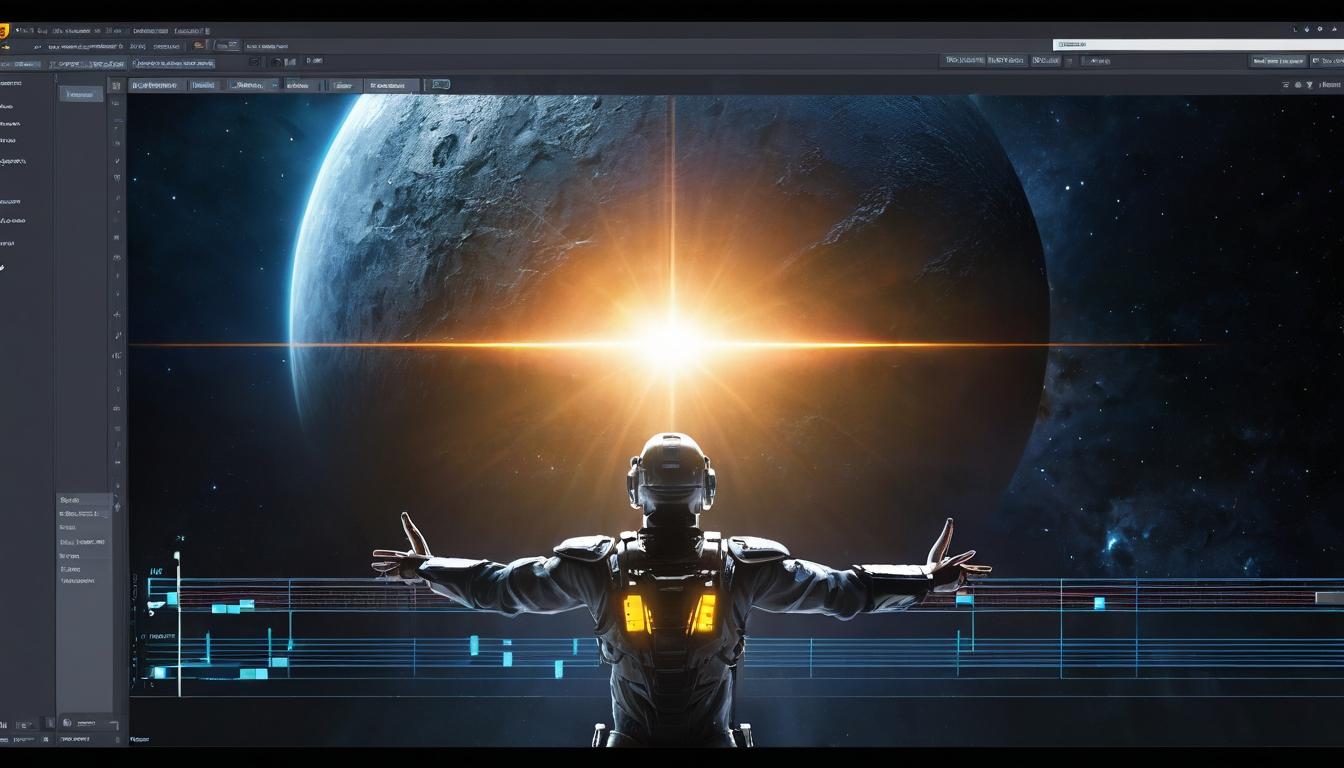
In the dim glow of a post-production suite, a composer stares at a blank digital staff, the weight of a director's vision pressing against the silence. This isn't Mozart's Vienna or Bernstein's New York; this is the 21st-century crucible of film music, where tradition collides with technology and streaming algorithms whisper suggestions about audience retention. The websites chronicling this world—from the deep-dive analyses at Film Score Monthly to the fan-driven passion of Soundtrack Geek—reveal a landscape in quiet revolution. The old guard of leitmotifs and sweeping themes hasn't vanished, but it's being infiltrated, augmented, and sometimes outright replaced by sonic architects who think in textures, pulses, and psychological triggers.
Forget the idea of a composer merely supporting the image. Today's leading voices, like Hildur Guðnadóttir and the late Jóhann Jóhannsson, often begin their work during pre-production, their sounds influencing cinematography and editing. Guðnadóttir's cello became a character in 'Joker,' its raw, acoustic scrape mirroring Arthur Fleck's fracturing psyche before a single frame was shot. This is 'composing as world-building,' a trend dissected in forums on MovieWave and Reel Music, where the line between score and sound design blurs into irrelevance. The goal is no longer just melody but environment—an immersive audio space that the viewer breathes.
This shift is powered by, and in reaction to, the streaming era. As noted in pieces on Film Music Mag, platform data shows that subtle, ambient scores often lead to longer viewing sessions, reducing auditory fatigue during binge-watches. In response, composers are crafting 'adaptive scores'—layered pieces that can be mixed and matched in real-time by AI, creating a unique sonic fingerprint for each viewer. It's personalization at a subconscious level, a far cry from the one-size-fits-all orchestral blast. Yet, as Score It's interviews reveal, this raises existential questions: Is the composer's intent being diluted? Or is this the ultimate democratization of the film music experience?
Meanwhile, the very instruments are changing. The iconic studios of London and Prague are now joined by bedrooms stocked with modular synthesizers and bespoke software. Composers like Mica Levi and Oneohtrix Point Never treat the studio as an instrument, manipulating found sounds and digital glitches into haunting new palettes. The discussion on Soundtrack Geek often highlights how these scores don't just accompany a film; they *feel* like the film. The unsettling, organic clicks in Levi's 'Under the Skin' score don't tell you the alien is predatory—they make you feel the cold, curious hunger yourself.
Yet, for all the innovation, a powerful counter-current is pulling back toward the tangible. Young composers, as profiled on Reel Music, are increasingly seeking out acoustic anomalies—recording in caves, using century-old microphones, or sampling the hum of forgotten machinery. This 'analog revival' isn't nostalgia; it's a search for imperfection, for the unique sonic grain that sterile digital synthesis can't replicate. It's the warmth of tape hiss, the unpredictable resonance of a prepared piano—a human fingerprint in an increasingly algorithmic art form.
The business, too, is undergoing a quiet upheaval. The classic model of a single composer delivering a finished score is giving way to composer collectives and 'score producers' who curate contributions from multiple specialists—a beat-maker here, a string arranger there. This collaborative, almost modular approach, discussed in business sections on Film Score Monthly, mirrors the production of modern pop music. It's efficient, but it fragments authorship, creating legal and creative gray areas that the industry is still learning to navigate.
Ultimately, the most compelling thread running through all these sites is the redefinition of what film music must *do*. Its role is expanding from emotional guide to narrative co-conspirator, from background ambiance to a primary vehicle for subtext. The next time you feel a chill in a thriller or a swell of hope in a drama, pause. That emotion might not be coming from the actor's face or the script's words, but from a carefully designed frequency, a subliminal pulse crafted by a new kind of storyteller working in the shadows behind the screen. They are the unsung architects of our cinematic feelings, and their quiet revolution is just beginning to be heard.
The unsung architects of emotion: How modern film composers are rewriting the rules