In the dim glow of a mixing studio, a composer leans over a keyboard, fingers hovering above the keys. This isn't just about creating background noise—it's about building the emotional architecture of a story. While audiences flock to theaters for dazzling visuals and A-list actors, a quiet revolution is happening in the sonic shadows of Hollywood. Film composers, once relegated to the credits crawl, are now becoming narrative co-authors, and their tools are evolving faster than any CGI software.
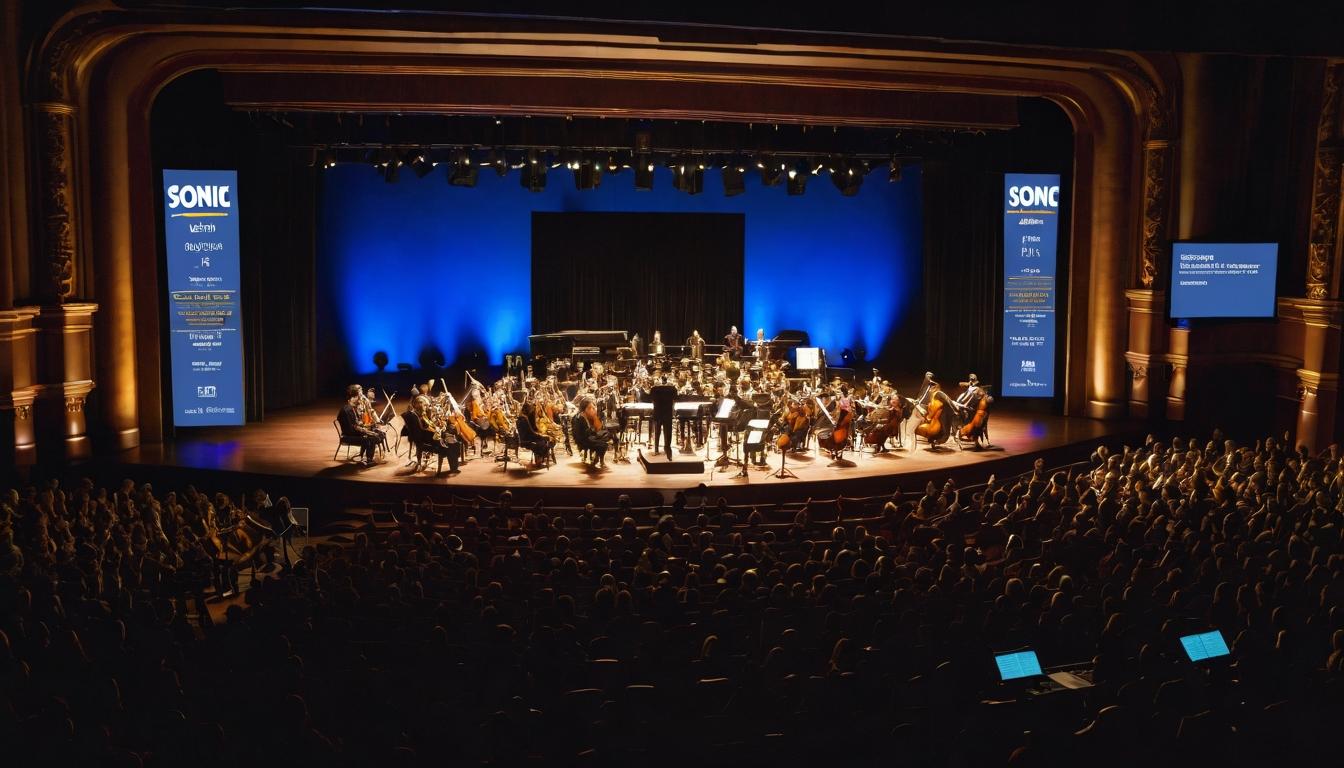
Walk into any major scoring session today, and you'll find a curious blend of ancient and futuristic. Beside the traditional 90-piece orchestra, you might see a modular synthesizer patched with cables resembling a mad scientist's experiment, or a laptop running AI-assisted composition software. The composer's palette has expanded from strings and brass to include field recordings from remote locations, digitally manipulated human breaths, and even the resonant frequencies of architectural spaces. This isn't just technological novelty—it's changing how stories feel.
Consider the recent trend of 'sonic world-building' in franchise films. Where John Williams established musical themes for characters in Star Wars, today's composers like Ludwig Göransson are creating entire sonic ecosystems. For The Mandalorian, Göransson didn't just write melodies—he built instruments from scratch, recorded unconventional percussion, and developed a musical language that feels alien yet familiar. The result isn't a soundtrack you hum leaving the theater, but a world you feel you've inhabited.
Meanwhile, streaming platforms are quietly reshaping the economics of film music. Netflix, Amazon, and Apple aren't just content factories—they're becoming patrons of musical experimentation. With smaller budgets but greater creative freedom, composers are exploring regional musical traditions, collaborating with folk musicians from Mongolia to Mali, and bringing authentic cultural sounds to global audiences. The monolithic Hollywood sound is giving way to a global sonic tapestry.
Yet this creative expansion faces an ironic threat: algorithmic composition. Several major studios are experimenting with AI that can generate 'emotionally appropriate' music based on scene analysis. While executives see cost-cutting potential, composers warn of homogenization. As one veteran put it, 'Algorithms can replicate patterns, but they can't understand why a character's theme should break at the moment of betrayal.' The fight isn't against technology, but for the human understanding of emotional nuance.
Parallel to this technological drama, a archival renaissance is preserving film music's history. Previously lost scores are being reconstructed from handwritten manuscripts, while recording sessions from the 1960s and 70s are being remastered from original tapes. This isn't mere nostalgia—it's revealing how composers solved narrative problems before digital tools existed. Their ingenious acoustic solutions, from using piano strings as percussion to manipulating tape speed, are inspiring today's musicians to think beyond presets and sample libraries.
The most significant shift might be in how composers enter the industry. Where once they apprenticed under established maestros, today's newcomers often emerge from video game scoring, electronic music production, or even sound design. This cross-pollination is creating hybrid scores that blur traditional boundaries. A horror film might feature a string quartet processed through guitar pedals, while a romantic drama could incorporate ambient electronic textures. The genre rulebook has been discarded.
What does this mean for audiences? Listen closely to next year's award contenders. You'll hear scores that don't just support the image, but actively converse with it—sometimes agreeing, sometimes contradicting, always deepening. The composer is no longer the invisible hand guiding your emotions, but a visible collaborator in the storytelling. In an era of visual overload, the most innovative filmmaking might just be happening in the space between the notes.
As streaming services compete for subscribers, original film music is becoming a branding tool. A distinctive score can make a film feel 'like a Netflix original' or 'peak HBO.' This has led to bold commissioning choices, with platforms gambling on avant-garde composers who would never get a studio tentpole. The financial risk is lower, but the cultural impact is growing—these scores often migrate from films to concert halls and streaming playlists, creating new revenue streams and audience connections.
The future might belong to interactive scores. With virtual reality films and choose-your-own-adventure narratives in development, composers are already prototyping music that changes based on viewer choices. Imagine a thriller where the score intensifies differently depending on which door a character opens, or a romance where the love theme evolves based on relationship decisions. This isn't science fiction—prototypes exist, waiting for the right narrative framework.
Ultimately, the revolution in film scoring is about reclaiming music's narrative power. In an industry obsessed with what's visible, composers are reminding everyone that what we hear shapes what we feel. They're not background decorators, but emotional architects. And as technology offers both unprecedented tools and existential threats, their most valuable instrument remains the same: the human capacity to translate story into sound, and sound into memory.
The unsung architects of emotion: How film composers are rewriting Hollywood's sonic rulebook