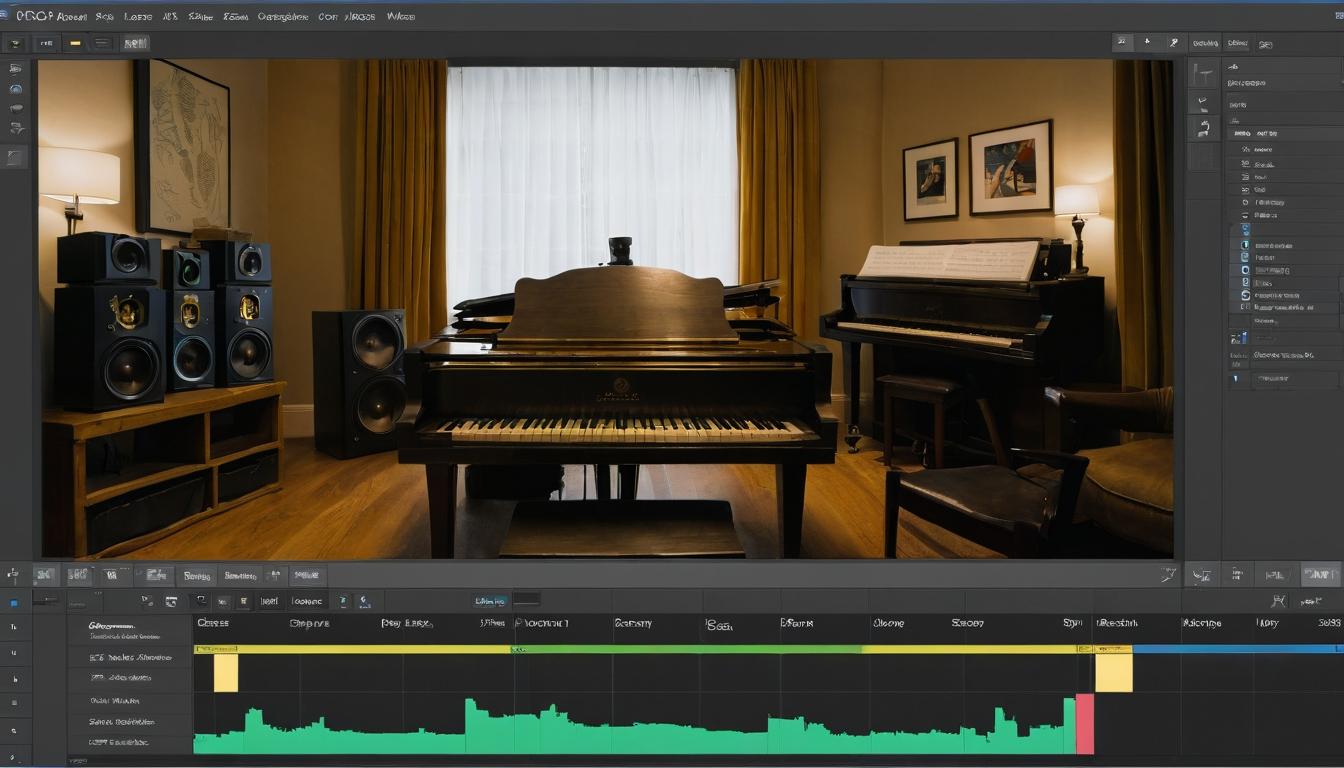
In the shadowed corners of Hollywood's soundstages, a quiet revolution is unfolding. While audiences fixate on dazzling visuals and A-list performances, a cadre of musical architects is quietly dismantling the century-old conventions of film scoring. This isn't about John Williams' triumphant brass or Hans Zimmer's thunderous percussion—though those giants still cast long shadows. This is about the subtle, seismic shifts happening at the edges of the industry, where composers are no longer mere accompanists but narrative co-authors.
Walk into any major scoring session today, and you'll witness a curious inversion of traditional roles. Where composers once received locked picture and wrote to match, they're now being brought into pre-production meetings, sitting alongside directors and screenwriters during script development. The result? Music isn't just supporting the story—it's helping to build its DNA. Take Mica Levi's work on 'Jackie,' where the composer's fragmented, dissonant strings didn't just reflect Jacqueline Kennedy's grief; they became the psychological architecture of her trauma. Or Hildur Guðnadóttir's groundbreaking score for 'Joker,' where the cello wasn't an instrument but Arthur Fleck's unraveling psyche made audible months before cameras rolled.
This collaborative shift is rewriting the economics of film music. Streaming platforms, particularly Netflix and Apple TV+, are pouring unprecedented resources into original scores, treating them not as post-production expenses but as premium content differentiators. The 'Stranger Things' soundtrack didn't just accompany the show—it became a cultural phenomenon, with Kyle Dixon and Michael Stein's analog synth work spawning vinyl releases, concert tours, and a generation of imitators. Suddenly, film composers aren't just hired guns; they're brand ambassadors, their sonic signatures as recognizable as any director's visual style.
Yet this golden age of opportunity comes with Faustian bargains. The democratization of scoring technology means anyone with a laptop can create professional-quality music, flooding the market and driving down fees for mid-career composers. Meanwhile, the pressure to produce 'safety-first' scores that algorithmically resemble previous hits creates creative homogenization. The very technology that liberated composers—sample libraries so realistic they mimic entire orchestras—threatens to make actual musicians obsolete. It's a paradox: never have composers had more tools at their disposal, yet never has the industry been more risk-averse.
Perhaps most fascinating is the globalization of film scoring. No longer confined to Hollywood's echo chamber, composers from Reykjavík to Seoul are bringing indigenous musical traditions to blockbuster cinema. When Bong Joon-ho needed a score for 'Parasite,' he didn't look to Los Angeles but to Korean composer Jung Jae-il, whose blend of classical minimalism and traditional Korean instrumentation became the film's unsettling heartbeat. Similarly, Ludwig Göransson's fusion of Scandinavian folk motifs with Western orchestration for 'Tenet' created a temporal disorientation that mirrored the film's narrative complexity.
What emerges from this landscape isn't just new music but new questions about cinema itself. If a composer's themes can exist as standalone concert works, are they still 'film music'? When franchises like Marvel employ different composers for each installment yet demand musical continuity, who owns the sonic identity? And as AI begins generating serviceable underscore, what becomes of the human touch—those imperfections and inspirations that transform notes into emotion?
The answers may lie in cinema's past. Before talkies, live musicians provided the only sound in theaters, improvising to match the flickering images. Today's composers, armed with digital workstations and global collaborators, are returning to that spirit of real-time creation. They're not just writing music; they're engineering emotional weather systems, building sonic worlds that exist beyond the screen. In an age of endless content, perhaps the most radical act is to create something that can't be skipped—not because it's loud, but because it's essential to the story's breath.
As the credits roll on this evolving drama, one truth remains: the best film music doesn't tell you how to feel. It reveals feelings you didn't know you had. And in studios from Burbank to Bangkok, composers are still chasing that revelation—one note, one risk, one quiet revolution at a time.
The unsung architects of cinema: how film composers are rewriting the rules of storytelling