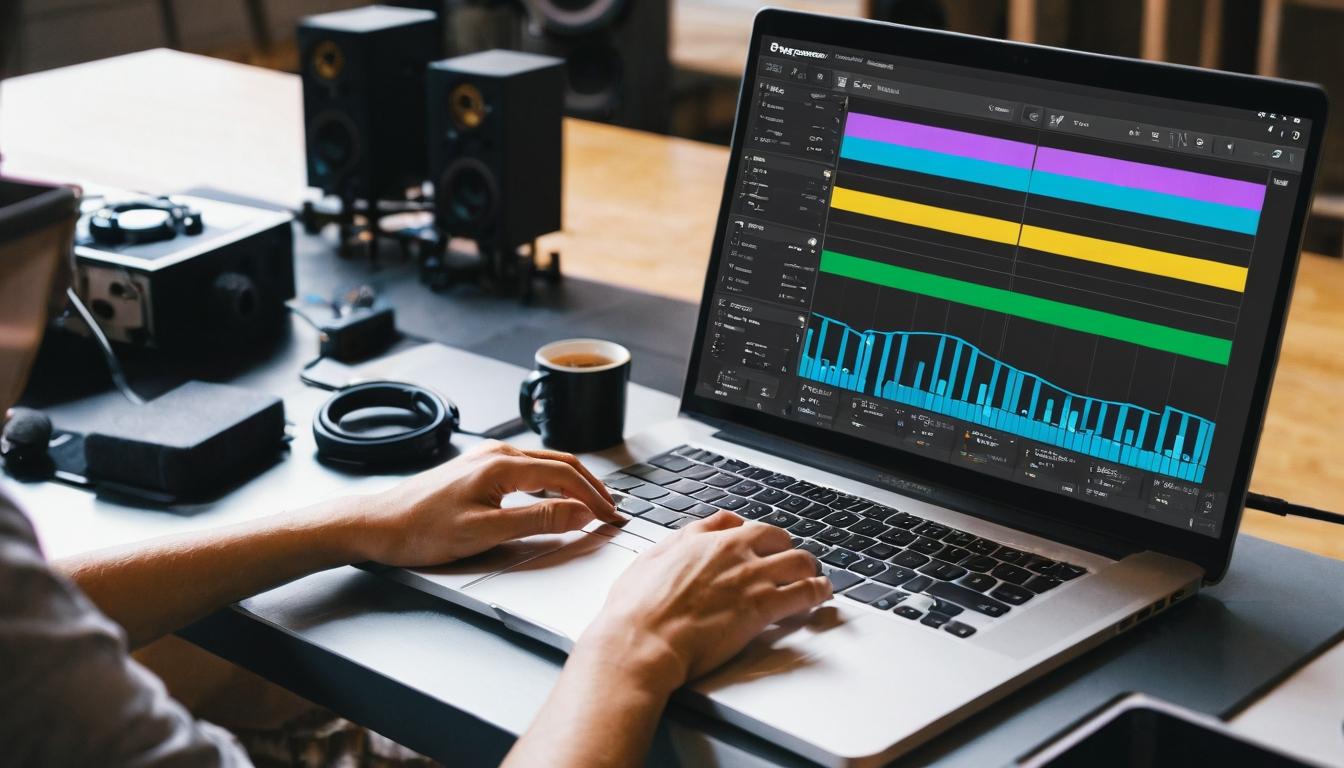
In the dimly lit control room of a Berlin recording studio, composer Anna Vogel adjusts her headphones as a string section in Los Angeles tunes their instruments via fiber-optic connection. Three thousand miles away, a percussionist in Mumbai waits for his cue. This isn't a scene from a science fiction film—it's Tuesday morning for today's film composers. The once-isolated world of film scoring has quietly undergone a revolution, not through dramatic announcements or industry conferences, but through the silent creep of streaming platforms and remote collaboration tools that have permanently altered how movie music gets made.
When Netflix released its first original film in 2015, few predicted how thoroughly streaming services would dismantle traditional scoring workflows. Where composers once worked in proximity to directors, huddled together in screening rooms with pencil and paper, they now navigate time zones and digital interfaces. The change isn't merely logistical—it's fundamentally altering the creative process itself. Veteran composer Michael Giacchino recently noted in an interview that the immediacy of feedback has accelerated timelines while paradoxically creating new forms of creative isolation. 'You can get notes at 2 AM from someone halfway across the world,' he observed, 'but you'll never bump into them at the coffee machine.'
This transformation extends beyond workflow to the very sound of contemporary film music. Streaming platforms' data analytics have begun influencing musical choices in subtle ways. Algorithms tracking viewer retention during credit sequences have led some platforms to request more 'stick-around' music—scores that maintain energy through the final fade-out. The result is a shift away from traditional resolution-focused endings toward more sustained musical tension. As one music supervisor for a major streaming service confided off the record, 'We're not telling composers what to write, but we're definitely suggesting what works based on what keeps people watching.'
The economic landscape has shifted just as dramatically. Where film scores once generated significant revenue through physical soundtrack sales, today's streaming royalties operate on a completely different scale. A score streamed millions of times might generate only modest income for its composer, while placement in trending playlists can unexpectedly revive decades-old compositions. This has created strange bedfellows—classic film themes finding new life on TikTok, Bernard Herrmann's Psycho strings accompanying makeup tutorials, John Williams' motifs backing travel vlogs. The film music ecosystem has expanded beyond the cinema, creating what industry analyst David Chen calls 'the perpetual soundtrack economy.'
Perhaps most surprisingly, this digital transformation has sparked a counter-movement toward analog authenticity. As remote collaboration becomes the norm, some composers are deliberately seeking out live recording sessions with all musicians in one room. The warmth of acoustic imperfections—the slight rustle of a page turn, the collective breath before an entrance—has become a premium product in an increasingly digital landscape. Recording engineer Sofia Martinez, who specializes in vintage microphone techniques, reports that demand for 'live-to-tape' scoring sessions has increased 300% in the past five years. 'It's the musical equivalent of artisanal bread in a world of sliced white,' she laughs. 'People crave something that feels human.'
This tension between digital convenience and analog authenticity defines the current moment in film music. Composers navigate a landscape where they might email stems to a director in the morning, then spend the afternoon tracking French horns in a century-old concert hall. The tools have changed, but the fundamental challenge remains the same: to translate emotion into sound, to make the invisible audible. As technology continues to evolve, one thing seems certain—the relationship between image and music will keep transforming in ways nobody can fully predict, creating new challenges and opportunities for those who score our stories.
What emerges from this quiet revolution is a more globally connected, technologically sophisticated, yet strangely fragmented film music landscape. The community that once gathered at specific studios and industry events now exists as much in Slack channels and video calls as in physical spaces. The result is a fascinating paradox: film music has never been more widely distributed or easily accessible, yet the process of creating it has never been more complex and layered. As we stream our entertainment with increasing ease, behind every score lies a web of global connections, digital handshakes, and creative compromises that would astonish the composers of Hollywood's golden age—and will likely seem quaint to those scoring films a decade from now.
The hidden orchestras: how streaming platforms are reshaping film music creation