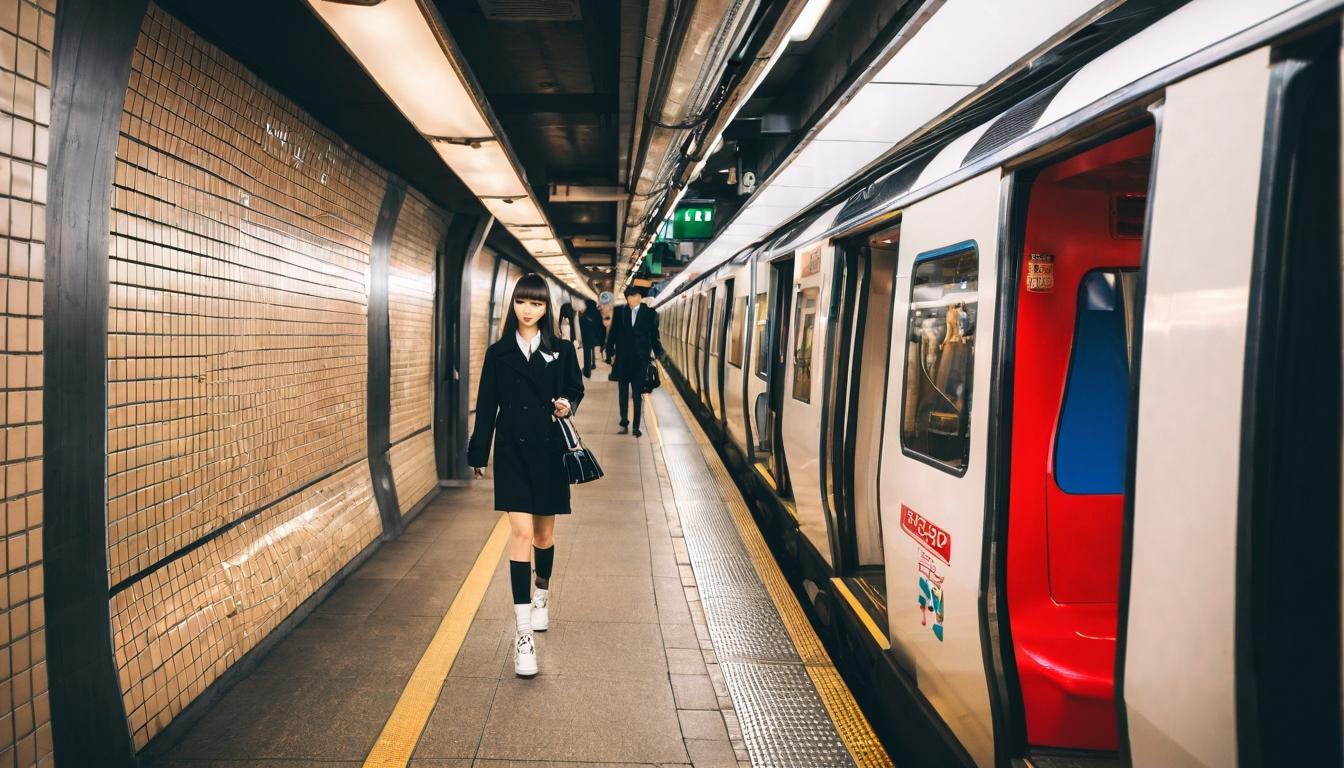
In the back rooms of Tokyo's Harajuku district, where the scent of spray paint mixes with steamed milk from the corner konbini, a new uniform is emerging. It's not on the runways of Paris or Milan, but in the mosh pits of underground venues and the digital alleys of SoundCloud. The kids aren't wearing what fashion tells them to wear—they're stitching together identities from the sonic landscapes they inhabit, and luxury brands are finally listening.
For decades, fashion and music have danced around each other like awkward partners at a high school prom. The occasional collaboration—think Madonna's Jean Paul Gaultier cone bra or Pharrell's Billionaire Boys Club—felt more like celebrity endorsement than cultural synthesis. But something has shifted in the tectonic plates of creativity. The barriers between these worlds are dissolving, not through corporate strategy meetings, but through the raw, unfiltered expression of artists who refuse to be categorized.
Walk through South London's Peckham neighborhood on a Friday night, and you'll see it firsthand. Teenagers in custom-tailored track suits that blend Savile Row precision with grime's aggressive energy. Hand-painted leather jackets referencing obscure drill lyrics. It's a visual language born from audio, where the bassline dictates the silhouette. These aren't consumers buying into a trend—they're creators building a worldview where sound and fabric are inseparable.
What's fascinating isn't just that fashion is borrowing from music, but that the relationship has become reciprocal in unexpected ways. When Virgil Abloh was designing for Louis Vuitton, he famously kept a studio playlist that included everything from Steve Reich's minimalist compositions to Chief Keef's chaotic drill. The clothes didn't just reference the music—they felt like the music. A puffer jacket with exaggerated proportions carried the same disruptive energy as a distorted 808 kick drum. A delicately beaded gown moved with the rhythmic complexity of a J Dilla beat.
This symbiosis is rewriting the rules of luxury. For generations, high fashion spoke in whispers—exclusive, refined, distant. But the new generation of designers understands that cultural relevance requires volume. Literally. Brands like Marine Serre and Martine Rose aren't just showing collections during fashion week; they're curating soundtracks, hosting club nights, and embedding QR codes in garments that lead to exclusive music drops. The garment becomes a portal, not just an object.
Perhaps most telling is what's happening beneath the mainstream radar. In Mexico City, the intersection of reggaeton's global domination and traditional craftsmanship has spawned what locals call 'nueva lujo'—new luxury. Designers like Carla Fernández are working with indigenous artisans to create pieces that incorporate the rhythmic patterns of dembow beats into woven textiles. The result is something that feels simultaneously ancient and hyper-contemporary, a physical manifestation of cultural exchange that no marketing team could engineer.
Meanwhile, in Seoul, the K-pop machine has become an accidental fashion incubator. When BTS's Jimin wore a customized jacket from emerging designer Jiyong Kim during a live performance, the piece sold out globally in 14 minutes. But more interesting than the commercial success is the design process: Kim creates while listening to the group's music on loop, translating vocal harmonies into color gradients and choreography into cut lines. The clothes don't just represent the music—they're transcriptions of it.
This isn't about celebrity dressing or brand partnerships. It's about a fundamental reimagining of what fashion can be when it stops trying to lead culture and starts listening to it. The most exciting developments aren't happening in design studios with mood boards, but in recording studios where fabric swatches sit alongside synthesizers. It's in the DIY communities of Bandcamp where musicians sell limited-edition merch that becomes more coveted than runway pieces.
What emerges from this collision is something messy, contradictory, and vibrantly alive. A couture gown with built-in speakers. Sustainable sneakers that change color based on the BPM of your surroundings. A leather jacket that comes with its own generative AI soundtrack. These might sound like gimmicks, but they represent a deeper truth: we no longer experience culture in separate channels. Our identities are playlists, our personalities are mashups, and our clothes are becoming the physical interface for this new reality.
The implications ripple far beyond aesthetics. When a luxury house invests in a music festival instead of a traditional advertising campaign, when a rapper's merch line gets reviewed in Vogue before their album gets reviewed in Pitchfork, when fashion students study sound design alongside pattern cutting—we're witnessing the birth of a new creative language. One that doesn't distinguish between what we hear and what we wear, but understands them as different expressions of the same human impulse: to communicate who we are, and who we hope to become.
In the end, maybe this convergence was inevitable. Both fashion and music are fundamentally concerned with time—capturing a moment, predicting the next, memorializing the past. Both thrive on tension between tradition and innovation. Both require an audience to complete their meaning. As the boundaries continue to blur, we're left with a simple but radical proposition: perhaps the future of luxury isn't about what you own, but what you experience. And the most powerful experiences, it turns out, are those that engage all our senses at once.
The underground sound of fashion: how music subcultures are reshaping luxury