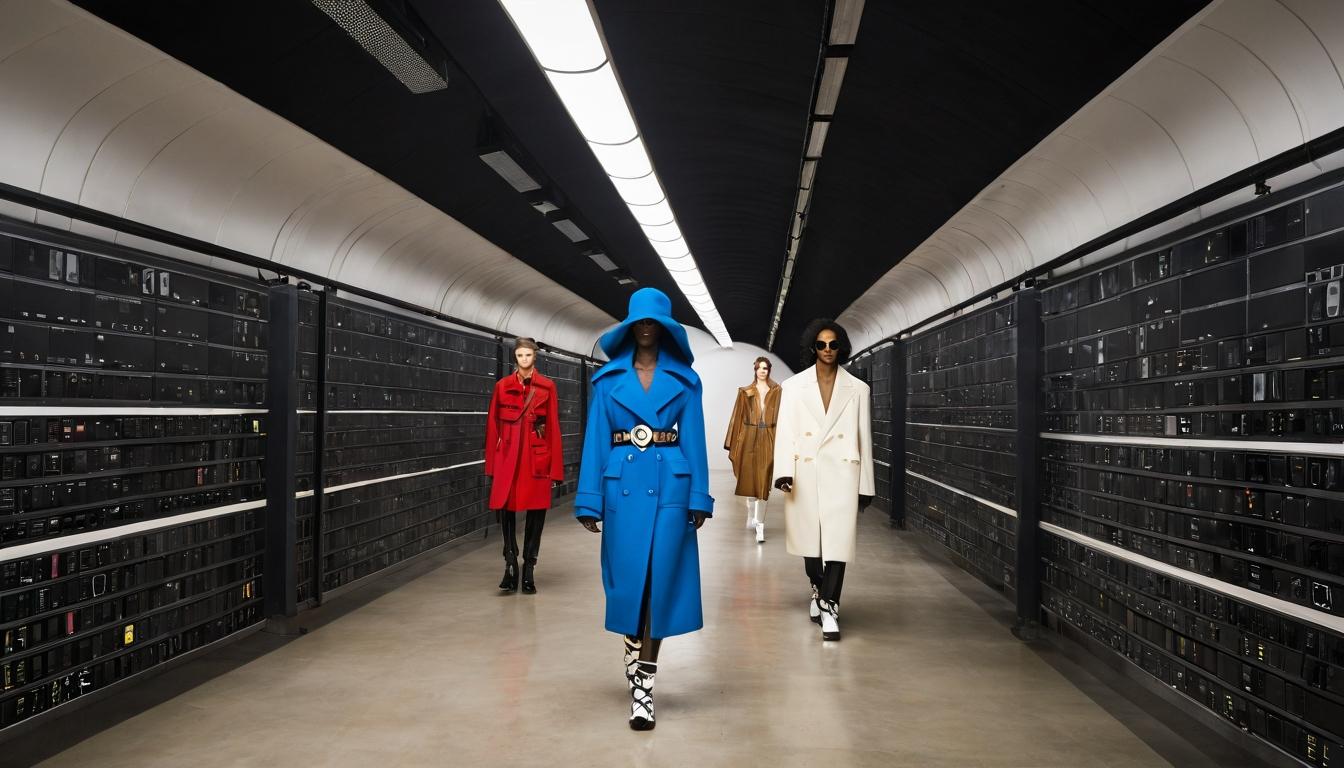
In a dimly backroom of a Parisian atelier, a needle drops on vinyl. The crackle precedes a bassline that vibrates through concrete floors, up steel tables, into the fingers of a designer cutting midnight-black silk. This isn't background music—it's the blueprint. Across fashion's landscape, a silent revolution is scoring itself not with celebrity endorsements or runway fanfare, but with meticulously curated soundscapes that are reshaping both industries from the inside out.
While headlines chase the obvious collisions—rappers turned creative directors, pop stars in front rows—the real story hums beneath the surface. It's in the coded playlists of avant-garde studios, the commissioned scores for shows that never hit streaming platforms, and the underground producers who've become fashion's most sought-after consultants. This isn't about branding; it's about frequency alignment. When Dazed Digital profiled the anonymous collective scoring London's most experimental shows, they revealed a truth the mainstream missed: fashion isn't borrowing from music anymore—it's composing alongside it.
Walk into the headquarters of brands that dominate Hypebeast's sneaker indexes, and you'll find recording studios before you find PR departments. Complex's deep-dive into streetwear's sonic identity exposed how brands build auditory worlds as carefully as visual ones, creating immersive experiences that begin with a beat long before the first garment is seen. This sonic architecture doesn't just accompany fashion—it dictates its rhythm, its mood, its very construction.
Meanwhile, Billboard's charts tell one story while fashion's studios tell another. The sync placements that matter aren't the stadium anthems but the obscure tracks that become runway signatures, transforming unknown artists into cult figures overnight. Vogue's coverage of fashion week often notes the music, but rarely follows the thread back to the bedroom producers in Berlin or Tokyo whose careers were launched not by radio play, but by a model's walk.
At Fashionista's recent roundtable with emerging designers, the conversation kept returning to what they were listening to while creating—not as inspiration, but as infrastructure. One designer described building a collection around the tempo of specific drum patterns, another spoke of dyeing fabrics to match audio frequencies. This isn't metaphorical; it's methodological. The seam between sound and textile has dissolved.
What emerges is a new ecosystem where success is measured not in decibels or decibels alone, but in resonance. The most interesting collaborations aren't between famous names, but between disciplines—pattern makers and sound engineers, textile developers and audio technicians. When these worlds truly merge, they create something neither fashion nor music could achieve alone: a complete sensory language.
This underground movement challenges both industries' commercial instincts. The most powerful sonic-fashion statements often resist easy consumption—they're show-specific, limited-run, or deliberately unrecorded. Their value lies in their ephemerality, their connection to a specific time and space. In an era of endless digital reproduction, these moments insist on being physically present, creating scarcity not through exclusivity, but through experience.
As boundaries blur, new questions emerge about authorship, ownership, and creative identity. When a garment is designed to a specific composition, who owns the resulting work? When a track becomes inseparable from a visual collection, where does one art form end and the other begin? These aren't legal questions—they're creative ones, pushing both fields into uncharted territory.
The revolution remains quiet by design. You won't find it trending on social media or dominating award shows. It lives in studio conversations, in shared headphones during fittings, in the vibration felt through a sewing machine. But its influence is amplifying, creating ripples that will eventually reach every corner of both industries. The future of fashion isn't just something you'll see—it's something you'll hear, feel in your bones, and recognize in the silent spaces between notes.
The underground sound: how fashion's quietest designers are scoring music's biggest moments