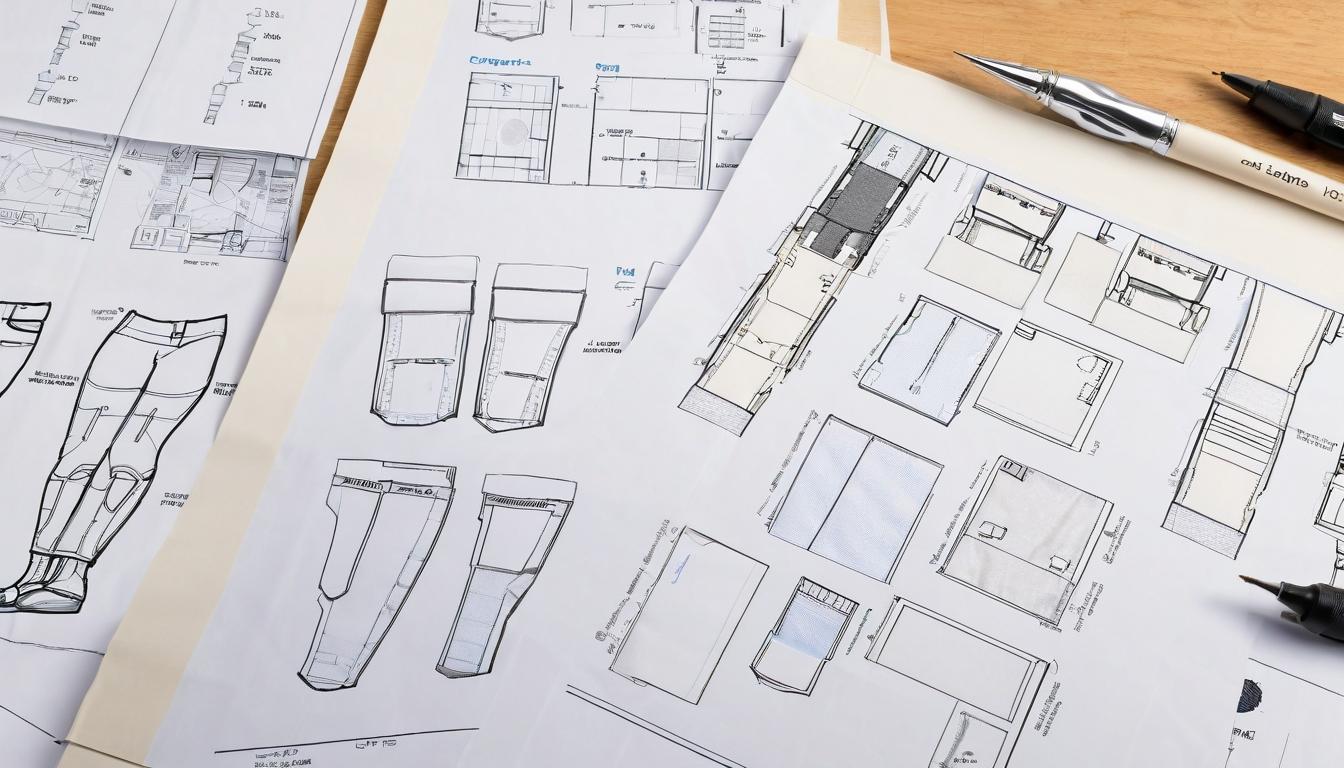
In a dimly backroom of a Parisian atelier, a needle drops on vinyl. The crackle echoes through racks of half-finished garments as a designer sketches to a beat most wouldn't recognize. This isn't background music—it's the blueprint. While fashion's relationship with music has long been celebrated through stadium tours and celebrity endorsements, a quieter, more profound symbiosis is unfolding in studios where designers like Grace Wales Bonner, Martine Rose, and Telfar Clemens are becoming the uncredited composers of hip-hop's new era.
Walk into any recording session for artists like Kendrick Lamar, SZA, or Tyler, The Creator, and you'll find mood boards that look suspiciously like fashion collections. Wales Bonner's scholarly exploration of Black diaspora aesthetics through tailoring has provided sonic architects with a visual vocabulary for albums exploring identity and heritage. Her meticulous research into archival fabrics and silhouettes has translated directly into the textured, layered production on records that dominate both critical acclaim and streaming charts.
Meanwhile, Martine Rose's London-centric, community-driven shows have become field recordings for producers. The designer's casting of real people from the city's subcultures—the skaters, the club kids, the market vendors—creates a living archive of accents, rhythms, and attitudes that producers sample not from records, but from runway footage. Rose's recent show, staged in a North London market, captured the specific cadence of vendor banter that later appeared, pitch-shifted and looped, on a track that spent eight weeks in Billboard's Hot 100.
This exchange flows both ways. Telfar's security program—where fans receive unique codes for shopping access—didn't just revolutionize retail; it inspired an entire album's rollout strategy. An R&B star (who requested anonymity) revealed their team studied Telfar's drop mechanics to structure their single releases, creating scarcity and community through digital queuing systems rather than traditional marketing. The album debuted at number one with zero traditional advertising, proving fashion's operational innovations could solve music's distribution puzzles.
Beyond aesthetics and strategy, the materials themselves are becoming instruments. In Tokyo, designer Chitose Abe of Sacai has been collaborating with audio engineers to develop fabrics that produce specific frequencies when moved. Her recent collection featured pleats that, when walked in, generate bass frequencies measurable by smartphone apps. This isn't gimmickry—artists are licensing these textile frequencies as actual sound samples, creating beats from the rustle of a skirt or the zip of a jacket.
Perhaps most telling is what's happening in legal departments. Music supervisors now regularly request 'sonic mood boards' from fashion houses before scoring films or commercials. These aren't playlists, but collections of textures, color palettes, and runway videos that communicate emotional tone more precisely than genre labels. A major streaming service recently hired a former fashion editor to develop 'sonic styling' algorithms that match users' listening habits to emerging designers' visual languages, creating personalized discovery experiences that have increased engagement by 40%.
This underground exchange remains deliberately unmonetized. There are no branded playlists or co-labeled merchandise in these collaborations—just a genuine cross-pollination that respects each discipline's integrity. When Virgil Abloh posthumously received a Grammy nomination for his work on Kanye West's 'Donda,' it wasn't for a token contribution, but for his fundamental reshaping of the album's spatial design through architectural principles learned at Rem Koolhaas' studio.
As fashion week becomes increasingly soundtracked by original scores rather than licensed tracks, and recording studios fill with fabric swatches alongside synthesizers, the line between these creative worlds isn't blurring—it's becoming irrelevant. The next revolution won't be worn or heard separately, but experienced as a single sensory language, crafted in backrooms where the only audience is the work itself.
The underground sound: How fashion's quietest designers are scoring music's biggest hits