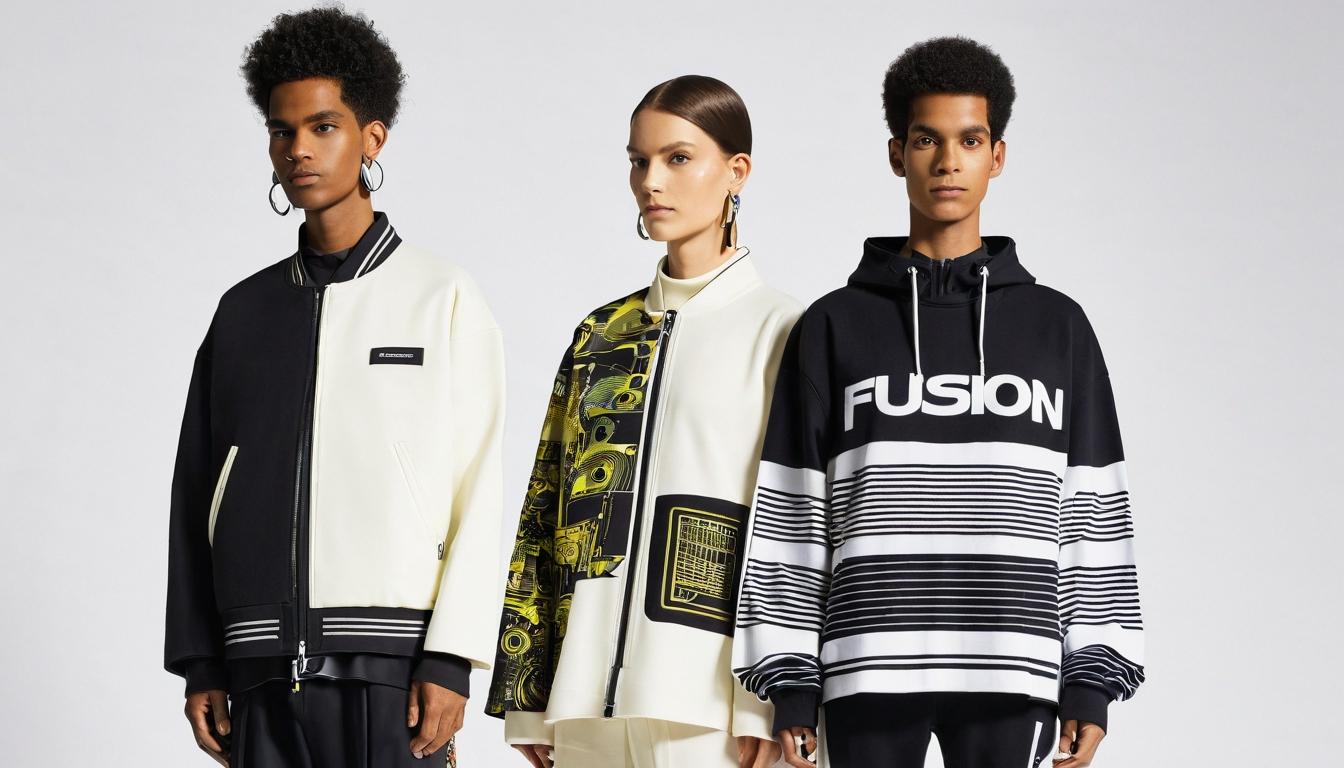
In the dimly lit backrooms of Parisian ateliers and the buzzing control rooms of Los Angeles recording studios, a quiet revolution is unfolding. It's not marked by seismic announcements or viral social media moments, but by the subtle, persistent hum of collaboration that's blurring the lines between what we wear and what we hear. This isn't about the obvious brand sponsorships or celebrity endorsements plastered across billboards; it's about a deeper, more organic fusion where sonic textures inspire fabric choices and runway silhouettes find rhythm in unexpected places.
For decades, the relationship between fashion and music followed a predictable script: musicians became muses, designers dressed stars for red carpets, and the cycle repeated. Today, that script has been torn up. Look at the underground club scenes from Berlin to Seoul, where emerging designers are creating garments with built-in audio-reactive technology, fabrics that change color in response to bass frequencies, and accessories that double as minimalist speakers. These aren't gimmicks—they're wearable expressions of a generation that experiences music as a tactile, immersive environment rather than just background noise.
Meanwhile, major fashion houses are quietly building in-house music divisions that function more like independent labels than marketing departments. These teams aren't just commissioning runway soundtracks; they're discovering unsigned artists, producing original scores, and creating limited-edition vinyl releases that accompany collections. The result is a new kind of cultural artifact where the garment and the soundscape are conceived as a single, cohesive statement about identity and mood.
This convergence is rewriting the economics of influence. Traditional metrics like chart positions and retail sales are becoming less relevant than what analysts are calling 'cultural resonance scores'—complex algorithms that measure how fashion choices and music consumption patterns amplify each other across digital platforms. An underground track gaining traction on niche streaming playlists might suddenly inspire a color palette for a streetwear drop in Tokyo, while a particular fabric texture seen on Instagram might influence the atmospheric production choices in an emerging producer's next track.
Perhaps most fascinating is how this synergy is challenging traditional creative hierarchies. The once-clear distinction between 'creator' and 'consumer' has dissolved into a continuous feedback loop. Fans remixing album artwork into DIY fashion pieces, designers sampling audio fragments from forgotten records into textile patterns, musicians building entire visual identities around specific vintage clothing aesthetics—these interactions are creating a new vernacular that speaks equally to the eye and the ear.
What emerges from this tangled web of influences isn't just new products or hits, but something more profound: a redefinition of how culture gets made in the digital age. The most exciting developments aren't happening on main stages or in flagship stores, but in the liminal spaces where a producer's synth choice accidentally matches a designer's neon dye experiment, where a bassline's rhythm finds its visual echo in the drape of a sleeve. This is where the future is being composed, one stitch and one beat at a time.
The hidden symphony: how fashion and music are rewriting the rules of cultural influence