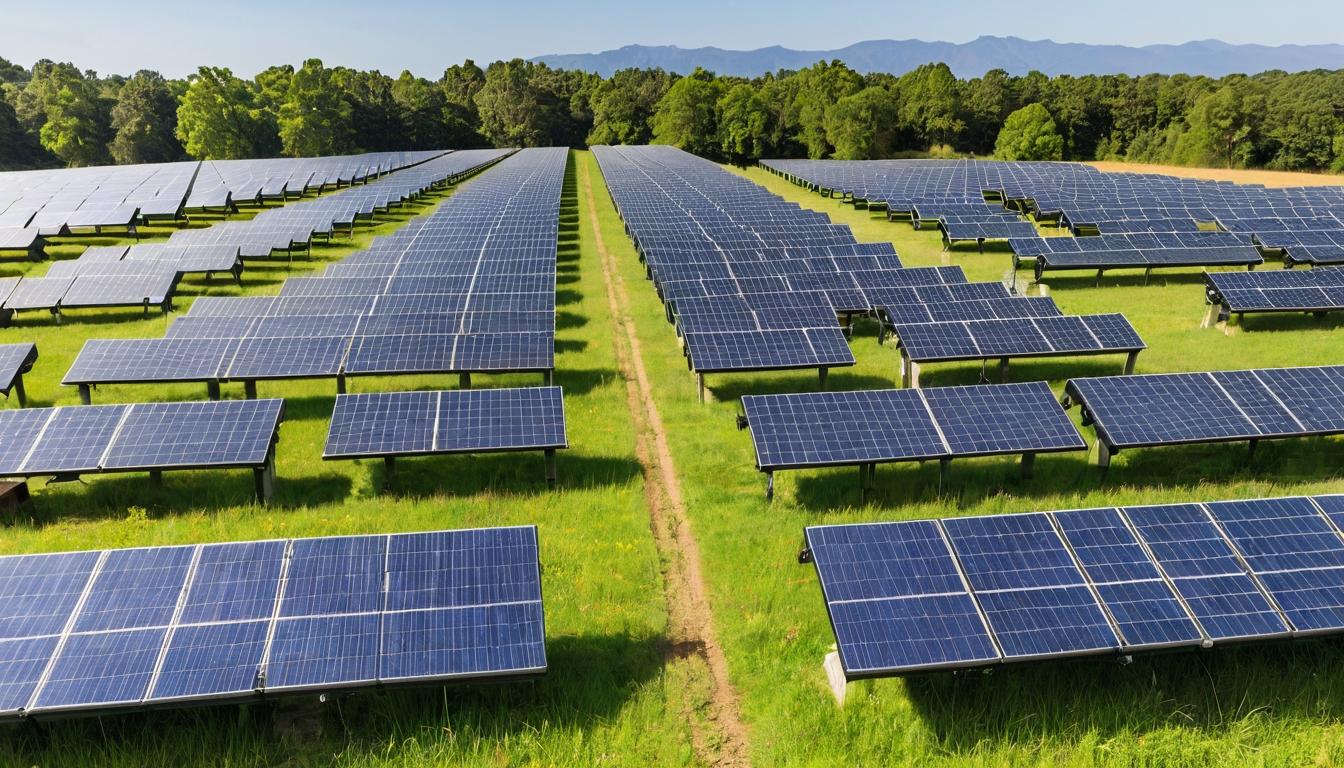
In the shadow of sprawling transmission lines and century-old utility monopolies, a quiet revolution is taking place in basements, backyards, and community centers across America. While headlines focus on massive offshore wind farms and billion-dollar solar installations, the real story of energy transformation is happening at the human scale—where neighbors are becoming their own power producers, and communities are declaring independence from the grid.
Walk through any suburban neighborhood today, and you'll see the signs: solar panels glinting on rooftops, electric vehicles charging in driveways, and increasingly, battery storage units humming quietly beside air conditioning units. What looks like scattered consumer choices is actually the emergence of a distributed energy ecosystem that threatens to upend everything we know about how electricity flows from producer to consumer.
This isn't just about saving money on utility bills anymore. When Hurricane Ida knocked out power to more than a million homes in Louisiana, one community in New Orleans kept their lights on while the rest of the city sat in darkness. The reason? A community microgrid powered by solar panels and battery storage that islanded itself from the failing main grid. Similar stories emerged during Texas' winter freeze and California's wildfire-driven blackouts—wherever centralized systems failed, decentralized alternatives succeeded.
Utility executives are watching these developments with growing unease. For decades, their business model relied on predictable demand flowing through infrastructure they controlled. Now, they're facing what energy analysts call the 'death spiral'—as more customers generate their own power, utilities must spread fixed infrastructure costs across fewer ratepayers, leading to higher bills that drive even more customers toward self-generation.
But the microgrid movement faces its own challenges. Regulatory hurdles vary wildly from state to state, with some jurisdictions actively discouraging grid defection while others offer incentives. Technical standards remain fragmented, creating interoperability nightmares. And perhaps most importantly, the upfront costs—while falling rapidly—still put true energy independence out of reach for low-income communities.
Yet innovation continues at a breathtaking pace. Companies are developing plug-and-play microgrid systems that homeowners can install without an engineering degree. Blockchain technology enables peer-to-peer energy trading between neighbors. Virtual power plants—networks of distributed resources controlled by software—are beginning to compete with traditional power plants in wholesale markets.
The implications extend far beyond individual households. Military bases are building microgrids for national security. Hospitals are installing them for life-saving reliability. Universities are creating living laboratories where students monitor and optimize campus energy flows in real time. Each installation becomes a data point in a massive, decentralized experiment in how we power our lives.
What's emerging isn't a complete rejection of the traditional grid but rather a renegotiation of its role. The grid of the future may serve less as a one-way delivery system and more as a balancing mechanism—a backup for when local generation falls short, and a marketplace for excess production. Utilities that adapt to this new reality could thrive as orchestrators of complex energy networks. Those that resist may find themselves managing stranded assets in a world that has moved on.
This transformation carries profound social implications. Energy democracy advocates argue that decentralized systems could address historical energy injustices, putting power generation—and decision-making—in the hands of communities rather than distant corporations. Environmental justice communities, long burdened by polluting power plants, could leapfrog directly to clean, local generation.
As the sun sets on another day, millions of rooftop solar systems across America begin feeding excess power back into the grid or into local batteries. Each kilowatt-hour represents a small vote for a different energy future—one that's more resilient, more democratic, and ultimately, more human. The revolution may be quiet, but its echoes are growing louder with every panel installed and every battery charged.
The quiet revolution: How microgrids are rewriting the rules of energy independence