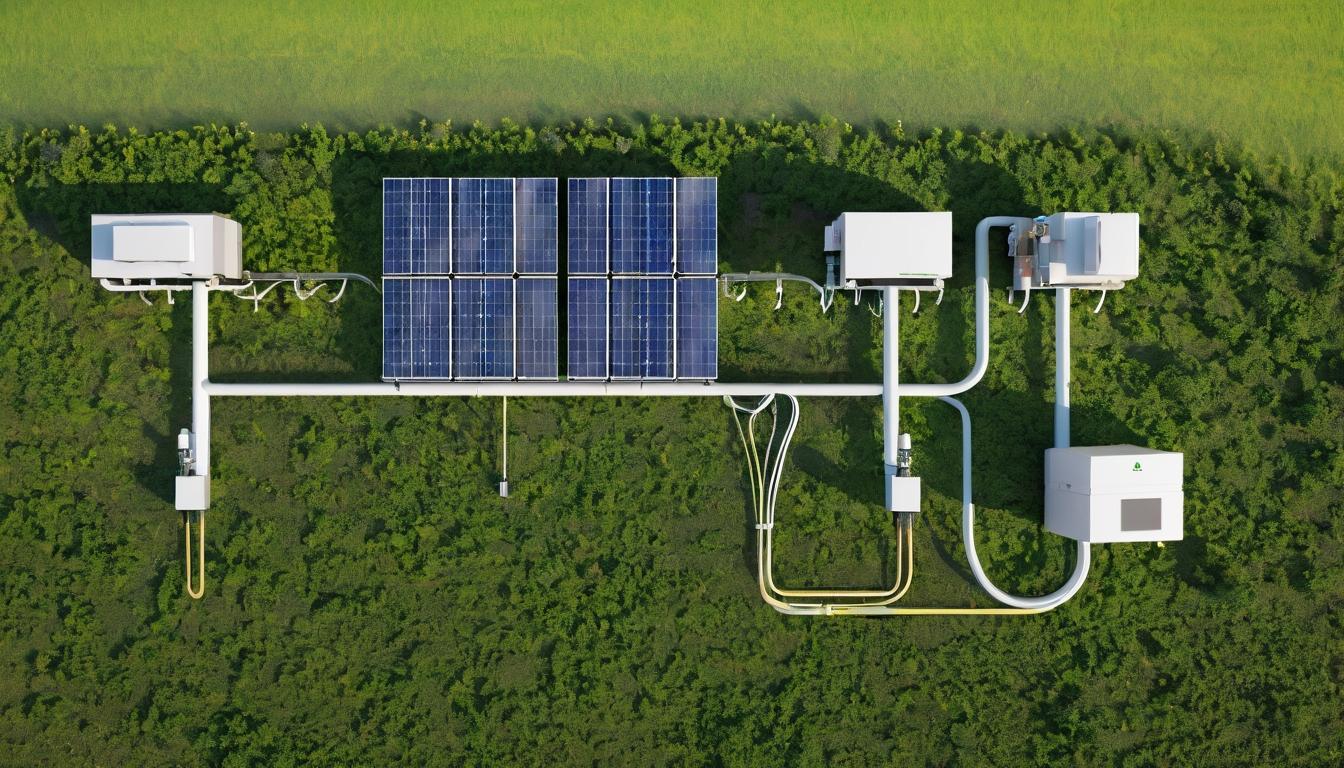
In the shadow of towering transmission lines and century-old substations, a quiet revolution is taking place across America's energy landscape. It doesn't make headlines like massive offshore wind farms or splashy solar installations, but it's fundamentally changing how communities think about power. Welcome to the age of the microgrid—where neighborhoods, campuses, and even single buildings are becoming their own miniature utilities.
Picture this: A hospital in California continues operating seamlessly during a wildfire-induced blackout. A university campus in New England powers through a nor'easter without flickering a single light. A manufacturing plant in Texas keeps production humming while the rest of the grid stumbles. These aren't hypothetical scenarios—they're happening right now, and they're challenging everything we thought we knew about reliable electricity.
What makes this revolution particularly fascinating isn't just the technology—it's the regulatory chess game playing out in state capitals from Sacramento to Albany. Traditional utilities, long accustomed to being the sole providers in their territories, are watching as customers discover they can generate, store, and manage their own power. The response has been a fascinating mix of resistance, adaptation, and occasional partnership that reads like a corporate thriller.
Take the case of a small town in Massachusetts that decided to build its own microgrid after repeated outages left residents in the dark for days. The local utility fought the proposal tooth and nail, arguing it violated their exclusive franchise rights. The town countered with data showing their microgrid would actually strengthen the larger grid by reducing strain during peak periods. After two years of regulatory battles, they won—and created a blueprint dozens of other communities are now following.
Meanwhile, the technology itself is evolving at breakneck speed. Early microgrids were essentially fancy backup generators—diesel-powered behemoths that kicked in when the grid failed. Today's systems are sophisticated networks integrating solar panels, battery storage, advanced controls, and sometimes even small wind turbines or fuel cells. They can island themselves from the main grid during outages, then seamlessly reconnect when power returns. Some can even sell excess electricity back to utilities, turning power consumers into power merchants.
Perhaps most intriguing is how microgrids are becoming social equalizers in an era of climate vulnerability. Wealthy communities and large corporations were early adopters, but innovative financing models are bringing the technology to affordable housing complexes, rural clinics, and tribal lands. In Puerto Rico, where Hurricane Maria exposed the fragility of centralized power, microgrids are being deployed in remote mountain communities that might otherwise wait years for reliable grid connections.
The financial calculus is shifting too. As battery prices continue their dramatic fall and solar panels become more efficient, the economics of microgrids are reaching tipping points that would have seemed impossible a decade ago. What was once a luxury for critical facilities like military bases and data centers is becoming viable for shopping centers, apartment buildings, and even individual homes.
Yet challenges remain. Interconnection standards vary wildly from state to state, creating a regulatory patchwork that confuses developers. Cybersecurity concerns loom large as these distributed systems create new entry points for potential attacks. And the fundamental business model question persists: In a world where everyone can generate their own power, who pays for maintaining the larger grid that still serves millions?
What's clear is that the microgrid revolution isn't about abandoning the traditional grid—it's about creating a more resilient, flexible, and democratic energy system. It's about giving communities control over their power destiny while creating backup systems that make the entire grid more robust. As climate change brings more extreme weather and cyber threats grow more sophisticated, these miniature power networks may prove to be our most intelligent insurance policy.
The quiet revolution is getting louder by the day. Utilities that adapt may find new revenue streams in managing these distributed networks. Communities that embrace microgrids may discover unprecedented energy independence. And all of us might just sleep better knowing the lights could stay on even when the big grid goes dark.
The quiet revolution: How microgrids are rewriting America's energy rules