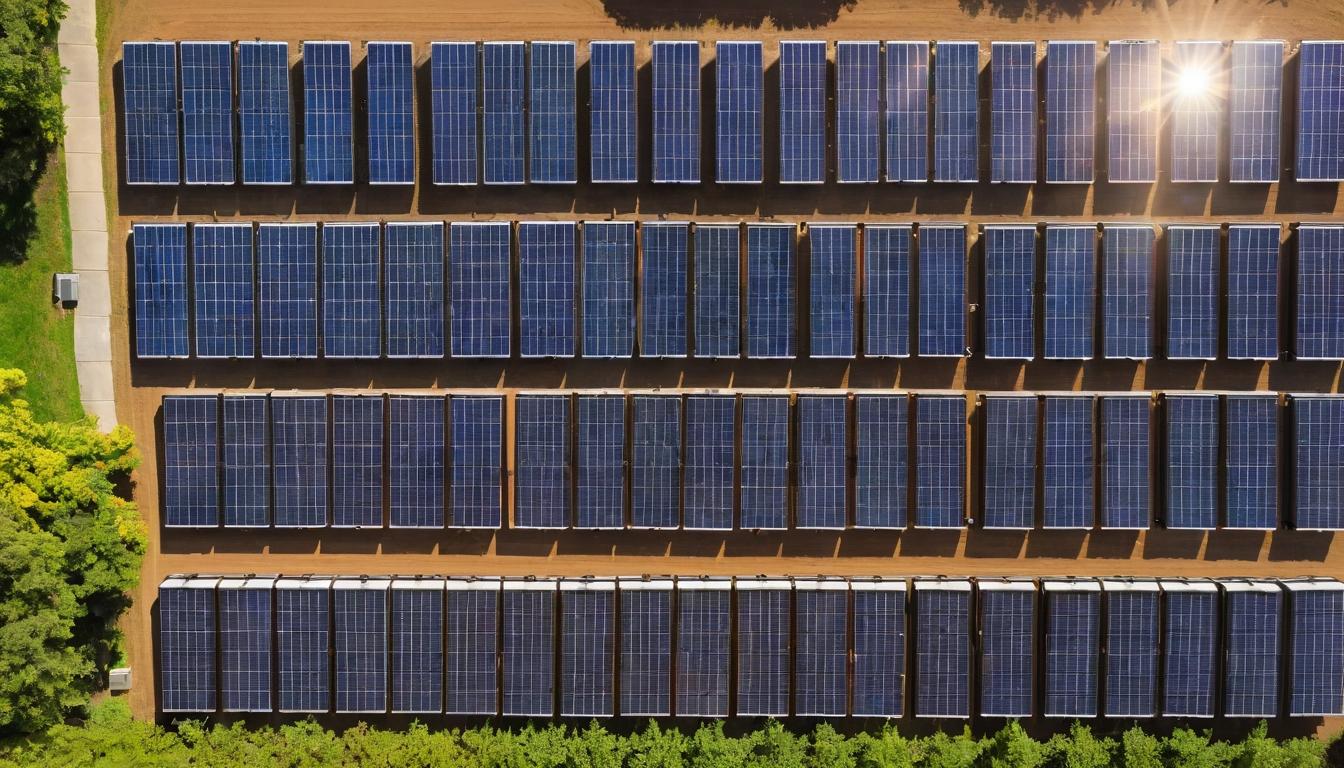
In a nondescript warehouse on the outskirts of Austin, Texas, something remarkable is happening. A group of neighbors—teachers, small business owners, retirees—are huddled around a laptop, watching real-time data from their shared solar array. They're not just saving money on their electricity bills; they're part of a grassroots movement quietly dismantling the century-old model of centralized power. Across the country, from Brooklyn's brownstones to California's suburbs, energy communities are emerging as the most disruptive force the utility sector has seen since Thomas Edison flipped the first switch.
These aren't your grandfather's co-ops. Modern energy communities leverage blockchain for transparent energy trading, AI for predictive load management, and sophisticated software platforms that make participation as easy as using a rideshare app. What started as niche experiments for off-grid enthusiasts has evolved into a legitimate threat to traditional utility business models. The numbers tell the story: over 2,000 energy communities now operate in the U.S., collectively managing enough capacity to power a mid-sized city.
Behind the feel-good narrative of neighbors helping neighbors lies a fierce regulatory battle. Utilities, caught flat-footed by the solar revolution, are now facing an even more fundamental challenge. When communities generate, store, and trade their own power, what happens to the grid maintenance fees that keep utilities profitable? State public utility commissions from New York to Hawaii are grappling with this question, often issuing contradictory rulings that create a regulatory patchwork inhibiting growth.
Technology is the great enabler, but also the source of unexpected complications. Microgrid controllers—the brains behind these community systems—must perform a delicate dance: balancing local production with grid stability, managing battery storage cycles to maximize financial returns, and ensuring cybersecurity in increasingly connected networks. The most successful communities have become sophisticated energy traders, selling excess power during peak hours and buying back during lulls, effectively playing the market against itself.
Perhaps the most revolutionary aspect isn't technological but social. Energy communities are creating new forms of local governance and economic resilience. In Puerto Rico, communities that formed after Hurricane Maria now operate independent microgrids that kept lights on when the central system failed again during subsequent storms. In Colorado, a community solar garden provides discounted power to low-income households, addressing energy equity concerns that have long plagued traditional utility programs.
The financial innovation is equally striking. New models are emerging that separate the ownership of generation assets from their consumption. Third-party developers build community solar arrays, while specialized operators manage the complex billing and allocation. Residents subscribe rather than invest upfront, dramatically lowering participation barriers. This 'solar-as-a-service' model is attracting venture capital at an unprecedented rate, with over $500 million invested in community energy platforms in the last year alone.
Yet challenges persist. Interconnection queues—the process for connecting to the grid—remain clogged, with some communities waiting over two years for approval. Liability concerns make insurers nervous about novel ownership structures. And the sheer complexity of coordinating dozens or hundreds of participants requires administrative overhead that can eat into financial benefits.
Looking forward, the most intriguing development may be how these communities interface with the broader energy transition. Electric vehicle charging represents both a massive new load and a distributed storage opportunity. Smart communities are already experimenting with vehicle-to-grid technology, using EV batteries to stabilize local networks during outages. Meanwhile, as heat pumps replace gas furnaces and induction stoves replace gas ranges, the electrical load becomes more valuable—and more manageable through community coordination.
This quiet revolution won't eliminate utilities overnight. But it's forcing a fundamental reimagining of what a grid should be: not just a one-way pipe for electrons, but a platform for exchange, a tool for resilience, and perhaps most importantly, a community asset. The people in that Austin warehouse may not think of themselves as revolutionaries. They're just trying to save money and ensure their lights stay on during the next storm. But in doing so, they're writing the next chapter of America's energy story—one kilowatt-hour at a time.
The quiet revolution: how energy communities are rewriting the grid's rules