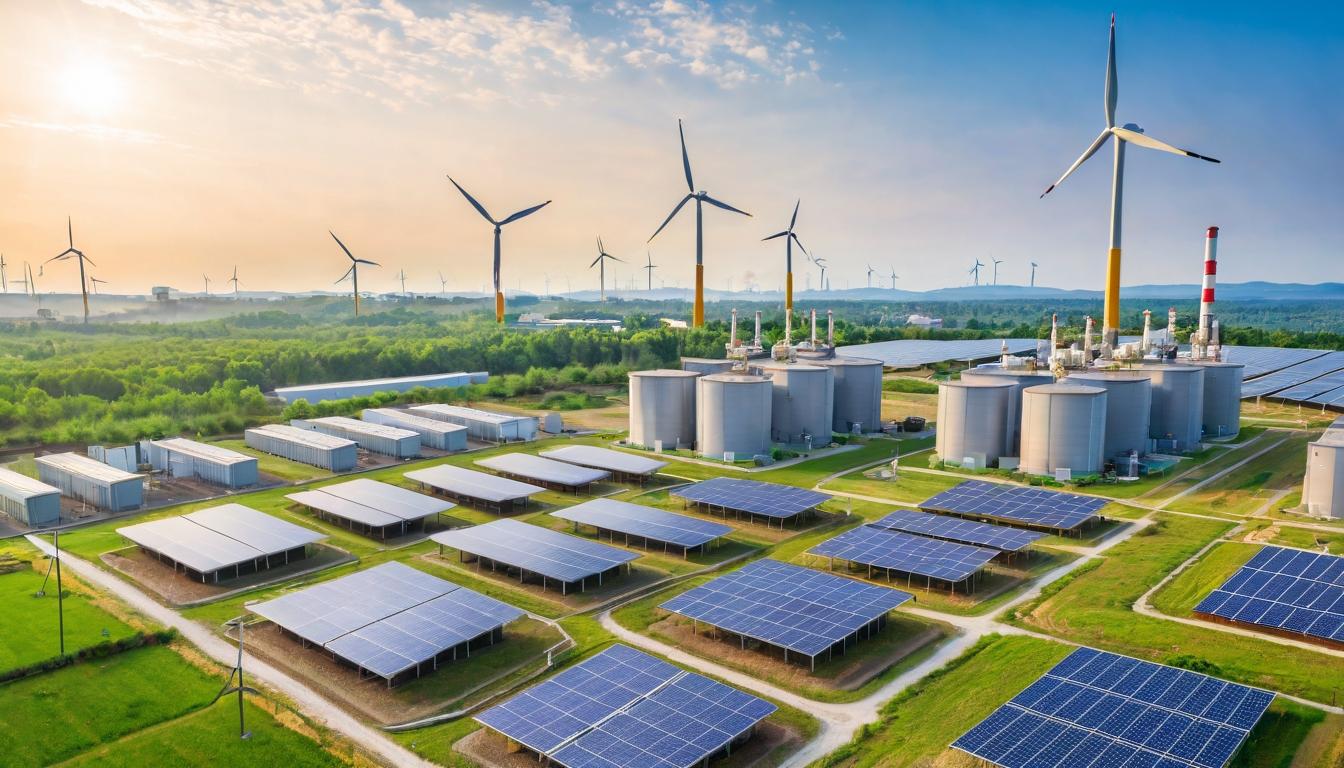
In a nondescript control room somewhere in the Midwest, operators are staring at screens that look nothing like the traditional grid maps of a decade ago. Instead of static lines and predictable load curves, they're watching a living, breathing digital twin of the entire regional transmission system—one that predicts trouble before it happens. This isn't science fiction; it's the new reality of grid management, where artificial intelligence is quietly transforming how we keep the lights on.
While solar panels and wind turbines grab headlines, the real energy revolution is happening in the algorithms. Utilities that once relied on historical data and human intuition are now deploying machine learning models that can forecast electricity demand with startling accuracy, sometimes days in advance. These systems analyze everything from weather patterns to social media trends about major sporting events, creating a mosaic of predictive intelligence that human operators could never assemble alone.
What makes this shift particularly fascinating isn't just the technology itself, but how it's changing the economics of power. Traditional grid planning involved building expensive infrastructure to handle peak demand that might occur only a few hours each year. Now, AI-driven virtual power plants—networks of distributed energy resources like home batteries and EV chargers—can be summoned on demand, creating capacity without pouring concrete or stringing new transmission lines.
This digital transformation comes with its own set of challenges and ethical questions. As grids become smarter, they also become more vulnerable to cyberattacks. The very connectivity that enables real-time optimization also creates potential entry points for bad actors. Meanwhile, privacy advocates worry about the granular data collection required for these systems to function—your smart thermostat might be helping balance the grid, but it's also telling utilities when you're home and when you're away.
Perhaps most surprisingly, the AI revolution is creating strange new alliances. Tech companies that once had little interest in energy markets are now deeply embedded in utility operations, while traditional energy giants are hiring data scientists by the dozens. The result is a hybrid industry that looks less like the monolithic utilities of the past and more like the collaborative ecosystems we see in Silicon Valley.
For consumers, these changes manifest in subtle but significant ways. Dynamic pricing models that once seemed theoretical are becoming practical, allowing homeowners to save money by shifting their energy use to off-peak hours. Electric vehicle owners can now earn credits by allowing utilities to draw from their car batteries during grid emergencies. The boundary between energy producer and consumer is blurring in ways that would have seemed impossible just five years ago.
Yet for all its promise, the AI-powered grid faces a fundamental tension between optimization and resilience. The most efficient grid isn't necessarily the most robust one, and as we've seen in recent extreme weather events, redundancy matters. The challenge for utilities is balancing the elegant efficiency of algorithms with the messy reality of physical infrastructure that must withstand hurricanes, wildfires, and polar vortices.
Looking ahead, the next frontier may be what some are calling the 'cognitive grid'—systems that don't just predict and respond, but actually learn and adapt autonomously. Imagine transformers that sense their own impending failures and reroute power before humans even notice a problem, or microgrids that can island themselves during outages and reconnect seamlessly when the main grid is restored.
What's clear is that the energy transition isn't just about replacing fossil fuels with renewables—it's about replacing analog thinking with digital intelligence. The quiet hum of servers in data centers may not be as dramatic as the roar of a natural gas turbine, but it's becoming just as essential to keeping our society powered. As one grid operator told me recently, 'We're not just managing electrons anymore; we're managing information about electrons.' And in that subtle shift lies nothing less than the future of energy itself.
The quiet revolution: how AI is rewriting the rules of grid management