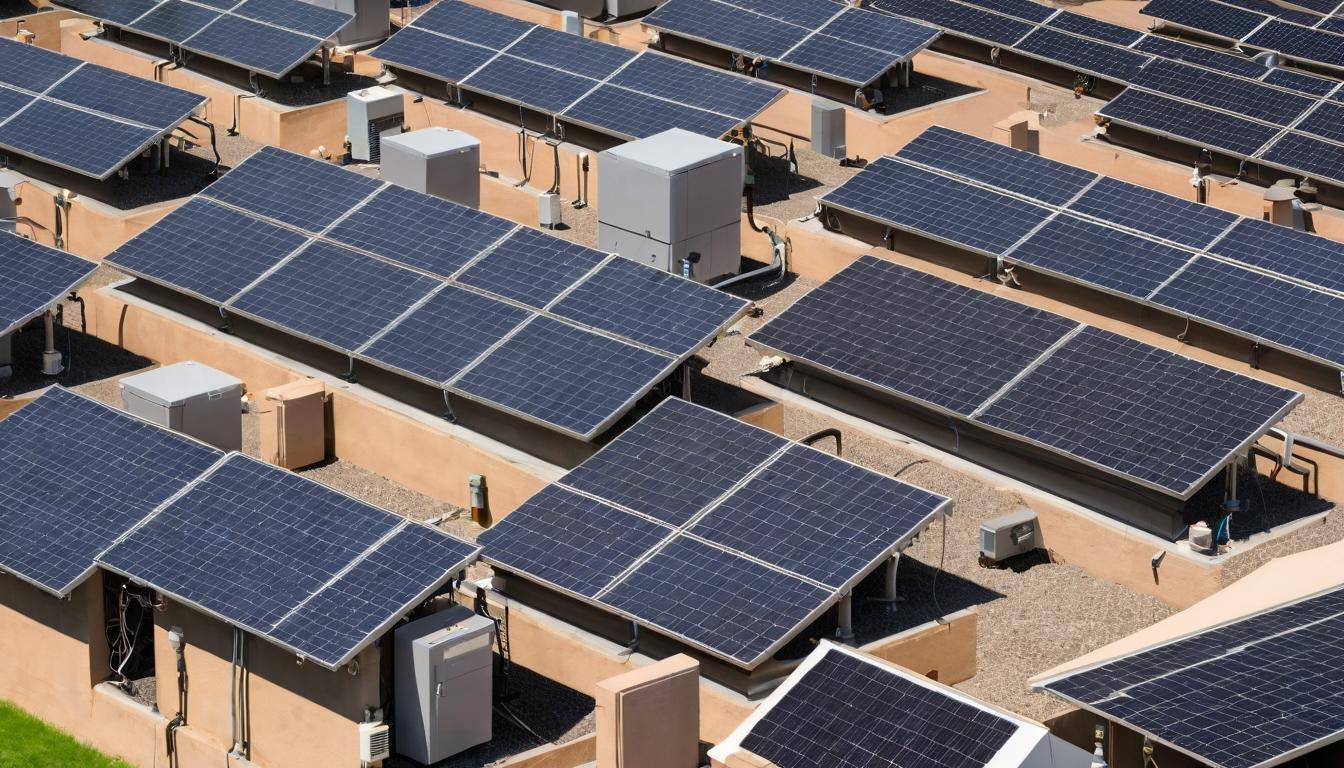
If you think the energy transition is happening on wind farms and solar arrays visible from the highway, you're missing the real story. The revolution is happening in basements, on rooftops, and in suburban garages—places where utilities have historically had little reason to look. Across America, a distributed energy network is growing organically, creating what some analysts are calling a 'shadow grid' that could fundamentally alter how we power our lives.
This isn't about homeowners simply installing solar panels. That's yesterday's news. Today, we're seeing the emergence of sophisticated home energy ecosystems that include battery storage, smart inverters, electric vehicle chargers that can feed power back to the grid, and intelligent management systems that optimize every kilowatt-hour. These systems don't just consume energy—they produce it, store it, and trade it, creating what energy economists call 'prosumers' who both produce and consume electricity.
What makes this development particularly disruptive is how it's happening outside traditional utility planning processes. While regulators and utility executives debate multi-billion dollar transmission projects that take decades to complete, homeowners and businesses are quietly building a decentralized network that could eventually handle significant portions of local energy needs. In some communities, these distributed resources already provide more capacity during peak hours than traditional power plants.
The implications for grid reliability are profound but largely unexamined. On one hand, distributed resources can provide crucial backup during extreme weather events when centralized systems fail. During recent heatwaves in California and Texas, home battery systems kept lights on and air conditioners running while the main grid struggled. But there's a darker side: as more customers generate their own power, utilities collect less revenue while still maintaining the expensive grid infrastructure everyone relies on when the sun isn't shining or the wind isn't blowing.
This creates what energy analysts call the 'utility death spiral'—as customers defect from the grid or reduce their purchases, utilities raise rates on remaining customers, which encourages more defection, creating a vicious cycle. Some utilities are fighting back with new rate structures and fees for solar customers, while others are embracing the change by offering to manage home energy systems as virtual power plants.
The regulatory landscape is struggling to keep pace with these technological changes. Current rules were written for a one-way flow of electricity from large power plants to passive consumers. Now, with electrons flowing in multiple directions, regulators are grappling with questions about who owns the power, how it should be priced, and what responsibilities come with being both a producer and consumer of grid electricity.
In several states, battles are brewing over 'net metering' policies that determine how much utilities must pay for excess solar power fed back into the grid. These seemingly technical debates have enormous consequences for the economics of distributed energy and could determine whether the shadow grid remains a niche phenomenon or becomes the dominant energy paradigm.
Perhaps most intriguing is how this distributed energy revolution is creating new business models that didn't exist five years ago. Companies are now offering 'energy-as-a-service' packages where they install, maintain, and optimize home energy systems for a monthly fee. Others are creating neighborhood microgrids that can operate independently from the main grid during outages. And blockchain startups are experimenting with peer-to-peer energy trading platforms that would allow neighbors to buy and sell electricity directly.
What's missing from most discussions about this transformation is the human element. For decades, electricity was something that magically appeared when you flipped a switch. Now, homeowners are becoming intimately familiar with kilowatt-hours, demand charges, and time-of-use rates. This new energy literacy is changing how people think about power and could have profound effects on energy conservation and climate policy.
The ultimate question isn't whether distributed energy will continue to grow—all indicators suggest it will accelerate as battery prices fall and electric vehicle adoption increases. The real question is whether our institutions can adapt quickly enough to harness this transformation for public benefit rather than fighting a rearguard action to preserve the status quo. The grid of the future may look less like a centralized hub-and-spoke system and more like the internet—decentralized, resilient, and constantly evolving in ways its original designers never imagined.
What's clear is that the energy landscape is changing from the bottom up, driven by technology that puts power—literally and figuratively—in the hands of ordinary people. Whether this leads to a more resilient, affordable, and sustainable energy system or creates new forms of inequality and grid instability may be the defining energy story of our decade.
The hidden grid: how distributed energy is quietly rewriting the utility playbook