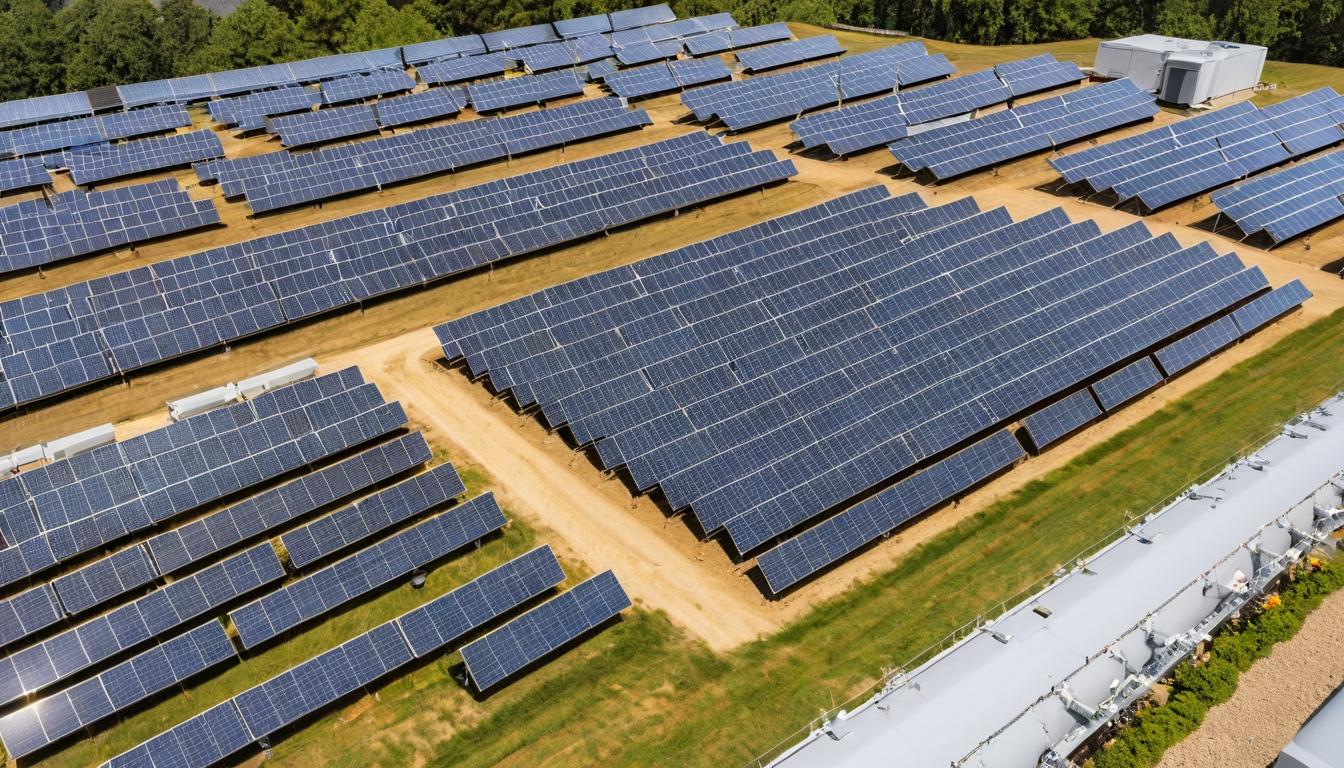
If you think the energy revolution is happening in sprawling solar farms or towering wind turbines, you're only seeing half the picture. The real action is unfolding in basements, on rooftops, and in suburban garages across America—places where ordinary people are becoming power producers, and where utilities are scrambling to keep up with a transformation they never saw coming.
Walk through any residential neighborhood today, and you'll spot the signs: solar panels glinting in the sun, electric vehicles charging quietly in driveways, home batteries humming in utility closets. What looks like scattered consumer choices is actually the emergence of a distributed energy ecosystem that's challenging century-old utility business models. The numbers tell a startling story—distributed solar capacity has grown 40% annually for the past five years, while residential battery installations have tripled since 2020.
Utilities aren't just watching from the sidelines. They're deploying their own distributed resources while trying to manage the flood of customer-owned generation. The result is a complex dance between centralized control and decentralized innovation. Some utilities are embracing the change, creating virtual power plants that aggregate thousands of small systems into grid resources. Others are fighting rearguard actions, implementing fees and restrictions that critics say protect outdated monopolies.
The regulatory landscape has become a battleground where every decision about net metering, interconnection rules, or rate design could tip the balance. In states like California and Hawaii, where distributed energy penetration is highest, regulators are rewriting the rulebook in real time. The stakes couldn't be higher—get it right, and we create a more resilient, democratic energy system. Get it wrong, and we risk slowing the clean energy transition or creating a two-tier system where only the wealthy can benefit.
Technology is advancing faster than policy can keep up. Smart inverters can now provide grid services that were once the exclusive domain of massive power plants. Blockchain-enabled peer-to-peer energy trading platforms are being tested in Brooklyn and Tokyo. Artificial intelligence is optimizing when to charge batteries, when to sell solar power, and when to reduce consumption—all without human intervention.
What's emerging isn't just a new way to generate electricity, but a new relationship between people and power. The passive consumer is becoming an active participant in the energy system. This shift raises profound questions about equity, access, and control. Will distributed energy become a tool for energy democracy, or will it create new divides between those who can afford the technology and those who can't?
The answer may lie in innovative business models that are emerging at the edges of the traditional system. Community solar projects are bringing the benefits of solar to renters and low-income households. Energy-as-a-service companies are removing upfront costs through subscription models. Microgrids are providing resilience in communities vulnerable to extreme weather.
As I've traveled the country talking to utility executives, regulators, entrepreneurs, and homeowners, I've seen both the promise and the peril of this transition. In Austin, a neighborhood microgrid kept lights on during a grid outage while selling power back to the utility. In Florida, a utility's aggressive fees on solar customers sparked a political battle that reached the state supreme court. In New York, a virtual power plant helped prevent blackouts during a heatwave by coordinating thousands of home batteries.
The distributed energy revolution isn't coming—it's already here. It's happening quietly, in millions of small decisions that are adding up to something transformative. The question isn't whether utilities will adapt, but how quickly, and at what cost to their traditional business. What's clear is that the grid of the future will look less like a one-way street and more like a networked web of interconnected resources.
For consumers, this means more choice and potentially lower costs. For utilities, it means reimagining their role from power providers to platform operators. For society, it offers a path to cleaner, more resilient energy. But getting there will require navigating technical challenges, regulatory uncertainty, and cultural resistance to change.
The story of distributed energy is still being written, and its authors include everyone from Silicon Valley entrepreneurs to suburban homeowners to utility engineers working late nights to keep the lights on. It's a story about technology, yes, but more importantly, it's a story about power—who has it, who controls it, and who benefits from it. And like all good stories about power, this one promises twists, conflicts, and ultimately, transformation.
The hidden grid: how distributed energy is quietly rewriting the power playbook