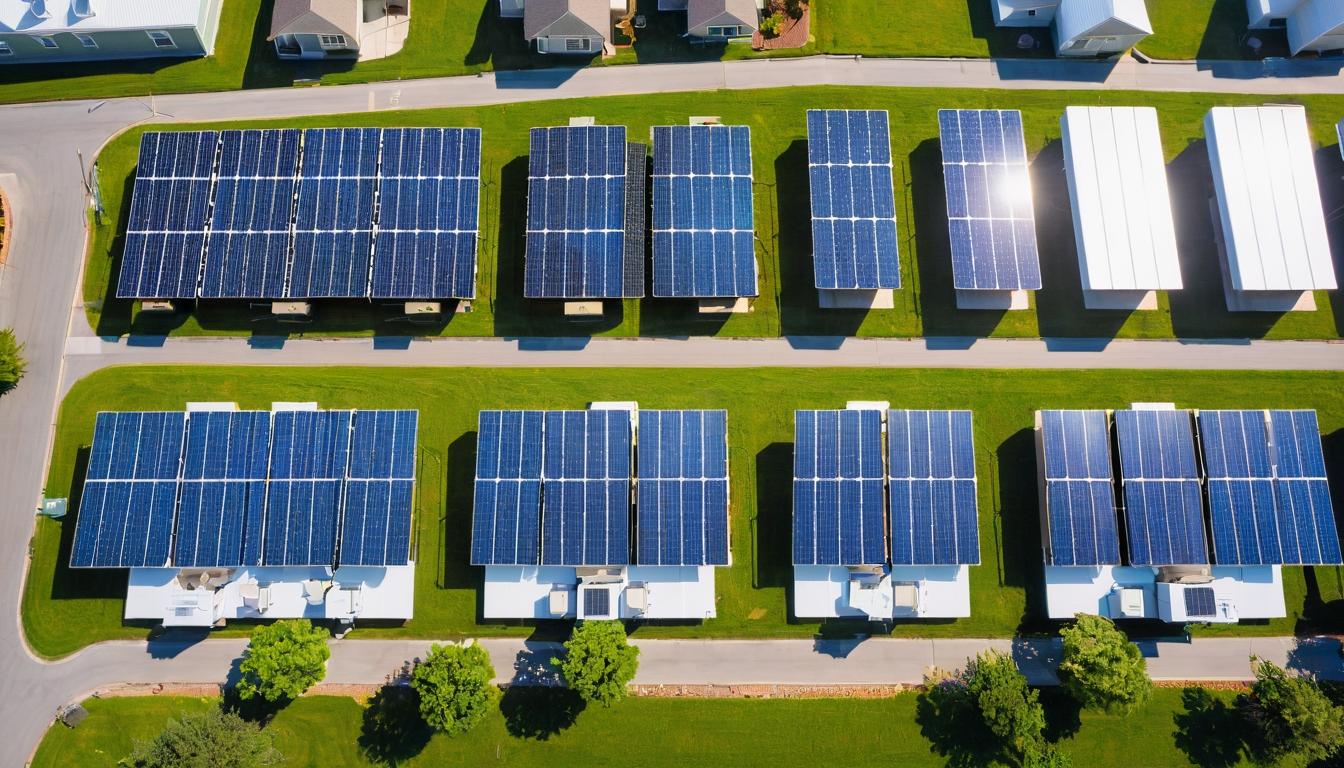
If you think the future of American energy is being decided in corporate boardrooms or congressional hearings, you're only seeing half the picture. The real revolution is happening on rooftops, in suburban garages, and across rural landscapes where traditional utilities rarely venture. This isn't about massive solar farms or offshore wind turbines—though those matter—but about millions of small decisions adding up to something transformative.
Across the country, homeowners are becoming accidental energy moguls. They're installing solar panels not just to save money, but to sell power back to the grid through net metering programs that have quietly become the most contentious policy battle nobody's talking about. In states like California and Texas, these prosumers—part producer, part consumer—are creating a distributed energy network that challenges century-old utility business models.
Meanwhile, community solar projects are bypassing traditional energy infrastructure altogether. In low-income neighborhoods from Brooklyn to Denver, residents who can't afford rooftop installations are buying shares in local solar gardens, getting clean power at reduced rates while keeping dollars in their communities. These projects represent more than environmentalism—they're economic development tools that traditional utilities struggle to replicate.
Battery storage is the silent game-changer in this equation. What started as backup power for tech enthusiasts has evolved into virtual power plants. In Vermont, Green Mountain Power pays customers to use their home batteries during peak demand, creating a distributed grid resource without building a single new power plant. This demand response 2.0 could make peaker plants—those expensive, polluting facilities that run only during high demand—obsolete within a decade.
The regulatory landscape resembles a patchwork quilt of conflicting priorities. Some states embrace distributed energy with open arms, while others erect barriers through fees and restrictive policies. The battle often plays out in obscure public utility commission hearings where utility lawyers argue against solar installers over rates that determine whether distributed energy thrives or barely survives.
Microgrids represent the ultimate expression of this distributed future. From military bases to college campuses, these self-contained energy systems can disconnect from the main grid during outages, providing resilience that traditional infrastructure can't match. After Hurricane Maria devastated Puerto Rico's grid, microgrids kept lights on in communities that waited months for traditional restoration.
What's most surprising isn't the technology—it's the economics. The levelized cost of solar-plus-storage has dropped 90% in the past decade, making it competitive with natural gas in many markets. This isn't green idealism; it's hard-nosed financial calculation driving adoption from corporate boardrooms to household budgets.
The human stories behind these statistics reveal deeper shifts. In Appalachian coal country, former miners are training as solar installers through programs that recognize energy transitions must include workforce transitions. In Native American communities, solar projects provide both energy sovereignty and economic development on tribal lands long exploited for fossil fuels.
Utilities aren't standing still—they're adapting in surprising ways. Some are becoming distributed energy aggregators themselves, managing networks of home batteries and solar systems as if they were power plants. Others are investing in grid modernization that makes two-way power flow possible, recognizing that fighting distributed energy is less profitable than facilitating it.
This quiet revolution faces real challenges. Grid integration remains technically complex, cybersecurity concerns grow with every connected device, and equity questions persist about who benefits from the energy transition. But the momentum is unmistakable—distributed energy has moved from fringe to fundamental, rewriting rules that seemed immutable just a decade ago.
The ultimate irony may be that the most radical transformation of America's energy system isn't coming from Washington or Wall Street, but from millions of ordinary decisions about where power comes from and who controls it. The centralized grid isn't disappearing, but it's learning to share power—literally and figuratively—with the distributed future already taking shape in neighborhoods across the country.
The hidden grid: how distributed energy is quietly rewriting America's power playbook