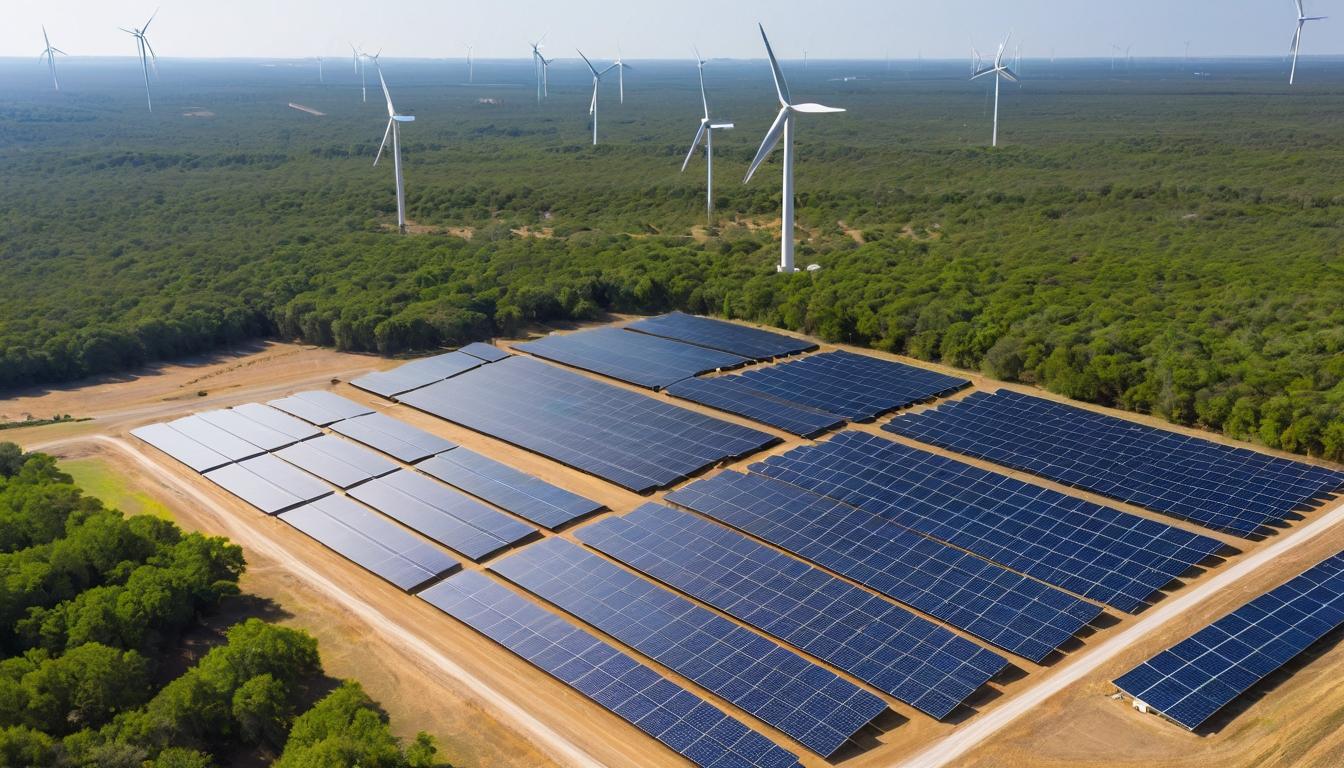
If you drive through West Texas, you'll see them stretching to the horizon—endless rows of solar panels and wind turbines turning the desert into a power plant. But look closer, and you'll notice something strange: many are sitting idle, their energy trapped by a grid that can't handle what they produce. This isn't a failure of technology; it's a failure of imagination. While politicians debate climate bills and corporations announce net-zero pledges, the real revolution is happening in places most people never think about—transmission corridors, substation control rooms, and regulatory hearings where the future gets decided one megawatt at a time.
What utilities won't tell you is that the clean energy transition has already outpaced the infrastructure meant to support it. In California, solar farms are regularly paid to shut down during sunny afternoons because the grid can't absorb their power. In the Midwest, wind turbines stand motionless while natural gas plants burn fuel just miles away. The bottleneck isn't generation—it's the aging network of wires and transformers that moves electricity from where it's made to where it's needed. This disconnect between promise and reality reveals a fundamental truth: building renewable energy is easy compared to rebuilding the system that delivers it.
Enter the grid edge—the messy, complicated frontier where new technology meets old infrastructure. This is where companies are deploying everything from virtual power plants (aggregating thousands of home batteries to act like a traditional plant) to advanced inverters that can stabilize the grid better than fossil fuel generators. In Brooklyn, a startup turned a public housing complex into a self-sufficient microgrid that survived Superstorm Sandy when the rest of the neighborhood went dark. In Vermont, utilities are using EV batteries as grid storage before the cars even leave the factory. These aren't pilot projects anymore; they're proving that distributed energy works at scale.
But innovation faces an invisible opponent: regulatory inertia. Most utility regulations were written for a one-way grid where power flowed from big plants to passive consumers. Today's grid needs to handle power flowing both ways, with millions of small generators feeding in unpredictably. Some states are adapting—New York's REV initiative rewards utilities for enabling distributed energy rather than just building more wires. Others cling to models that protect monopolies at the expense of progress. The result is a patchwork where your ability to participate in the energy revolution depends more on your zip code than your technology.
Meanwhile, the workforce crisis looms larger than any technical challenge. Nearly half of utility line workers will retire in the next decade, taking decades of institutional knowledge with them. The industry needs to recruit 100,000 new workers just to maintain today's grid, let alone build tomorrow's. Some utilities are partnering with community colleges to create pipeline programs; others are automating inspections with drones and AI. But replacing experienced hands with screens and algorithms brings its own risks—as Texas learned during Winter Uri, when automated systems failed and human operators had minutes to prevent total collapse.
Perhaps the most surprising development is who's driving change. It's not just Silicon Valley startups or environmental groups anymore. Walmart now operates one of America's largest private fleets of EV charging stations. Amazon's wind farms power its data centers. Even oil giants like Shell are becoming major renewable developers. This corporate shift isn't purely altruistic—clean energy has become cheaper than fossil fuels in most markets, and companies hate price volatility more than they hate change. When the world's largest corporations decide that renewables make business sense, the debate about whether to transition becomes irrelevant.
Yet for all the progress, equity remains the unfinished business of the energy transition. Low-income communities still pay disproportionately high energy bills while having less access to rooftop solar or EV charging. Community solar projects—where residents subscribe to shares of a local array—are helping, but they face regulatory hurdles in many states. The Inflation Reduction Act's incentives for disadvantaged communities could change this, but only if implementation matches ambition. The test won't be whether we can build a cleaner grid, but whether we can build one that serves everyone.
Standing in that Texas field, watching turbines spin uselessly, you realize the energy transition isn't a single event but a thousand interconnected battles. It's fought in utility boardrooms, regulatory hearings, research labs, and neighborhood meetings. The technology exists; the money is flowing; the demand is clear. What's missing is the connective tissue—the policies, workforce, and social contract to tie it all together. The hidden grid isn't just wires and transformers—it's the human systems that determine whether innovation becomes transformation or just another missed connection.
The hidden grid: How America's energy future is being built in plain sight