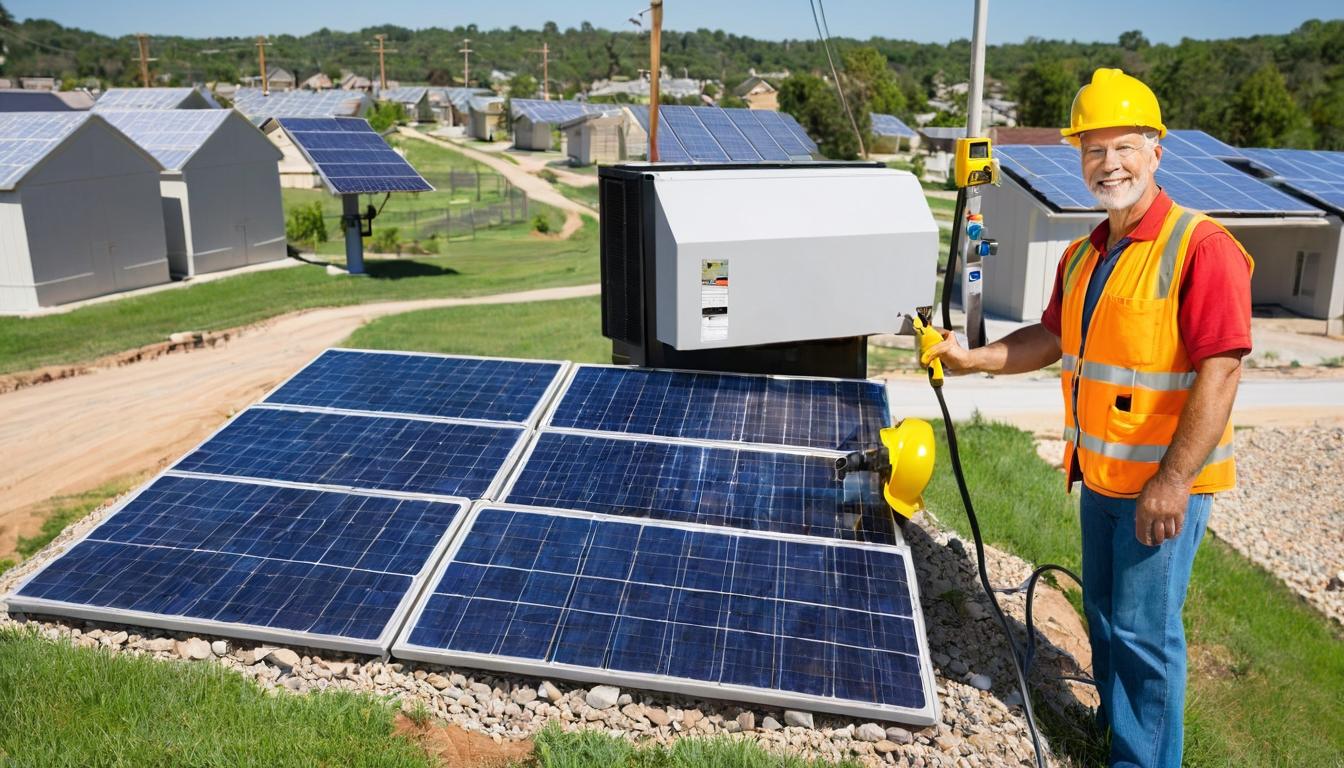
If you listen closely, you can hear the hum—not just from power lines, but from the groundswell of communities taking energy matters into their own hands. While Washington debates infrastructure bills and corporations announce net-zero pledges, a quieter revolution is unfolding in town halls, co-op meetings, and backyards across the country. This isn't about top-down mandates; it's about neighbors deciding they've had enough of blackouts, rising bills, and distant decision-makers.
In places like Boulder, Colorado, and San Diego, California, community choice aggregation (CCA) programs are letting municipalities buy or generate their own power, often with a cleaner mix than the incumbent utility provides. These aren't just feel-good initiatives—they're shifting billions in revenue and challenging the century-old utility monopoly model. "We saw our rates climbing while reliability dropped," says Maria Rodriguez, a schoolteacher who helped launch her town's CCA. "Now we control our destiny, and we're putting solar on every public building."
Meanwhile, the push for microgrids is turning campuses, military bases, and even whole neighborhoods into self-sufficient energy islands. When Hurricane Ida knocked out power for weeks in Louisiana, the campuses with microgrids kept lights on and shelters running. The technology isn't new, but the urgency is—spurred by climate-driven disasters and aging infrastructure. Engineers call it resilience; residents call it survival.
But this grassroots energy movement faces fierce headwinds. Utility lobbyists are fighting CCAs in state legislatures, arguing they undermine grid stability and leave poorer customers footing the bill. In some states, laws still penalize homeowners for generating too much solar power. The battle lines aren't just political—they're economic, pitting legacy power players against a patchwork of local innovators.
What's emerging is a two-tier energy system: one for those who can afford solar panels, batteries, and electric vehicles, and another for those stuck with the old grid. Bridging that gap requires more than technology—it needs inclusive policies that ensure low-income communities aren't left in the dark. Some CCAs are addressing this by earmarking funds for energy efficiency upgrades in affordable housing, but the scale remains small.
On the horizon, artificial intelligence and blockchain are adding new twists. Startups are using AI to optimize local energy trading, letting neighbors sell excess solar power directly to each other. It's a vision of the grid as a peer-to-peer network, but regulatory hurdles loom large. "The technology is ready," says a developer in Brooklyn's blockchain-based microgrid project. "The rules aren't."
This isn't just an energy story—it's about who gets to decide our future. As one community organizer in Ohio told me, "We're not waiting for permission anymore." The hum is getting louder.
The hidden battle for America's energy soul: How local communities are rewriting the grid