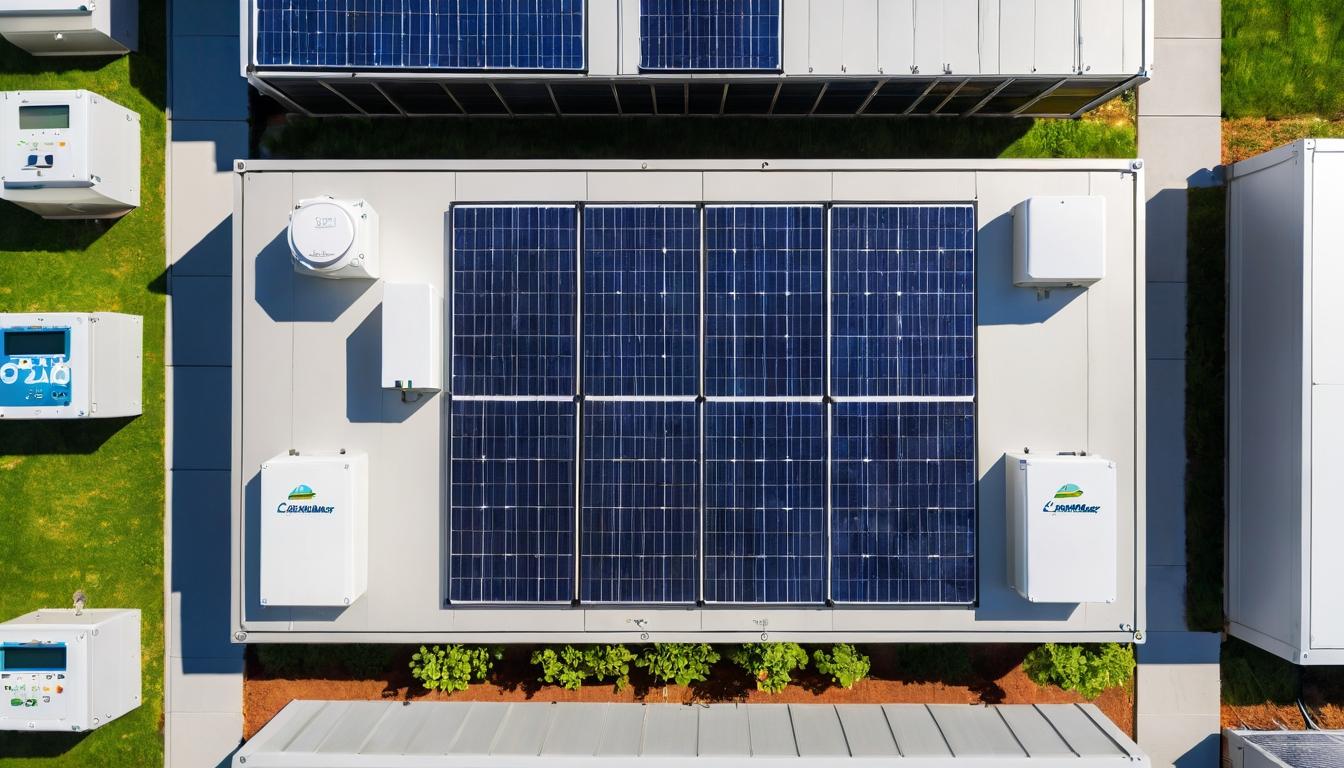
In a nondescript industrial park outside Phoenix, a quiet revolution is unfolding. Not with banners or protests, but with humming inverters and blinking LED displays. A local brewery has turned its entire roof into a solar farm, generating enough power not just for its own operations, but to sell back to the grid during peak hours. This isn't just green virtue signaling—it's a calculated business move that's sending shockwaves through traditional utility models. Across the country, similar scenes are playing out as distributed energy resources (DERs) move from fringe experiment to mainstream threat.
What makes this shift particularly disruptive isn't the technology itself, but the economics. Solar panel costs have dropped 90% over the last decade, while battery storage prices have followed a similar trajectory. Suddenly, the math that kept customers tethered to centralized utilities no longer adds up. A recent study found that by 2025, over 20 million U.S. households could save money by installing solar-plus-storage systems and reducing their grid dependence. Utilities are facing what energy analysts call the 'death spiral'—as more customers generate their own power, remaining customers bear higher infrastructure costs, pushing even more toward alternatives.
Behind the scenes, a regulatory battle is raging that most consumers never see. State public utility commissions are grappling with fundamental questions: Should customers with solar panels pay extra for grid access? How do you value the electricity they send back to the system? In California, the controversial NEM 3.0 policy has dramatically reduced compensation for solar exports, while in Texas, innovative rate structures are encouraging rather than punishing distributed generation. These regulatory decisions will determine whether the energy transition accelerates or stalls.
Meanwhile, the technology keeps advancing in unexpected ways. Virtual power plants—networks of home batteries, smart thermostats, and electric vehicles—are beginning to function like traditional power plants, responding to grid signals within milliseconds. During last summer's heat waves in California, these aggregated resources provided crucial capacity that prevented blackouts. The irony is delicious: the very technologies that threatened utilities' business models are now becoming their best tools for grid reliability.
Perhaps the most fascinating development is how this revolution is playing out differently across demographic lines. Contrary to early assumptions that solar was only for the wealthy, community solar projects are bringing clean energy to renters and low-income households. In New York, shared solar programs allow apartment dwellers to subscribe to off-site solar farms, while in Colorado, innovative financing makes solar accessible without upfront costs. The energy transition, it turns out, could be surprisingly democratic.
Utilities aren't sitting idle, of course. Some are fighting rearguard actions through lobbying and rate design, while others are embracing the change. Forward-thinking companies are transforming from mere electricity sellers to platform operators, managing increasingly complex two-way power flows. The smartest utilities recognize that their future lies not in fighting distributed energy, but in orchestrating it—becoming the air traffic controllers for millions of small generators.
What emerges from all this isn't just a cleaner grid, but a fundamentally different relationship between Americans and their energy. The passive consumer flipping switches is giving way to the 'prosumer' who both consumes and produces power. This shift carries profound implications for everything from emergency resilience to economic inequality. During recent hurricanes in Florida, homes with solar and batteries kept lights on while their neighbors waited days for repairs.
As we stand at this inflection point, one thing is clear: the centralized, one-way grid that powered the 20th century is evolving into something more decentralized, more democratic, and more resilient. The revolution won't be televised—it'll be metered, monitored, and managed through smartphone apps. And it's happening right now, on rooftops and in basements across America, quietly rewriting the rules of energy before most people have even noticed.
The grid's hidden revolution: How distributed energy is quietly rewriting utility playbooks